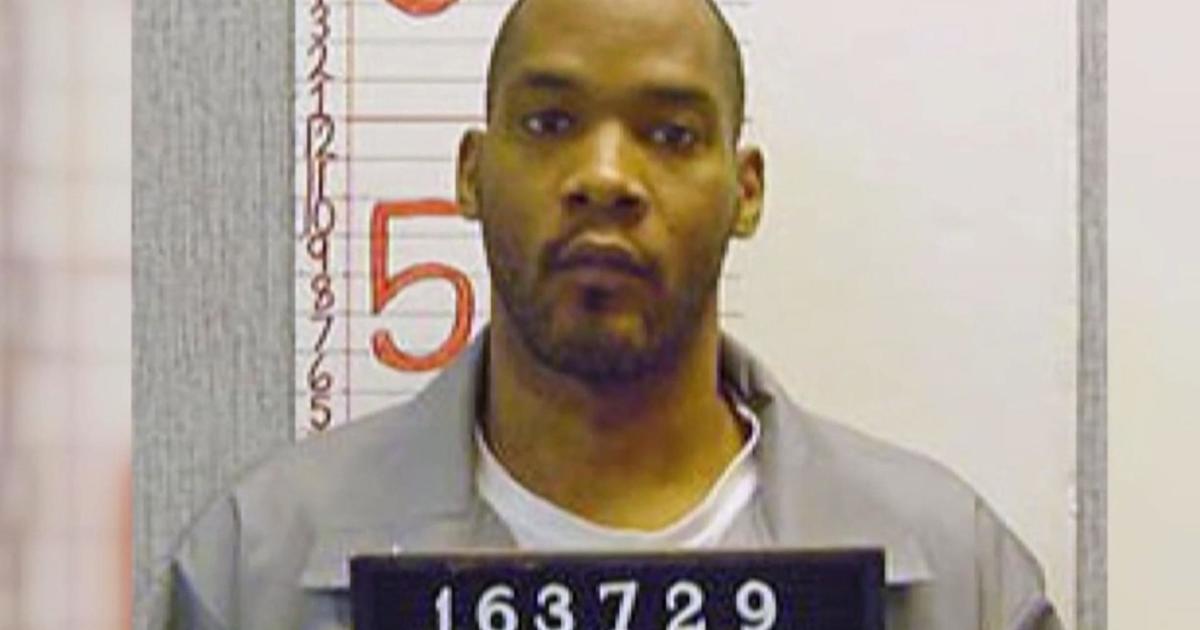
The Supreme Court of the United States made a significant decision on Tuesday regarding the execution of Missouri death row inmate Marcellus Williams. Williams was convicted in the 1998 stabbing death of Felicia Gayle in a St. Louis suburb, a crime that has been the subject of much controversy and debate.
Despite maintaining his innocence throughout the legal proceedings, Williams was scheduled to be executed by lethal injection at 6 p.m. CT. Previous attempts to halt the execution were denied by both the Missouri Supreme Court and Governor Mike Parson. This decision marked the third execution in Missouri this year and one of five scheduled nationwide within a seven-day span, as reported by the Death Penalty Information Center.
Justices Sonia Sotomayor, Elena Kagan, and Ketanji Brown Jackson expressed their dissent by stating they would have granted the request to halt the execution. Williams had previously faced execution twice following his 2001 conviction for the murder of Felicia Gayle. In 2015, the Missouri Supreme Court paused execution plans to review DNA testing on the handle of the murder weapon, a butcher knife used to stab Gayle 43 times.
Williams’ defense team argued that DNA experts found he was not the source of the DNA on the knife. However, the case was sent back to the Missouri Supreme Court, and a second execution date was set for August 2017. Shortly before this scheduled execution, then-Governor Eric Greitens canceled the execution and initiated an investigation into the DNA evidence by appointing a panel of retired judges. Unfortunately, this board was dissolved by Governor Parson in June 2023 without issuing a final report.
As new DNA evidence emerged and constitutional violations were brought to light, St. Louis County Prosecuting Attorney Wesley Bell sought to overturn Williams’ conviction. This included discrepancies in jury selection and the mishandling of evidence, such as DNA found on the murder weapon being consistent with the prosecutor and an investigator from the prosecuting attorney’s office.
With the DNA evidence tainted by mishandling, Williams and Bell reached an agreement where Williams would plead no contest to murder in the first degree with a sentence of life without parole. Despite the support of Gayle’s family for this resolution, Attorney General Andrew Bailey objected to the plea deal. The state supreme court intervened, ordering an evidentiary hearing to address Williams’ innocence claims.
During the proceedings, it was revealed that the prosecutor had removed a Black prospective juror from the case based on his resemblance to Williams. The prosecutor denied any racial bias in the jury selection process and defended the fairness of the trial. Additionally, the prosecutor admitted to handling the murder weapon without gloves multiple times before the trial, potentially contaminating the evidence.
Despite acknowledging constitutional errors in Williams’ prosecution, the judge declined to overturn his conviction and sentence. This decision was upheld by the Missouri Supreme Court, prompting Williams’ legal team to seek intervention from the Supreme Court of the United States. They argued that issues raised in another death penalty case involving an Oklahoma inmate were similar to Williams’ case and deserved consideration.
Williams’ attorneys emphasized the lingering doubts about his guilt and the numerous errors and biases present in his trial. They described his conviction as a grave miscarriage of justice and urged against his execution, citing irreparable consequences. However, Missouri officials opposed any delays in the execution, accusing Williams of employing dilatory tactics to avoid the consequences of his actions.
The prosecution alleged that Williams broke into Gayle’s home, waited for her to come downstairs, and brutally murdered her with a butcher knife. They presented evidence of Williams’ suspicious behavior after the crime, including his attempts to conceal the blood on his clothing and possessions. Witness testimonies from Williams’ girlfriend and a former cellmate further incriminated him in Gayle’s murder.
As the legal battle continues and the execution looms closer, the case of Marcellus Williams raises significant questions about the fairness of the justice system, the use of DNA evidence, and the potential for wrongful convictions. Despite the efforts to bring closure to this tragic case, the quest for justice and truth remains elusive for all parties involved.