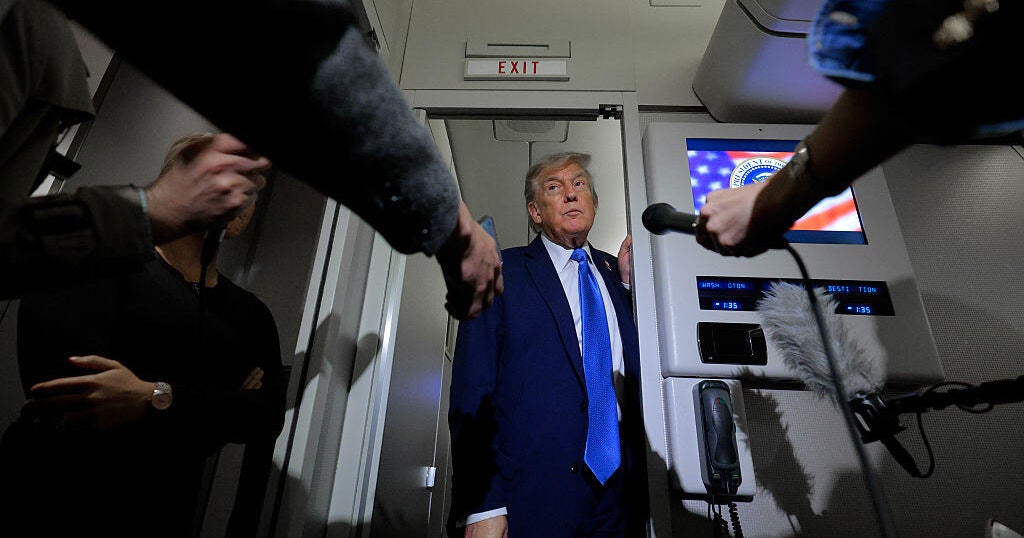
In a significant bipartisan effort reflective of growing legislative unease with executive overreach in military affairs, U.S. lawmakers are exploring measures to restrain President Donald Trump’s authority to conduct military strikes against Iran. This push stems from concerns regarding the escalating hostilities between Iran and Israel and underscores a resurgent commitment to the constitutional prerogatives granting Congress the sole authority to declare war.
The legislative impetus gained considerable traction following statements from Kentucky Republican Representative Thomas Massie and California Democrat Representative Ro Khanna, who have spearheaded initiatives stressing the existential need for congressional consent ahead of military engagements. Massie, expressing his disapproval of unilateral executive military action, highlighted that conversations pertaining to war must be deliberated within the halls of Congress, resonating a sentiment encapsulated in the U.S. Constitution. On social media, he shared his proposal to invoke the 1973 War Powers Resolution aimed to curb the president’s ability to order strikes on Iran, asserting that such critical decisions should not bypass legislative scrutiny.
Complementing this perspective, Rep. Ro Khanna articulated this congressional initiative as a defining moment for lawmakers to decide their allegiance either to neoconservative forces or to the broader American populace who are wary of endless foreign entanglements. His comments on social platforms called upon his colleagues to clearly state their stance, proposing a litmus test for their commitment to constitutional duties over partisan inclinations.
This brewing legislative dissent is staged to culminate in a compelled vote through the privileged resolution mechanism, which mandates deliberation within a fixed timeframe. While the House of Representatives adjourned for recess, the impending issue promises to pressurize House Speaker Mike Johnson upon the legislators’ return. The forthcoming vote poses a particularly challenging scenario for Speaker Johnson, who has previously articulated strong support for both Israel and President Trump.
Similarly, a parallel movement led by Democratic Senator Tim Kaine from Virginia aims to enforce legislative oversight over military engagements with Iran. Kaine introduced a Senate resolution requiring President Trump to obtain either congressional approval or a formal war declaration before initiating military actions against Iran, barring scenarios involving imminent threats to national security. Although Kaine initially reported a lack of cosponsors, he indicated a growing interest among his colleagues, hinting at potential bipartisan support.
Contrasting opinions within the Senate further complicate the landscape. Republican Senator Josh Hawley of Missouri expressed skepticism over the potential for significant military escalation under President Trump’s command, suggesting that fears of an unwarranted war were overstated. On the other hand, Senator Lindsey Graham of South Carolina has advocated for a more assertive posture, endorsing substantial U.S. support for Israel in the conflict, potentially including military assistance and direct involvement.
Adding a personal dimension to the unfolding drama, President Trump abruptly shortened his visit to the G7 summit in Canada, citing the urgency of the Israel-Iran conflict. Upon his return, Trump took to social media to assert U.S. dominance over Iranian airspace and insinuated knowledge of the whereabouts of Iran’s Supreme Leader, which he cryptically remarked was not currently a target of U.S. forces. This bold assertion has only amplified concerns regarding the president’s autonomous military actions without prior congressional endorsement.
Within the Senate, additional voices such as Republican Rand Paul of Kentucky and independent Bernie Sanders of Vermont have echoed the call for stringent adherence to the War Powers Resolution. Paul reemphasized the constitutional requirement for congressional approval in matters of war, whilst Sanders has proposed a measure to restrict federal funding for any unauthorized military action against Iran. Senate Majority Leader John Thune remarked that while the president currently operates within his established authorities, a protracted engagement would necessitate a more thorough congressional debate and potential legislative action.
This ongoing debate occurs against a backdrop of increasing congressional frustration with executive overreach in foreign and military policy, manifesting a clear bipartisan desire to reclaim its constitutional role in decisions of war and peace. As lawmakers on both sides of the aisle rally for a reassessment of the balance of power between the branches of government, the coming weeks are poised to be a critical period for U.S. foreign policy and constitutional governance, spotlighting the enduring struggle over the war powers vested in the United States Congress.