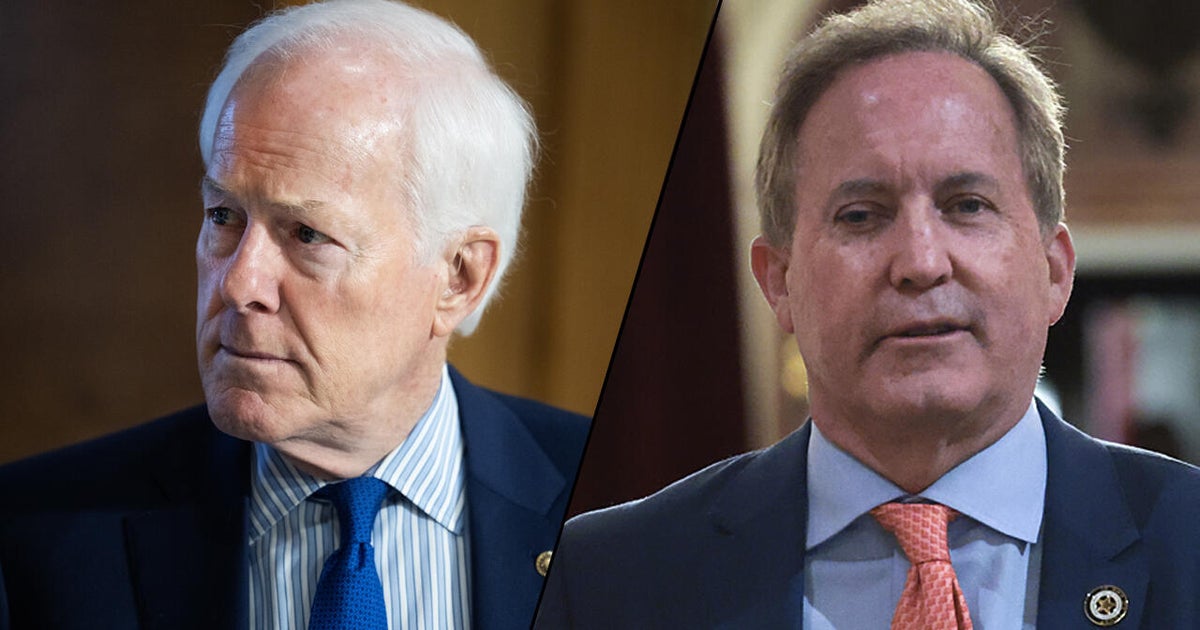
The upcoming Texas primary runoffs, scheduled for Tuesday, mark a pivotal point in what has already been a tumultuously expensive and politically charged election cycle, particularly within the Republican contests. The most attention-grabbing among these is undoubtedly the Senate runoff featuring incumbent Senator John Cornyn facing off against Texas Attorney General Ken Paxton. This particular race has shattered historical spending records and has seen an influx of both financial and influential political endorsements, significantly shaping the political landscape.
John Cornyn, who has been a senator since 2002 and held roles such as the Republican whip and chair of the Senate Republican fundraising arm, initially topped the three-way primary in March but failed to secure a majority, thus triggering the runoff. Despite being a prominent figure within the Republican establishment and occasionally at odds with former President Donald Trump, Cornyn has solidified his position as an ally during Trump’s second term. Conversely, Ken Paxton has long been a staunch supporter of Trump, advocating vehemently for his policies and even engaging in legal actions aligned with Trump’s claims, most notably attempting to challenge the 2020 presidential election results in key states—a move that was ultimately dismissed by the U.S. Supreme Court.
The dynamics of the race took a sharp turn when President Trump officially endorsed Paxton after a period of speculation regarding his commitment. This endorsement, described by political analysts as transforming a balanced playing field into a steep uphill battle for Cornyn, illustrates the weight such political support carries within the Republican primaries. Trump’s influence was further evidenced by recent Republican contests where his endorsed candidates succeeded against incumbents, as seen in Louisiana and Kentucky.
In the background of this highlighted Senate race, several other critical positions are up for grabs with implications both at the state and national levels, affecting sectors from legal frameworks to energy policies. The attorney general position, for instance, is being fiercely contested, coinciding with Paxton’s Senate bid. Here, U.S. Representative Chip Roy and State Senator Mayes Middleton are vying to be the Republican nominee, dividing conservative supporters across the state.
Meanwhile, contentious races also unfold in the Congress where redistricting has led to significant shifts. In the 18th Congressional District, for instance, Democrats Christian Menefee and Al Green are contesting in a runoff subsequent to neither achieving a majority in the primary. The 35th Congressional District sees an equally intense Democratic runoff, with Johnny Garcia and controversial figure Maureen Galindo at the helm. Galindo, in particular, has remained a polarizing candidate due to her provocative statements and positions, leading to major pushback from party members and significant advertising spends aimed at swaying the electorate.
Furthermore, the race for the Texas railroad commissioner, responsible for overseeing the state’s substantial oil and gas industry, sees incumbent Jim Wright contested by Bo French, who has been linked to extremist views. This race underscores the broader ideological divides within the Texas Republican electorate and may influence voter turnout and subsequent general election dynamics.
Lastly, the expansive nature of this primary runoff goes beyond individual races, encapsulating broader themes of party identity, the influence of high-profile endorsements, and the strategic deployment of vast resources—financial and otherwise. These runoffs will not only determine nominees but potentially set the stage for the political direction of Texas and impact on national policies, given the state’s significant role in national politics.
As Tuesday approaches, all eyes are on Texas as voters head to the polls, making decisions likely to resonate far beyond the state borders. The outcomes here could redefine the political trajectories of key figures within the Republican party and possibly alter the broader political landscape leading into the crucial 2026 midterm elections. The stakes are unmistakably high, both for the candidates involved and the constituents they aim to represent, setting the scene for a crucial showdown in one of America’s most vibrant political battlegrounds.