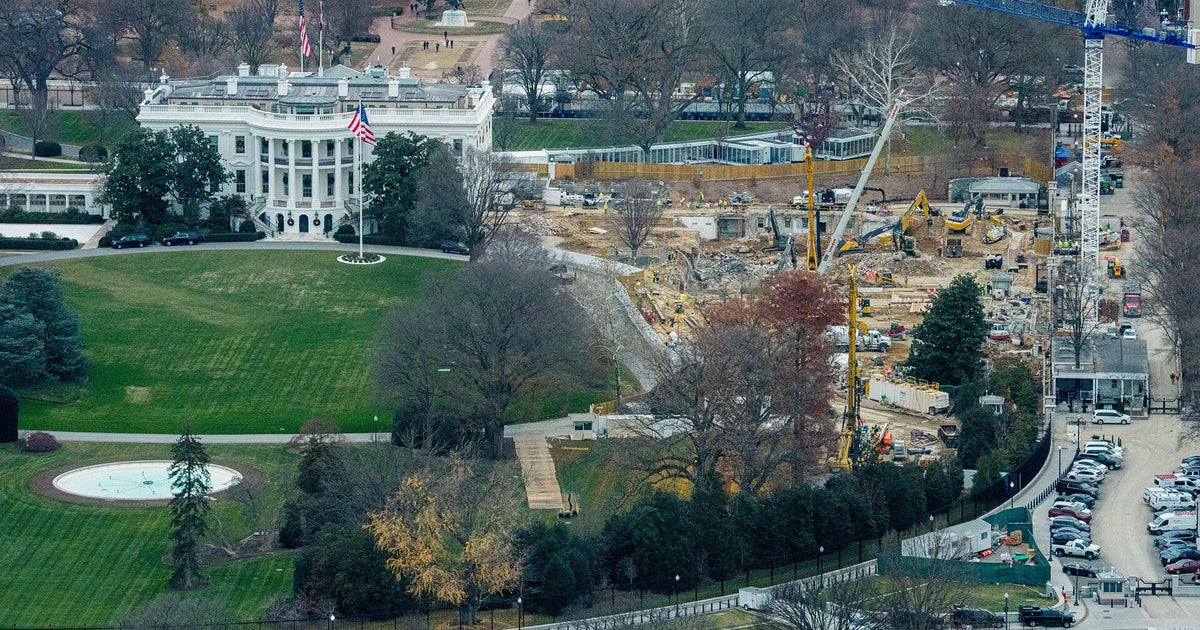
In a recent legal battle unfolding in Washington D.C., U.S. District Judge Richard J. Leon made a pivotal decision regarding the development of a new ballroom intended for the White House, a project supported by the Trump administration. Despite a concerted effort by the National Trust for Historic Preservation to halt the project, Judge Leon denied their request for an immediate stoppage. However, he imposed specific conditions on the construction process going forward, reflecting the complexity and contentious nature of this development.
The legal confrontation began when the National Trust for Historic Preservation challenged the construction of the ballroom, citing concerns over the potential disregard for legal protocols and historical conservation. The organization argued that significant historic elements of the White House, specifically parts of the East Wing, were being demolished without adequate public review or adherence to legal standards. They stressed that the project violated multiple laws and lacked a comprehensive environmental impact statement, describing the administration’s submitted plans as “woefully inadequate.”
During detailed courtroom exchanges, the judge acknowledged that while the plaintiffs had raised substantial concerns, they did not convincingly demonstrate that the harm from continuing construction would be irreparable. Consequently, he did not grant a full halt but issued a temporary restriction against any further below-ground construction activities for two weeks. This was aimed at preventing any actions that might preemptively lock in the construction footprint before further legal clarifications could be made. Judge Leon sternly noted that violations of this directive would lead to severe repercussions, including potentially dismantling already constructed sections.
Further legal stipulations by Judge Leon required the Trump administration to submit detailed construction plans to the National Capital Planning Commission by year’s end. The Justice Department reported that preliminary discussions to facilitate these submissions were already underway.
The government’s defense hinged on several arguments. They contested the need to liaise with the National Capital Planning Commission before initiating such construction developments, asserting that their plans did not finalize any specific design or structure yet. The Justice Department’s attorney, Adam Gustafson, underscored this in court, arguing, “There is nothing final about this building.” Additionally, the administration posited that since the directives came from the Executive Office of the President, they were largely insulated from federal judicial review, further complicating the legal landscape.
Support for the project within the government was evident, as the National Park Service was implicated several times in the court proceedings through Justice Department filings supporting the ongoing work. Also, the government expressed its commitment to consult with the Commission of Fine Arts, despite current operational limitations due to a lack of a complete member roster following actions by President Trump.
The urgency of the legal proceedings was underscored by a planned preliminary injunction hearing set for the second week of January, which would reexamine the issues at hand and possibly set more definitive future directions for the project.
Politically, the case represented more than just a typical construction dispute. President Trump lauded the court’s decision at a Hanukkah event, framing it as a victory against unnecessary legal obstruction. He highlighted the grand scale of the ballroom, estimating its cost at $400 million—a figure up from a previous $300 million projection—and portrayed the project as a significant enhancement for White House facilities, aimed to be completed with efficiency and at a potentially reduced cost.
The controversy and the debate around the White House ballroom illustrate the often complex interplay between historical preservation, legal frameworks, and executive power. As the Trump administration seeks to implement this ambitious project, the intersection of public interest, historical integrity, and governmental authority continues to provoke significant legal and political discussions, reflecting broader themes of governance and preservation in America.
Contributions from Kathryn Watson of CBS News shed further light on the unfolding events, offering a comprehensive view of the intricate legal, political, and social dynamics at play. As the situation progresses, further analysis and reporting will undoubtedly continue to reveal the evolving implications of this high-profile development project at one of America’s most iconic residences.