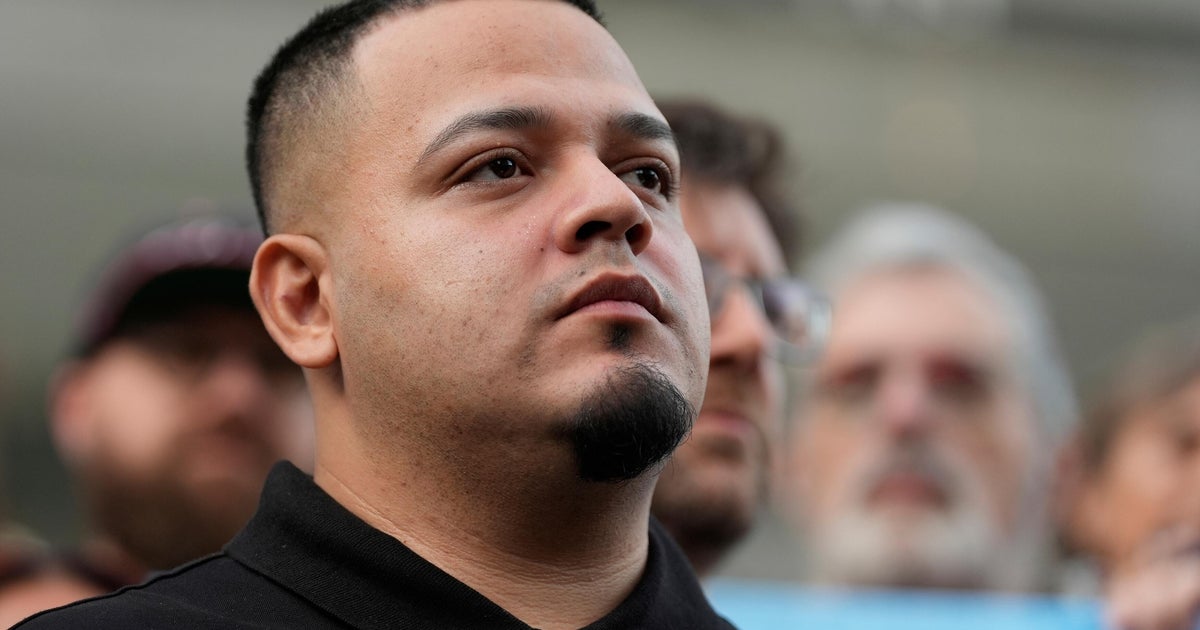
In a significant legal development in Tennessee, U.S. District Judge Waverly Crenshaw has dismissed charges against Kilmar Abrego Garcia, a Salvadoran national who became entangled in the U.S. justice system following a wrongful deportation during the Trump administration. The decision, announced on Friday, marks a pivotal turn in a case that epitomizes the broader debates surrounding immigration policies and prosecutorial discretion in recent years.
Kilmar Abrego Garcia faced charges of human smuggling after a traffic stop in November 2022 led to his arrest in Tennessee. Despite pleading not guilty, the somber reality of his legal plight was compounded after he was mistakenly deported to El Salvador in March 2025. In a distressing twist of events, despite being granted protection against deportation by an immigration judge, he found himself imprisoned in a notorious supermax facility in El Salvador due to administrative errors acknowledged by officials from the Trump administration.
The gravity of Garcia’s predicament gained judicial recognition when a federal judge in Maryland intervened, ordering the Trump administration to facilitate his return to the U.S. This legal order came too late to spare him months of undue imprisonment. Upon his return, Garcia not only had to navigate the complexities of his immigration status but also contend with the looming criminal charges which, his legal team argued, were a product of vindictive prosecution.
The dismissal of the charges by Judge Crenshaw was rooted in a detailed critique of the Justice Department’s motives. Crenshaw highlighted the timing of the prosecution, which coincided with Garcia’s legal victories challenging his wrongful deportation. The judge’s skepticism about the genuineness of the prosecutorial efforts was evidenced by the reopening of the investigation after Garcia’s lawsuit had cast a spotlight on his case. It was a scenario that suggested retaliatory motives cloaked behind the veneer of legal prosecution.
Garcia’s legal representatives have expressed profound relief and vindication following the dismissal. Sean Hecker, Garcia’s attorney, characterized the prosecution as a politicized attempt influenced by a then-partisan Justice Department. This dismissal not only underscores the resilience of the judiciary in upholding justice but also serves as an acknowledgment of the errors committed by federal authorities in handling Garcia’s case.
The implications of this case extend far beyond the personal relief experienced by Garcia. It casts a critical light on the operational protocols and ethical considerations within the U.S. Justice Department, especially concerning the influence of political considerations on judicial proceedings. Internal communications within the Department, as highlighted during court proceedings, pointed to an elevated interest in pursuing charges against Garcia subsequent to his assertive legal stance against his deportation. These revelations underscore concerns about the entanglement of political priorities in decisions that should be steered by unbiased legal assessments.
Moreover, the case reflects broader issues under the Trump administration’s stringent immigration policies and the handling of deportation cases. Garcia’s ordeal has brought into sharp focus the potential human costs of administrative oversights and aggressive immigration enforcement strategies. It raises questions about the safeguards available to protect individuals from the caprices of systemic failures and the robustness of the checks against misuse of prosecutorial power.
The Justice Department, signaling their disagreement with Judge Crenshaw’s ruling, announced plans to appeal the decision. A spokesperson for the Department criticized the judge’s decision as misguided, framing it as a preference for politics over public safety. This impending appeal ensures that the discourse surrounding prosecutorial discretion, judicial independence, and immigration enforcement will continue to be at the forefront of national legal and political debates.
Garcia’s acquittal, however, has not cleared all hurdles as he remains embroiled in ongoing civil and immigration-related legal battles. Yet, this victory in the criminal court offers a semblance of justice and a chance to rebuild his life that was abruptly disrupted by a series of administrative mishaps and legal challenges.
This case is likely to resonate as a cautionary tale and a beacon for advocacy groups fighting for the rights of immigrants and fair treatment under the law. It underscores the necessity for transparent and accountable law enforcement practices, especially in cases involving non-natives entangled in the complex web of U.S. immigration laws. Furthermore, it highlights the critical role of an independent judiciary in upholding the principles of justice, often against formidable political pressures. As this legal drama unfolds further, it serves as a litmus test for the resilience of democratic institutions in safeguarding human rights and justice in a polarized political environment.
These proceedings have not only defined Kilmar Abrego Garcia’s relentless fight for justice but have also underscored the ever-evolving narrative of immigration in America—a narrative intertwined with the ideals of fairness and the rule of law, challenging the nation to live up to its creed.