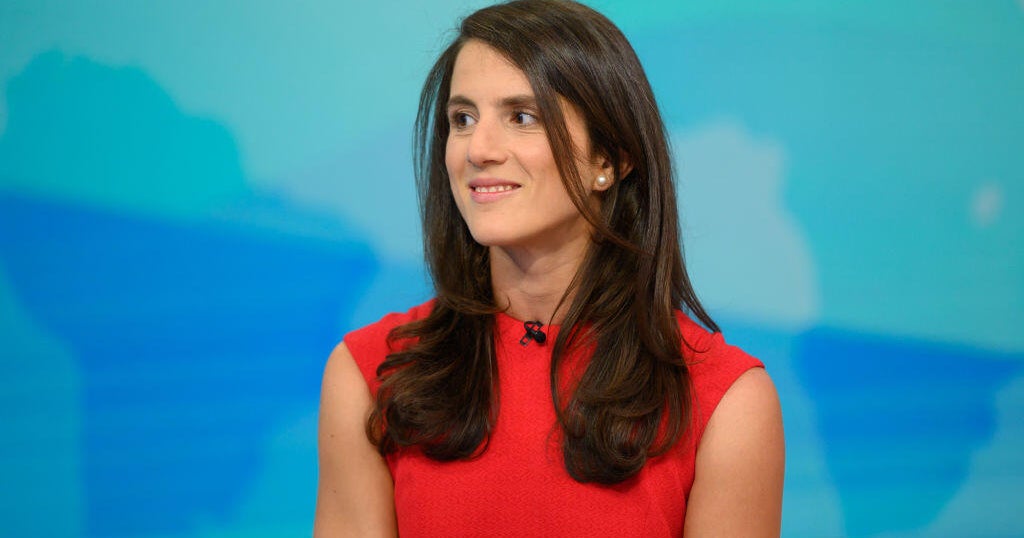
In the pantheon of American history, the Kennedy family has long held a prominent place. Their narrative, both triumphant and tragic, has been woven into the tapestry of our national consciousness. Now, the family saga has taken another heart-wrenching turn as Tatiana Schlossberg, the granddaughter of the late President John F. Kennedy, revealed that she has less than a year to live, following a cancer diagnosis.
The 35-year-old journalist and author, the second of three children born to Caroline Kennedy and Edwin Schlossberg, made the announcement in a deeply moving and introspective essay published in The New Yorker magazine. The piece, penned with a raw and unflinching honesty, detailed her struggle with acute myeloid leukemia, a type of cancer that affects the blood and bone marrow.
The diagnosis came abruptly, just ten minutes after she had given birth to her second child, a baby girl, in May 2024. The doctors had noticed that her white-blood-cell count “looked strange,” an ominous harbinger of the life-altering news that was to come. Despite the joy of welcoming a new life into the world, Schlossberg, who has been married to Dr. George Moran since 2017, was suddenly thrust into a battle for her own life.
The essay paints a vivid and intimate portrait of her struggle, shedding light on the harrowing journey that cancer patients endure. After several clinical trials and two transplants, her physician delivered the grim prognosis that she may only have a year to live. This devastating news came at a time when she was grappling with the demands of motherhood, having to care for a newborn and her older son. The irony of life and death colliding in such a poignant manner was not lost on Schlossberg.
The prognosis has undoubtedly cast a pall over the Kennedy family, already marked by a series of high-profile tragedies. The assassination of President John F. Kennedy in 1963 and Senator Robert F. Kennedy in 1968, the 1994 death of Jacqueline Kennedy Onassis following a diagnosis of Non-Hodgkin’s Lymphoma, and the tragic plane crash that claimed the life of John F. Kennedy Jr. in 1999, have all left indelible scars on the family’s collective memory.
It is against this backdrop that Schlossberg’s illness takes on an added layer of poignancy. In her essay, she expressed guilt over contributing yet another tragedy to her family’s fraught history. “For my whole life, I have tried to be good, to be a good student and a good sister and a good daughter, and to protect my mother and never make her upset or angry. Now I have added a new tragedy to her life, to our family’s life, and there’s nothing I can do to stop it,” she wrote.
Her mother, Caroline Kennedy, who has served as the U.S. ambassador to Australia and Japan, had already endured the loss of her father and uncle to assassinations, as well as the death of her mother and brother. The announcement of her daughter’s cancer diagnosis arrived on the same date, 62 years later, that President Kennedy was assassinated by Lee Harvey Oswald.
However, the essay is not just a chronicle of despair. It is also a testament to Schlossberg’s strength and resilience in the face of adversity. Her reflections on her family, her “kind, funny, handsome genius” husband, and her fears about leaving her two young children without a mother, are punctuated with a determination to live in the moment. “Mostly I try to live and be with them now,” she wrote, as she seeks to create lasting memories with her children that she can carry with her.
Moreover, the essay serves as a critique of the current state of healthcare in the U.S. She lamented the nomination and confirmation of her cousin, Robert F. Kennedy Jr., as Secretary of Health and Human Services, and his subsequent slashing of nearly half a billion dollars for research into mRNA vaccines and funding from the National Institutes of Health. Schlossberg expressed concern that these decisions would adversely affect millions of women, especially in the context of her own experience with postpartum hemorrhage, which was treated using a drug currently under review by the Food and Drug Administration.
Despite the personal and familial challenges that lie ahead, Schlossberg’s essay is a powerful reminder of the human capacity for courage and resilience in the face of life’s most daunting trials. Her words will undoubtedly resonate with countless individuals who have been touched by cancer and other life-threatening illnesses. As her cousin, Maria Shriver, urged people on social media to read Schlossberg’s story, she emphasized the importance of gratitude for the life one is living “today, right now, this very minute.”
In a world where health and longevity can be so ephemeral, Schlossberg’s essay is a potent reminder of the value of each moment. It is an homage to life’s transience, a testament to the human spirit, and a call to cherish every second. It is a narrative of courage in the face of adversity, of love in the shadow of loss, and of resilience against the ruthless march of time. In the end, it is a testament not just to her life, but to the enduring legacy of the Kennedy family.