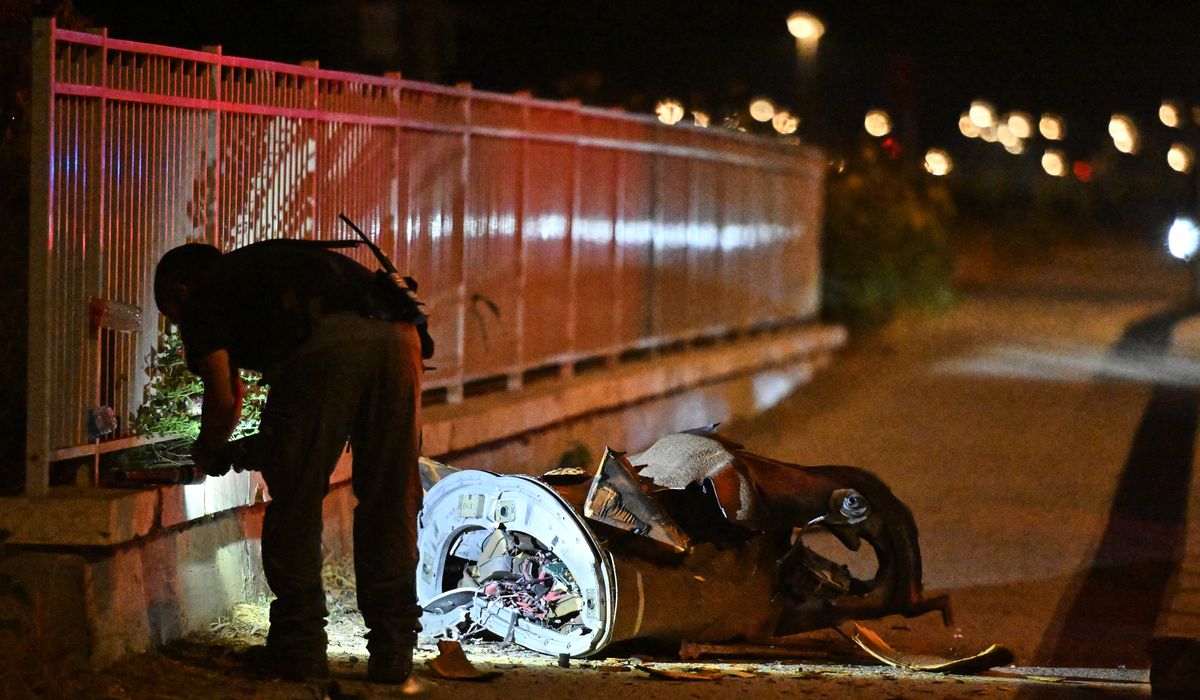
The military command of Iran announced on Monday the temporary cessation of its offensive operations against Israel. This follows a retaliatory barrage of ballistic missiles Tehran launched in response to Israel’s attacks on Hezbollah in Lebanon. The sudden flare-up of hostilities between the two nations has put the region on edge, and the world watches anxiously as it awaits the next developments.
Major General Ali Abdollahi, commander of Iran’s Khatam al-Anbiya joint military command base, described the missile strikes as a “painful response” to Israeli military action in Lebanon. He issued a stern warning, implying that the current pause in offensive operations could be lifted if Israel fails to halt its aggressive activities in southern Lebanon.
“The cessation of armed forces operations is announced,” said General Abdollahi in a statement. He added, “However, it is emphasized that if the aggression and acts of malevolence continue, including in southern Lebanon, much more severe and crushing measures than before will be forthcoming.”
The recent wave of conflict was reignited on Sunday, following Israeli strikes near Beirut, the capital of Lebanon. Over the past week, Iran had repeatedly cautioned that Israeli attacks in the vicinity of the city might incite a response from Tehran. True to its word, Iran responded swiftly and decisively following the Israeli strikes, launching ballistic missiles at Israel.
In retaliation to Iran’s missile strikes, the Israeli military commenced attacks on western and southern Iran. These included a strike on Mahshahr, Iran’s largest petrochemical complex, signifying a significant escalation in the conflict.
In the backdrop of these escalating tensions, people in Tehran, the capital of Iran, were photographed walking under a banner displaying portraits of the late revolutionary founder Ayatollah Khomeini and the slain Supreme Leader Ayatollah Ali Khamenei. The latter was killed in U.S. and Israeli strikes on February 28, which has been a contributing factor to the heightened tensions and hostilities between the nations.
On Monday, Tehran issued a separate warning, stating that it has the potential to strike energy infrastructure across the region. This threat is reminiscent of actions taken during the initial phase of the U.S.-Israeli conflict with Iran, suggesting an escalation in the severity of the current conflict.
While the situation continues to remain volatile, there have been some efforts to deescalate tensions. President Trump stated on Monday that discussions are underway between both sides to bring about a ceasefire. He believes that only “ignorance or stupidity” could prevent the successful conclusion of this process. His statement is a testament to the precarious nature of the situation, and the importance of the ongoing negotiations.
This continued conflict between Iran and Israel threatens to hinder efforts by the Trump administration to solidify a memorandum of understanding with Tehran. The intention of this memorandum is to initiate negotiations over Iran’s nuclear program and to lift the blockade of the Strait of Hormuz.
The Strait of Hormuz, a vital waterway for global oil shipments, has been a significant point of contention in the region. Iran’s blockade of this strait has had far-reaching implications for global oil supply and prices, making its resolution a matter of international concern.
In summary, the current situation in the Middle East is tense, with the recent conflict between Iran and Israel sparking fear of a potential escalation. While Iran has announced a pause in its offensive operations, it maintains that this could change if Israeli aggression continues. In the midst of this, efforts are being made to bring about a ceasefire and begin negotiations over Iran’s nuclear program and the blockade of the Strait of Hormuz. However, the success of these efforts remains uncertain, with the outcome likely to have significant implications for the region and the world at large.