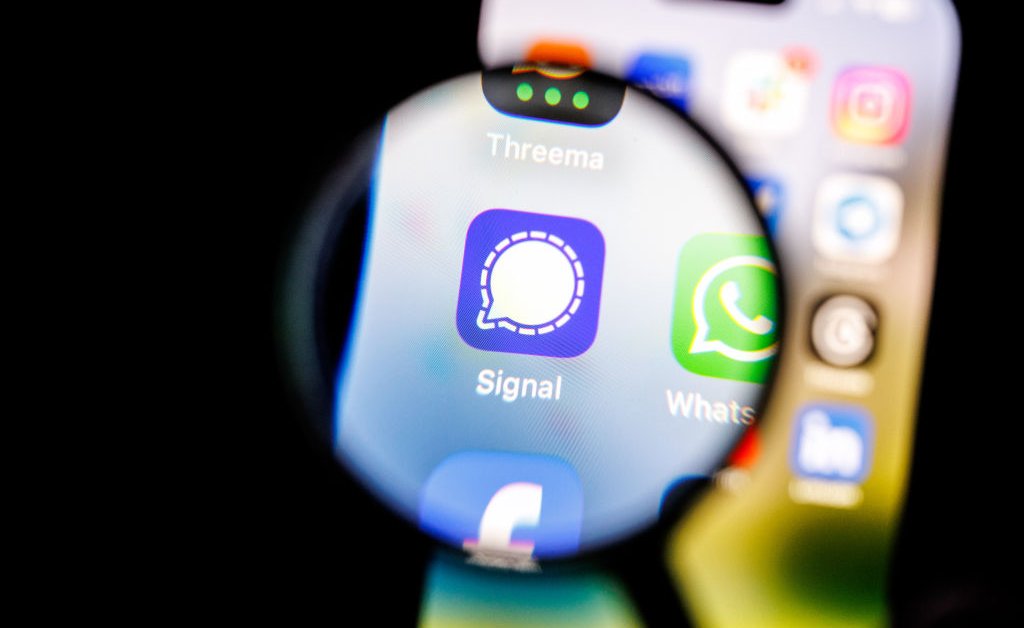
As a devastating wildfire tore through a Maui town, killing over 100 people in 2023, emergency management employees engaged in a text message exchange that would later aid investigators in understanding the government’s response to the tragedy. The messages hinted at the use of a second, untraceable messaging service, such as Signal, known for its end-to-end encryption and message auto-delete functions. While these apps offer increased security and privacy, they can also bypass open records laws designed to promote transparency in government decision-making.
An investigation by the Associated Press revealed over 1,100 government workers and elected officials across all 50 states had accounts on encrypted platforms. These accounts were linked to government cellphone numbers, suggesting the potential use of encryption apps for official communication. However, it remains unclear whether Maui officials actually utilized Signal or simply considered it as a means of secure messaging. The challenge for government entities lies in leveraging technological advancements for enhanced security while adhering to public information laws.
Governmental use of encryption apps appears to be common, with accounts identified for officials at the state, local, and federal levels in nearly every state. These accounts belonged to various government entities, including legislators, governors’ staff, state attorneys general, education departments, and school board members. While having an account on an encryption app is not typically prohibited, it raises concerns about the lack of transparency and accountability when messages are not subject to public information requests.
The AP’s findings underscore the need for a balance between privacy and accountability in government communications. While encryption apps offer secure messaging, they also present challenges in terms of compliance with open records laws. Without special archiving software, messages exchanged on these platforms may not be accessible through public information requests, limiting the public’s ability to scrutinize government decision-making processes.
Moving forward, government entities must navigate the complexities of using encryption apps for official communication while ensuring transparency and accountability. Clear guidelines and policies may be necessary to address the use of these apps and ensure that public records remain accessible. As technology continues to advance, policymakers and officials must consider the implications of using encryption apps on government transparency and work towards solutions that uphold the principles of open government.