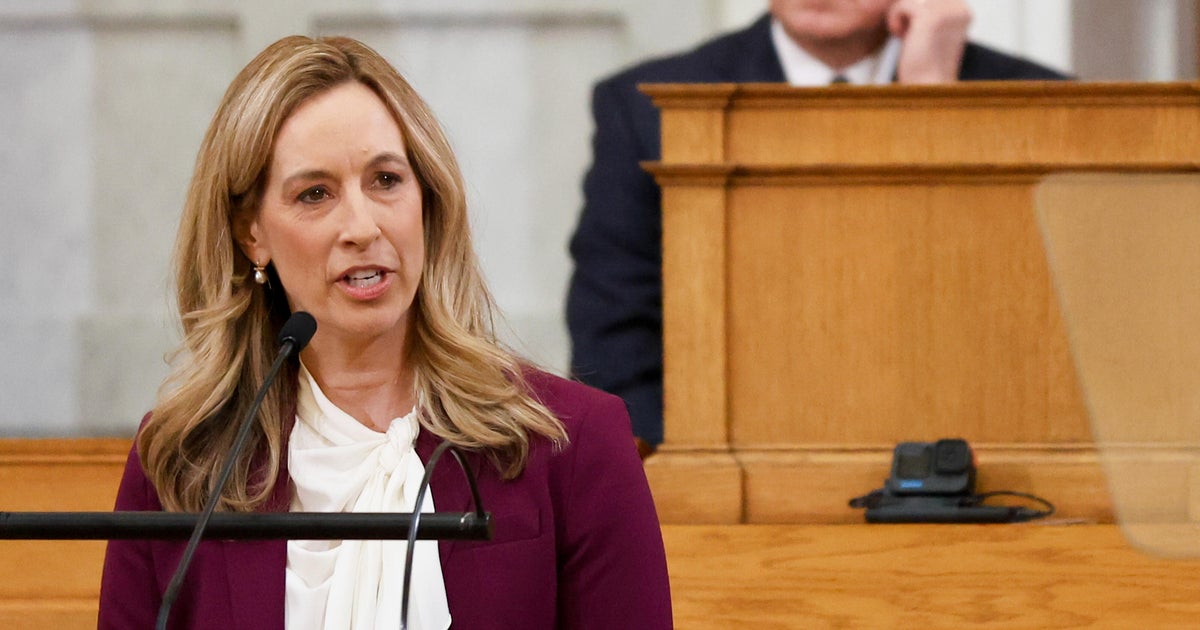
In what turned out to be one of the most hotly contested political dramas of the year, the improper release of New Jersey Governor Mikie Sherrill’s military records during the gubernatorial race became a focal point of national interest. The National Archives and Records Administration, after conducting a thorough investigation spearheaded by its inspector general, has clarified that the release was a matter of human error rather than a calculated political maneuver. This finding dispels the cloud of suspicion that hovered over the incident for months, which some believed to be a result of partisan scheming.
Governor Mikie Sherrill, a Democrat, found her past under intense scrutiny when her unredacted military records, including sensitive personal information, were improperly divulged. This breach included the release of her Social Security number, her parents’ home addresses, and detailed contents of her military personnel file. Such disclosure raised serious concerns under the Privacy Act of 1974 and the Freedom of Information Act, prompting an immediate and rigorous inquiry by the National Archives’ watchdog.
While initial suspicions were directed at potential political motivations behind the release, possibly linking it to Sherrill’s Republican opponent in the governor’s race, Jack Ciattarelli, or to allies within the Trump administration, the investigation concluded otherwise. It was discovered that the request for the release of the records was correctly filed to the National Archives. However, a technician handling the request failed to follow the proper protocols, thus mistakenly releasing the records without proper authorization.
The erroneous release happened despite the sensitive nature of the information, which ordinarily would have necessitated a higher level of scrutiny and the involvement of a supervisor. The technician admitted to being distracted and not fully attentive to the task, which led to this significant oversight. As a consequence of the gravity of this error, it was proposed that the technician, who had been employed at the Archives since around 2015, be removed from federal service for neglect of duty. The technician opted for retirement instead of facing potential termination.
In response to this incident, the National Archives implemented several new measures to prevent similar occurrences in the future. These included rigorous training for staff and new directives designed to enhance the reliability and accuracy of responses to sensitive records and FOIA requests.
Throughout this period, the ramifications of the record release rippled through the political landscape. Governor Sherrill, who went on to defeat Ciattarelli in the election, and her campaign suggested that the unapproved disclosure could have been an orchestrated effort tied to her opponents. This notion was fueled by historical political strategies where opposition research plays a critical role in election campaigns.
On the other side, representatives from Ciattarelli’s campaign, including Mark Sheridan of the law firm Squire Patton Boggs, expressed relief at the investigation’s findings. Sheridan pointed out that this conclusion refuted the claims directed at their campaign, suggesting that political motivations from their side were nonexistent.
Additionally, CBS News played a significant role in the unfolding of these events. The network initially launched an investigation into Sherrill during the campaign, focusing on allegations tied to her involvement in a 1994 Naval Academy cheating scandal. Sherrill, however, insisted that her role was minimal and unrelated to the allegations of cheating, stating that she had merely not reported fellow classmates who were involved.
Following the improper disclosure, both Sherrill and Ciattarelli’s campaigns resorted to legal threats and negative advertising, further intensifying the political battlefield. Amid these tumultuous interactions, Nicholas De Gregorio, a known associate of Ciattarelli, received the released documents. He defended his actions by stating that the FOIA request was intended to verify the truthfulness of Sherrill’s public statements regarding her military service.
This incident not only highlights the vulnerabilities in the handling of sensitive information but also exemplifies the intense scrutiny and often acrimonious nature of political campaigns. Both sides engaged in a vigorous debate over the implications of the released records, each defending its stance vigorously in light of the approaching election.
The cleanup operations at the National Archives, the political fallout, and the continued public and media scrutiny into the incident, collectively illustrate the complex interplay between governance, accountability, and privacy. While the inspector general’s investigation did ultimately clarify the sequence of events that led to the error, it also opened discussions on the need for stronger safeguards and more vigilant handling of sensitive information by governmental and political entities alike. These discussions are essential in ensuring that similar incidents are not repeated in the future, safeguarding the privacy of individuals, and maintaining the integrity of public trust in governmental and political processes.