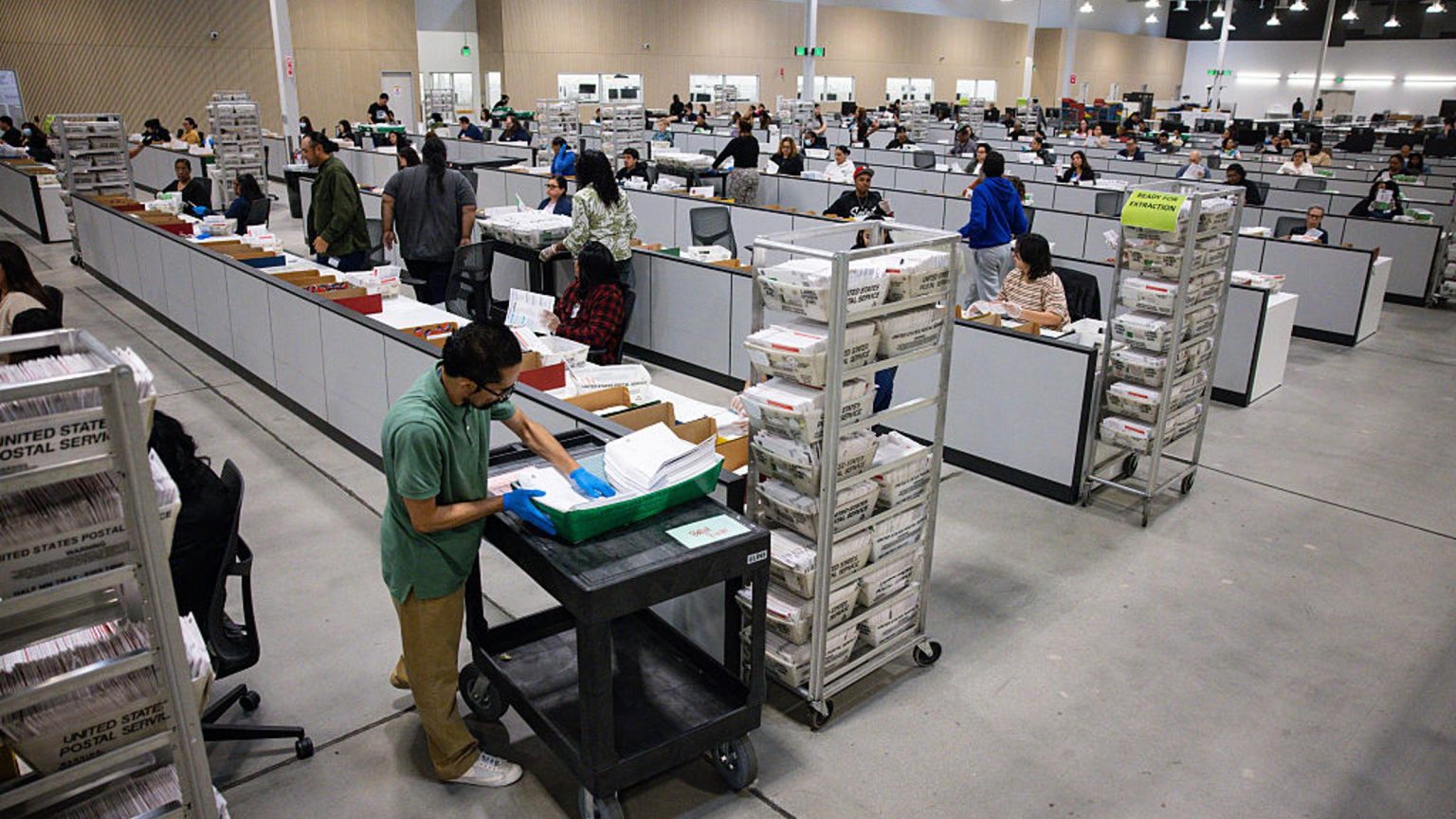
In California, when a ballot contains errors, voters are given 22 days to “cure” it, a timeline that was already reduced by the state assembly last year. This process of curing errors in ballots is not unique to California, as it is allowed in 34 other states and the District of Columbia, including battleground states like Pennsylvania, Arizona, Georgia, North Carolina, and Nevada. This practice can contribute to the length of time it takes to finalize national elections, as ballots are carefully reviewed and corrected before being counted.
The issue of curing ballots has become a topic of controversy, particularly due to the false claims of election fraud that emerged in the aftermath of the 2020 presidential election. While voters from all political affiliations utilize mail-in voting, Democrats tend to use this method more frequently. This is significant because mail-in ballots take longer to count than in-person votes, leading to a phenomenon known as “the blue shift” or “red mirage.” As more mail-in ballots are counted, the results often shift towards Democrats, which has been seized upon by President Trump and other Republicans to criticize mail-in voting.
President Trump has made baseless accusations that mail-in voting is prone to fraud, and has alleged without evidence that the 2020 election, won by President Joe Biden, was “stolen” from him through the use of mail-in ballots. These claims have created a divisive and contentious atmosphere surrounding the electoral process, with many Republicans calling for stricter measures to prevent what they perceive as fraudulent activities related to mail-in voting. This has led to increased scrutiny and challenges to the curing process in various states, as concerns about the legitimacy of election results continue to be raised.
The controversy surrounding ballot curing and mail-in voting has underscored the importance of ensuring that all votes are accurately counted and that every voter has the opportunity to participate in the electoral process. While the curing process allows for errors in ballots to be corrected, it has also become a target for those seeking to delegitimize election results and sow doubt in the integrity of the voting system. As states continue to grapple with these challenges, it is crucial to uphold the principles of democracy and ensure that all citizens have confidence in the fairness and transparency of the electoral process.
Moving forward, it will be essential for policymakers, election officials, and the public to work together to address concerns about ballot curing, mail-in voting, and election integrity. By promoting education, transparency, and accountability in the electoral process, states can help to restore trust and confidence in the democratic system. As the nation continues to navigate the complexities of modern elections, it is imperative to uphold the values of fairness, accuracy, and inclusivity to ensure that every vote is counted and every voice is heard.