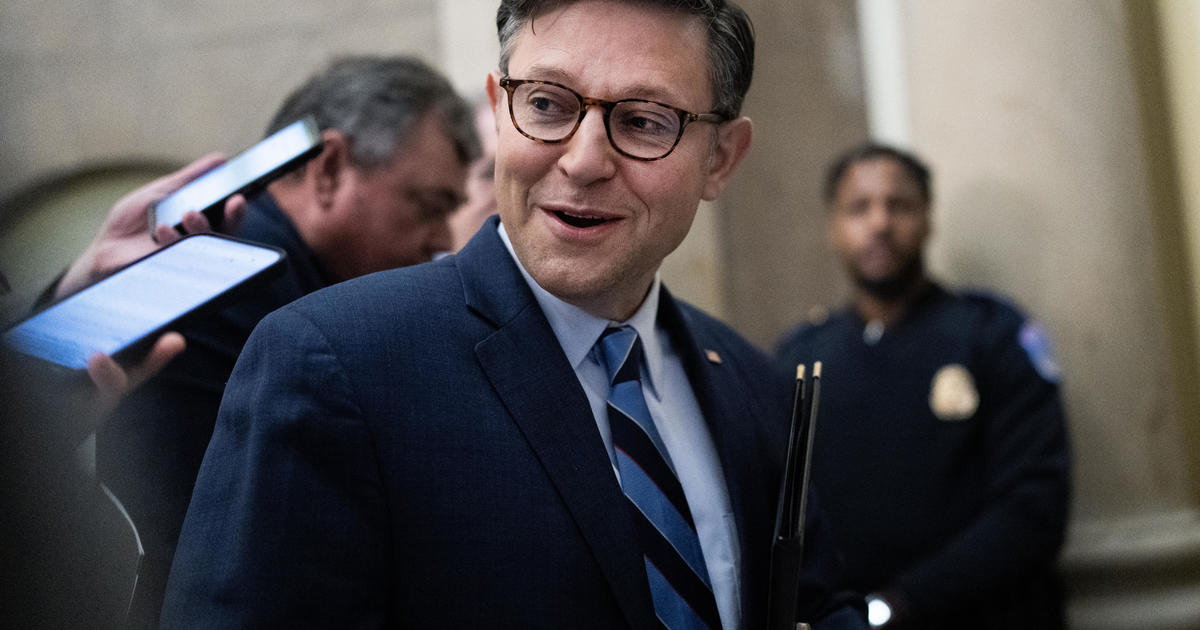
House Speaker Mike Johnson made an announcement on Tuesday that the House would proceed with a plan to vote on a partisan stopgap measure to keep the government funded this week, despite facing opposition from Democrats and intra-party pushback that resulted in the foiling of a vote on the measure last week.
“Congress has an immediate obligation to do two things: responsibly fund the federal government and ensure the security of our elections,” Johnson stated, outlining that the House would vote on the six-month continuing resolution and accompanying voting legislation on Wednesday.
The previous week, House GOP leaders withdrew the vote from the schedule due to opposition from members of their own party, which likely would have led to the bill’s failure. Johnson emphasized that Republicans are “in the consensus-building business” and delayed the vote until this week while leadership worked to garner support.
With a deadline at the end of the month to fund the government, a short-term measure is necessary to avoid a government shutdown. The plan put forth by House Republican leadership is a continuing resolution to keep the government funded through March 28, while also attaching a noncitizen voting bill that Democrats generally oppose.
The measure, known as the SAVE Act, is designed to target the rare occurrence of illegal voting by requiring proof of citizenship to register to vote in federal elections. Despite current law stating that only U.S. citizens are eligible to vote in federal elections, the legislation passed the House earlier this year.
“I urge all of my colleagues to do what the overwhelming majority of the people of this county rightfully demand and deserve — prevent non-American citizens from voting in American elections,” Johnson stressed on Tuesday.
Senate Majority Leader Chuck Schumer urged Johnson to reconsider his plan, stating that it would only lead to a dead end. Schumer emphasized the need for bipartisan cooperation to prevent a harmful government shutdown.
Democrats in the Senate have made it clear that the plan is dead on arrival in the upper chamber, and the bill’s passage through the House remains uncertain. The addition of the voting measure is seen as an incentive for House conservatives who often oppose continuing resolutions to fund the government. Despite leadership’s efforts to build support among the conference, some members have voiced opposition to the plan.
“Speaker Johnson is fake fighting by attaching a bright shiny object (that he will later abandon) to a bill that continues our path of destructive spending,” Rep. Thomas Massie, a Kentucky Republican, expressed on X after Johnson announced the vote. “I’m a hell no.”
When asked about the likelihood of the bill not passing, Johnson told reporters that he is focused on getting it passed and is not considering alternative options.
As the debate continues in Congress, the fate of the stopgap measure and the voting legislation remains uncertain. Johnson’s determination to push forward with the plan despite challenges from both parties sets the stage for a contentious showdown in the coming days.
In the midst of political maneuvering and partisan disagreements, the fundamental responsibility of Congress to fund the government and protect the integrity of elections hangs in the balance. The outcome of the upcoming vote will not only impact the immediate future of government operations but also shape the broader landscape of political discourse and decision-making in Washington.
Stay tuned for further updates as the House prepares to take action on the stopgap measure and voting legislation in the days ahead. The outcome of this pivotal moment in congressional proceedings will have far-reaching implications for the future of governance and democracy in the United States.