Pentagon Releases Sixth Batch of UAP Files, Detailing Secretive Studies and Strange Encounters
Washington — The Defense Department on Friday published its latest tranche of records concerning unidentified anomalous phenomena, commonly known as UAPs or UFOs. The release consists of 71 files, with 67 coming from the Pentagon and four from Colorado law enforcement. Among them are 55 PDF documents, 15 videos and one audio recording. Most of the material contains redactions, and the documents span more than seven decades, from 1952 to 2025.
The newest release is part of an ongoing effort by the All-domain Anomaly Resolution Office, or AARO, to bring the government’s long and complicated record on unexplained sightings into public view. Some files are new, while others have circulated among researchers for years, though Friday’s versions may include previously withheld details.
A significant portion of the release concerns a little-known military program called the Advanced Aerospace Weapon System Applications Program, or AAWSAP. Established by the Defense Intelligence Agency in 2008, AAWSAP was created to assess aerospace technologies that could emerge over the next few decades and pose a potential threat to the United States. The program ended in 2012. One of the documents outlines the program’s objective: to understand the physics and engineering of “advanced aerospace weapon system applications” and to consider “breakthrough technologies and applications that create discontinuities in currently evolving technology trends.” Contractors were asked to look as far ahead as the year 2050.
AAWSAP produced a series of Defense Intelligence Reference Documents, or DIRDs, and 37 of them are included in Friday’s release. The topics read like a catalog of science-fiction concepts: warp drives, wormholes, antigravity, negative mass propulsion and invisibility cloaking. Most of these documents have been publicly available for years, often obtained through Freedom of Information Act requests. Still, the Pentagon pointed out that the DIRDs should not be interpreted as proof that such technologies exist or that the government has validated them. They are “reference and synthesis products rather than original research,” according to the notes accompanying the release.
Among the DIRDs, however, is a document that is far less speculative in tone. This 38-page technical study, written in 2010, examines possible “evidence of unintended injury to human observers by anomalous advanced aerospace systems.” The report describes three people described as “fit and active individuals” who encountered an “anomalous aerospace-related event” and later experienced a range of serious health problems. Researchers said the individuals were “antennae engineers” and reported heat and redness on their skin, hair loss and signs of radiation illness. One person “over several years developed signs of malignant transformations.” The document did not identify the cause of the exposure, but the author compared the cases with 42 published and roughly 300 unpublished incidents of conventional radiofrequency injury where the source of the radiation was known. The author concluded that enough incidents had been accurately reported and enough medical data gathered “to support a hypothesis that some advanced systems are already deployed, and opaque to full US understanding.”
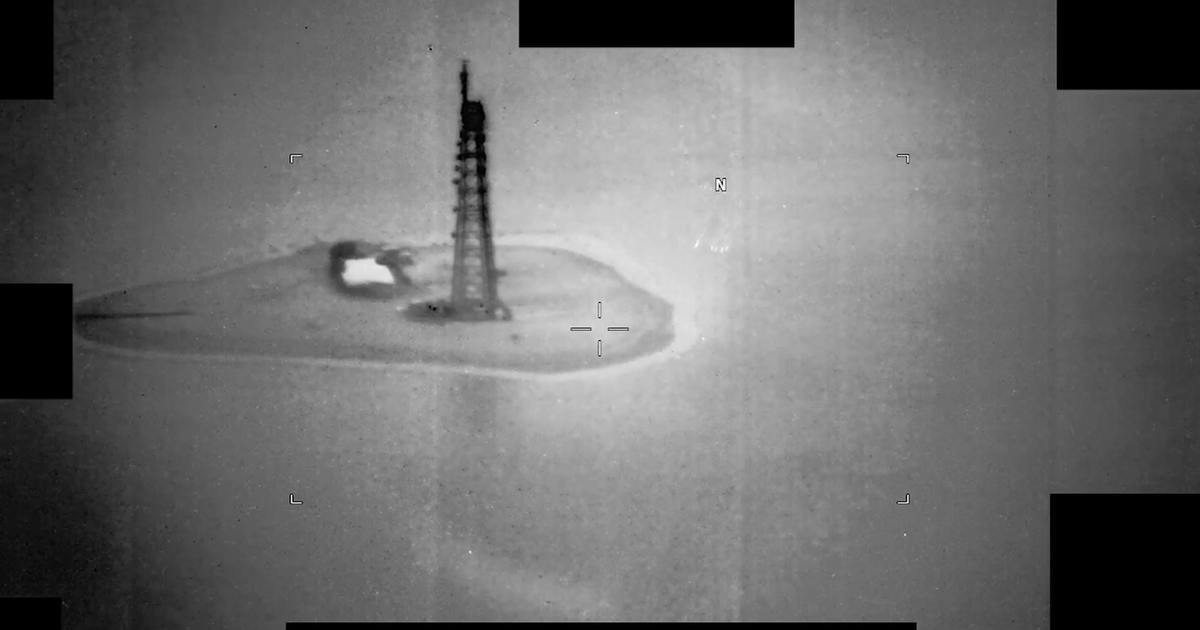
The videos included in the release are, for the most part, similar to footage released in previous batches. They include grainy clips from military cameras showing objects moving quickly across the sky, whose identities remain unresolved. One incident from 2022, filmed over the Middle East, features a UAP “traveling at various speeds between 80-180 miles per hour.” In the accompanying mission report, operators said the object was between one and two meters in size and was “flying sporadically within the target area.” The report does not identify the object or provide an explanation for its behavior.
Another video captured over the Middle East in 2025 shows half a dozen objects flying together. According to the accompanying report, there were “six small spherical objects” that “seemed to be agile” and were “frequently changing direction.” That incident also remains unexplained. The release does not reveal what military units were involved or what sensors recorded the footage.
The four videos from Colorado came from local law enforcement and were submitted to the Pentagon’s UAP investigation office. According to the military’s notes, the clips were captured on cellphone cameras in October 2023 and have been partially blurred. In one video, the reporting officer described the phenomenon as “silent” and as featuring “red, blue, and green flashing lights.” As with the other videos, the objects are unresolved.
Friday’s release also includes material from the early years of official UFO investigations. One notable item is an hour-long audio recording and transcript of a 1952 presentation by Air Force Captain Edward J. Ruppelt. At the time, Ruppelt was heavily involved in the Air Force’s effort to evaluate UFO reports, and he explained that agency investigators were struggling to explain a significant portion of the cases they had studied. He said that of the 800 UFO reports the Air Force had investigated, roughly 20% were “very good reports offered by very reliable people” and that “absolutely no conclusions can be drawn.”
Ruppelt later became the first director of Project Blue Book, the Air Force’s formal UFO study program, which ran from 1952 to 1969. Several additional Project Blue Book files were also included in the latest disclosure.
The release comes at a time when the U.S. government has been under increasing pressure from lawmakers, researchers and former military personnel to be more transparent about what it knows about UAPs. Over the past several years, Congress has held hearings featuring former defense officials and military aviators who have described encounters with objects that defy easy explanation. The Pentagon insists that most UAP sightings are probably misidentified aircraft, drones, balloons, weather phenomena or sensor artifacts, but it acknowledges that a small percentage of cases remain unexplained even after thorough review.
In addition to Friday’s release, the Pentagon announced earlier this week that it had created a legal waiver allowing current and former employees who are bound by nondisclosure agreements to share UAP-related information with the government. The move could encourage people who have worked on classified programs to come forward with information that might otherwise remain hidden. It does not automatically make any information public, but it gives those individuals a way to speak to authorized channels without fear of violating their security agreements.
The Defense Department’s latest release is not a conclusion to the UAP story, but rather another chapter in a long and ongoing effort to manage a subject that has moved from the fringes of national security discourse to the center of public and legislative attention. The files from 1952 to 2025 will be parsed by historians, researchers and skeptics alike, each looking for evidence of what the government knew and when it knew it. For now, the clearest takeaway from Friday’s batch is that a substantial number of records remain unreleased or partially redacted, and the Pentagon is still not offering definitive answers for many of the incidents captured on film.
The Pentagon has said it will continue to review and release additional records as part of its commitment to transparency, while also making clear that the documents themselves often raise more questions than they answer. The DIRDs, for example, contain detailed technical discussions of concepts that remain purely theoretical, not evidence of recovered alien spacecraft. Yet the medical document, the mission reports and the law enforcement videos show that the military and local authorities are still documenting encounters that they cannot fully explain.
For those who follow the UAP issue closely, Friday’s release is likely to be seen as a mixed bag: a trove of historical documents and new footage, but also a reminder of how much remains unknown. The redactions throughout the file set mean that even this “full release” is only partial. Still, the sheer range of material — from a 1952 Air Force briefing to 2025 footage from the Middle East — underscores how persistent the UAP phenomenon has been across decades, continents and branches of government.
As AARO and other Pentagon offices continue their work, the public will almost certainly see more releases in the future. The question is whether any of them will finally reveal something conclusive. Based on the latest batch, that moment has not arrived yet. But the effort to pull back the curtain on the government’s long engagement with UAPs is, at least, continuing. The combination of reclaimed historical audio, newly surfaced documents and previously unseen footage shows that the official record is far from closed.