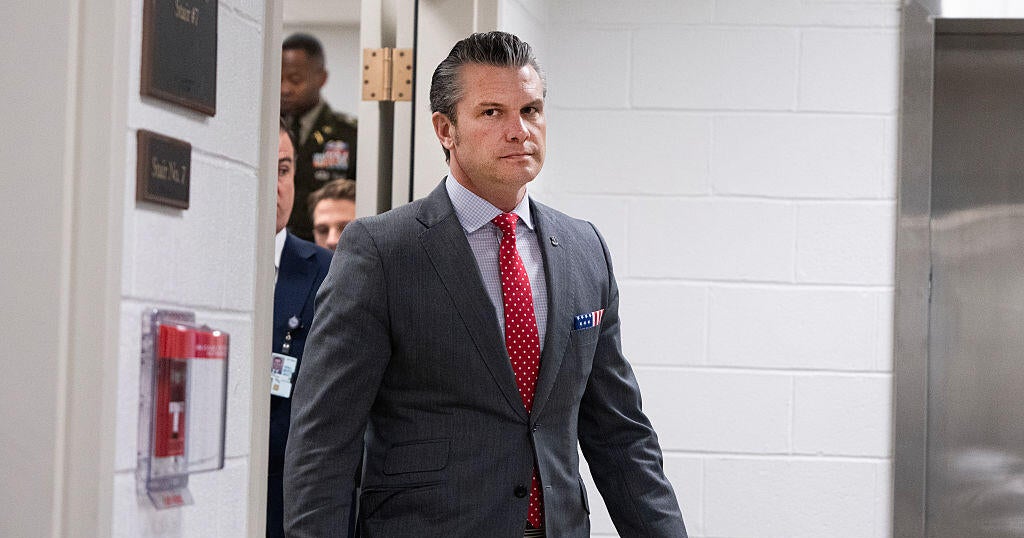
In a recent development that has sparked heated debates across political lines, Defense Secretary Pete Hegseth has firmly stated that the Pentagon will not release the full video of the controversial “double tap” strike that resulted in the deaths of two survivors from a U.S. military operation against alleged drug traffickers. The incident in question occurred on September 2, involving a U.S. attack on a suspected drug boat in the Caribbean.
During a session on Capitol Hill, Defense Secretary Hegseth, alongside Secretary of State Marco Rubio, briefed senators on the incident, revealing the complexity and sensitivity surrounding the military operation. Despite the briefing, Hegseth made it clear that the public would not gain access to the complete, unedited footage of the event, emphasizing the confidential nature of military operations, “Of course, we’re not going to release a top-secret, full, unedited video of that to the general public,” said Hegseth, underscoring the restrictions on such classified material.
The decision not to release the full video has not been without controversy. Over the past two weeks, Democrats, in particular, have exerted pressure on the Pentagon, eager to scrutinize the footage themselves following reports that U.S. forces had targeted individuals who had survived the initial boat strike. According to sources, these individuals were purportedly waving for assistance before they were attacked a second time—a maneuver often referred to as a “double tap.”
The issue has attracted significant attention within both chambers of Congress. A select group of lawmakers had the opportunity to view the video in question, and arrangements were made for members of both the Senate and House Armed Services committees to view the footage. Hegseth confirmed that the video would be shared with the appropriate committees but refrained from wider distribution or public release.
Senator Mark Warner of Virginia, a leading Democrat on the Senate Intelligence Committee openly criticized the Pentagon’s handling of the situation, suggesting a deliberate attempt to delay broader access to the video. “I think they’re trying to run out the clock in terms of holding off giving it to the rest of the senators, so then the Senate doesn’t see it before we break for the holidays,” Warner expressed his frustration to reporters.
In a rare moment of bipartisan agreement, Republican Senator Lindsey Graham from South Carolina echoed the sentiments of his Democratic colleagues, arguing that all members of Congress should be allowed to view the footage. “I think the video should be released to everybody in Congress,” stated Graham. “The least of my concerns is this friggin’ video – release it — make your own decisions, but this is lawful.”
The incident has broader implications beyond the immediate controversy over video transparency. It highlights ongoing U.S. military operations in the Caribbean targeting drug trafficking. The U.S. Southern Command recently announced that strikes against three suspected drug vessels had resulted in the deaths of eight alleged smugglers, bringing the total number of such fatalities to over 90 since missions commenced in early September.
Senator Graham further interrogated the ultimate objectives of the U.S. presence and actions in the region, specifically inquiring if they align with broader strategic goals such as the potential removal of Venezuelan President Nicolás Maduro. “I asked the question, ‘What happens when he leaves?’ And they say that this is counter-drugs; ‘it’d be nice if he left,'” Graham reported, dissatisfied with the ambiguous responses he received. “That’s not a good answer. I want to reassert again — you cannot allow this man to be standing after this display of force.”
As the debate rages on concerning the accessibility of classified military operations to elected officials, the broader discourse extends into the effectiveness of U.S. military strategy in the region, dealing with drug trafficking, and the implications these tactics may have on U.S. foreign policy, particularly in relation to Venezuela and its controversial leadership. The incident sheds light on the secretive, often intricately woven fabric of military and diplomatic maneuvering, necessitating a vigilant eye from various stakeholders, including the media, the public, and especially lawmakers tasked with overseeing and ensuring accountability in such critical military engagements. As the story unfolds, the Pentagon’s withholding of the full video remains a point of contention, symbolizing the perennial struggle between national security imperatives and demands for transparency and oversight in military operations.