As the United States gears up for its monumental 250th anniversary, two major organizations, Freedom 250 and America250, are in a frenzied race against time to orchestrate celebrations reminiscent of the nation’s storied past while aiming for unity. However, intricate plans, political undertones, and public disagreements have thrust the planning into the spotlight, revealing starkly contrasting visions for the upcoming national jubilee.
Washington erupted with buzz when several headline artists abruptly withdrew from a concert series tied to the anniversary, shedding light on the confusion and controversies marring the event’s preparations. The concert is part of a series of happenings organized by Freedom 250, a White House-connected group under President Donald Trump’s administration.
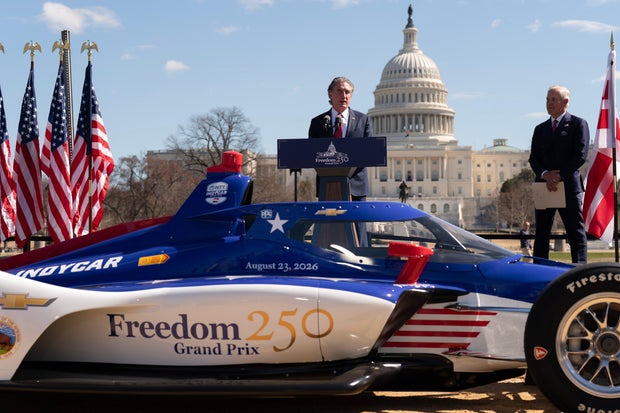
Freedom 250 is tasked with an ambitious ‘Great American State Fair’ set to be staged on the iconic National Mall. This fair promises a kaleidoscope of activities ranging from state exhibits and industry showcases to family-friendly attractions and a UFC match event on the White House Lawn—an unprecedented addition deeply intertwined with the organization’s bold approach to marking the semi-quincentennial. Further amplifying the grandeur, a massive Ferris wheel is expected to stand as a testament to the joy and community spirit the day intends to evoke. Amid these sprawling preparations, Freedom 250 will also manage the “Freedom 250 Grand Prix” in Washington, D.C. at the end of August, featuring a street race circuit which was highlighted during an announcement with Interior Secretary Doug Burgum.
Despite these high-flying plans, the commitments of popular performers have dramatically waned. Citing blatant politicization as their chief concern—a claim first made by the artists, and eventually underscored by Trump’s harsh criticisms on social media platforms about the event turning partisan, even proposing a replacement MAGA rally instead. The outburst did little to assuage fears about the misuse of such a historic marker for overt political gains. In a pivotal tweet, President Trump suggested dismissing the concert over what he called “overpriced singers” who “do nothing but complain,” compelling him to lean towards making a “major speech” at the fair.
On the parallel trajectory is America250, another significant force driving the 250th-anniversary celebrations but with a markedly different ethos. As a Congress-established entity from back in 2016, America250 operates under a nonpartisan banner with an inflexible commitment to celebrate the signing of the Declaration of Independence through a diverse set of events that transcend the national landscape down to local festivities. The organization has already shown a breadth in its undertakings, having left its mark on notable events like the Super Bowl and the Rose Parade. True to its inclusive agenda, America250 has plans running deep into the fabric of American society on July 4th, with celebrations ranging from Time Square’s ball drops to hosting America’s Block Party in multiple cities.
At its helm, several bipartisan members bring a wealth of varied political insights, ensuring that the programming remains faithful to American values—something Rosie Rios, the appointed chair and former U.S. Treasurer under Obama, has shown staunch support for. America250 has positioned itself as the custodian of America’s vast historical narrative, aiming to deliver celebrations that reach every American doorstep without bias.
Amid the unfolding scenario, critical voices have embarked on alternative narratives. Some performers who opted out have expressed their disillusionment openly, while others, like conservative commentator Matt Walsh, have rebuked the idea of swapping joyous artistic displays for political rhetoric, hinting at the dire need for celebrations that pull citizens together rather than wedge them apart.
As the nation rolls closer to the celebratory weekend, these two organizing bodies—each with its distinct flavor of patriotism—continue their work. While one seems to lean heavily into a grand spectacle colored by present-day political narratives, the other lifts the timeless essence of justice, liberty, and the American spirit. The coming days will see whether these bicentennial festivities will indeed transcend the frays of current times or if they will emerge as a moment of retrospection, realignment, and hopefully, national unity. The reality rests in the hands of not only those who are orchestrating these events but also the everyday Americans whose ancestors’ legacies these celebrations seek to homage. As such, the sesquicentennial moment presents not just a time for grandeur but a critical juncture for reflecting on what truly makes America the beacon of hope it has strived to be over 250 tumultuous yet triumphant years.