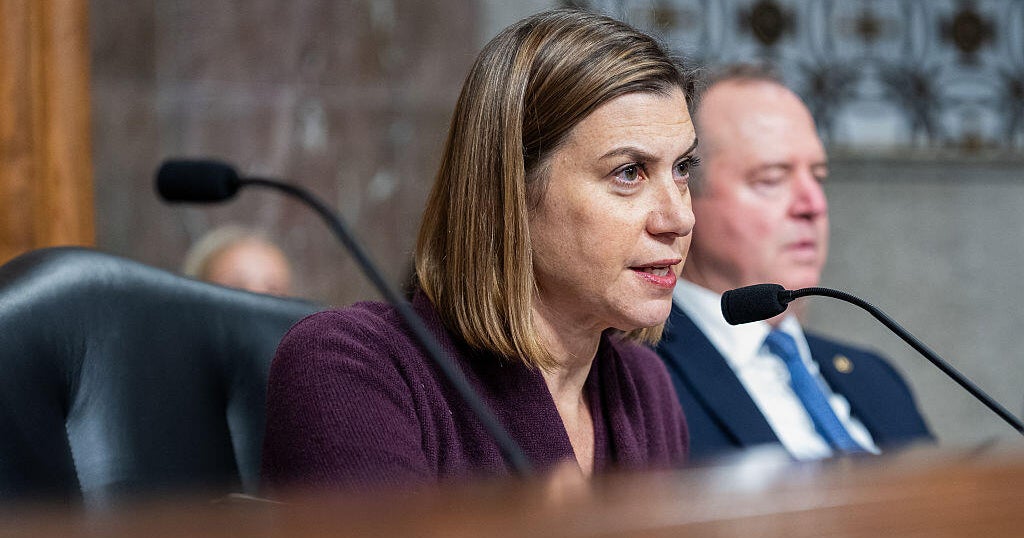
In a development that highlights the intensifying political tensions in Washington, the Federal Bureau of Investigation (FBI) has reportedly initiated an inquiry into six Democratic members of Congress following allegations of “seditious behavior.” These charges were levied by President Trump, who has accused the lawmakers of undermining the law through their recent actions and statements.
The controversy centers around a video released last week, featuring the six Congressional members. They addressed service members and intelligence community operatives, urging them to “refuse illegal orders.” This call has stirred significant debate regarding the limits of lawful military obedience and the responsibilities of those in the armed services.
The lawmakers under investigation include Senator Elissa Slotkin of Michigan, Senator Mark Kelly of Arizona, Representative Jason Crow of Colorado, Representative Chris Deluzio of Pennsylvania, Representative Maggie Goodlander of New Hampshire, and Representative Chrissy Houlahan of Pennsylvania. While specific details of the inquiry remain confidential, the involvement of the FBI’s counterterrorism division was confirmed by Senator Slotkin. She disclosed that the group was notified about the inquiry late Monday night.
Adding a layer to this unfolding scenario, the Pentagon has also launched a review concerning Senator Mark Kelly, who served as a U.S. Navy captain prior to his political career. The Defense Secretary Pete Hegseth has requested the Secretary of the Navy to conduct a thorough review of Kelly’s conduct, with findings due by December 10. This review will determine whether there is sufficient ground to recall Kelly to active duty for potential court-martial proceedings in relation to his participation in the controversial video.
These actions by the FBI and the Pentagon have ignited a flurry of responses from various corners. At a local event in Michigan, Senator Slotkin criticized President Trump’s use of the FBI, labeling it a “scare tactic.” She argued that the president’s penchant for utilizing federal agencies against his perceived adversaries compelled them to create the video. She elaborated on the necessity of assuring the public and government employees that they are not alone in facing these unfolding political disputes.
On the defensive, the implicated House and Senate members have openly refuted the intimidation efforts, vowing to continue fulfilling their duties and upholding the Constitution. They sent a message that no level of harassment or intimidation would hinder them from performing their legislative responsibilities.
In the Senate, reactions also varied. Several Republican senators have come out in defense of their colleagues across the aisle. Senator Lisa Murkowski of Alaska criticized the accusations of treason and sedition as reckless and misguided. She emphasized that the Department of Defense and the FBI should prioritize more pressing national concerns rather than what she views as frivolous investigations. Similarly, Senator John Curtis of Utah expressed his respect for Senator Mark Kelly, stressing the value of his public service and personal integrity.
The inquiry into these six congressional members opens up several critical questions regarding the balance of powers, the role of federal agencies within political disputes, and the responsibilities of elected officials in guiding the conduct of the military and intelligence sectors. This incident has further polarized the already contentious atmosphere in Washington, reflecting deeper national divisions over governance and legal interpretations.
As this story continues to unfold, it will be crucial to monitor how these investigations progress and what implications they may have for civil-military relations, Congressional independence, and the broader political landscape. The outcomes of the FBI and Pentagon reviews could potentially have far-reaching effects on political alignments, public trust in institutions, and the interpretation of sedition and loyalty within the framework of American law.
This case represents not just an isolated feud between a president and some members of Congress, but a foundational debate about the limits of executive power, the independence of Congressional responsibilities, and the role of the military in political life. As more details become available and further reactions emerge, the nation watches closely to see how these tensions will be resolved and what precedents might be set for future interactions between the elected officials and the various arms of the federal government.