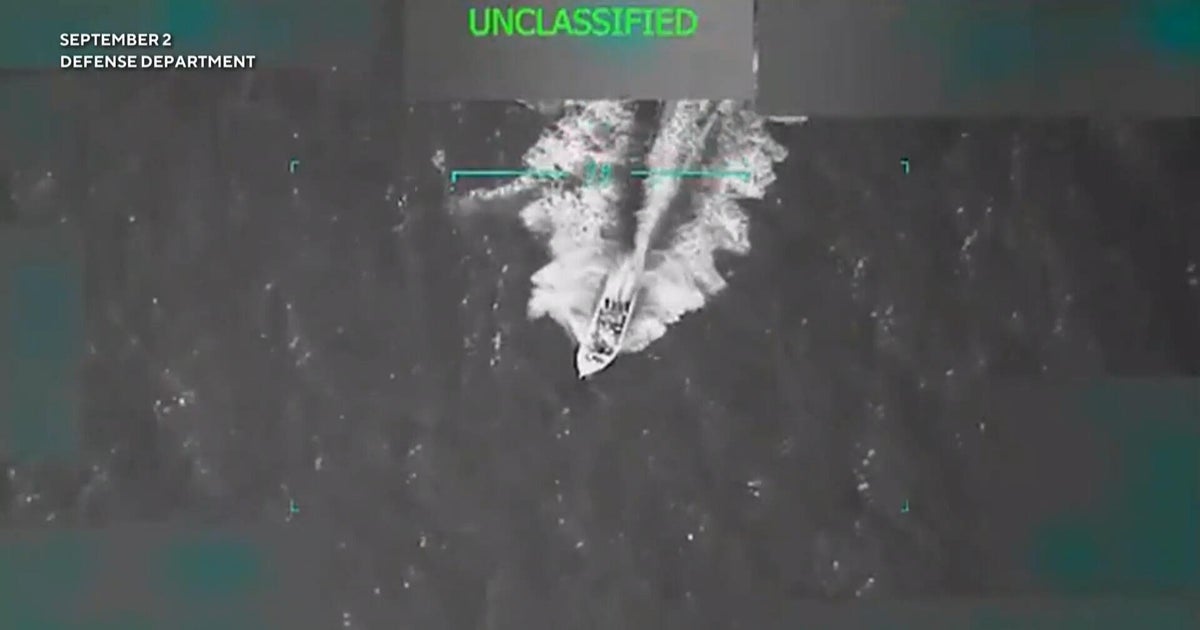
In early September, a significant and controversial military action initiated by the U.S. marked the beginning of a persistent and contentious campaign against alleged drug trafficking operations linked to Venezuela. This ongoing series of events, which has resulted in a string of military strikes targeting maritime vessels purported to be carrying narcotics, has recently come under intense scrutiny following revelations about multiple strikes on a single vessel and potential breaches of international laws of war.
On September 2, under directives from the Trump administration, the U.S. military executed an airstrike on a boat allegedly linked to Venezuelan drug activities. The strike, which President Trump disclosed to reporters during an event that day, was initially described as targeting a vessel carrying drugs presumably headed towards the United States. Trump’s statement on social media later characterized the incident as a decisive action against the Tren de Aragua, which is a Venezuelan gang the U.S. government had earlier in the year labeled as a terrorist group. The President even shared a brief video clip purportedly showing the attack, which supported his narrative of a robust response to cross-border criminal threats.
The narrative, however, became significantly complicated when Secretary of State Marco Rubio later suggested that the vessel was possibly en route to Caribbean destinations like Trinidad, rather than directly to the U.S. Despite these conflicting accounts on the destination, the administration maintained that the action was in defense of U.S. national security and interests.
Further controversy arose the following day when Defense Secretary Pete Hegseth, in an interview with Fox and Friends, contradicted claims from Venezuelan authorities disputing the legitimacy of the strike video. Hegseth asserted having witnessed the attack live, stating the government’s precise awareness of the boat’s occupants and their activities. By September 4, Hegseth robustly defended the legality of the strike, framing it as a necessary measure against what he described as an assault on the American populace by narco-traffickers.
The ongoing military campaign saw additional operations including a strike on September 15, where three more individuals, described as terrorists, were killed. The administration later classified these operations within the context of a “non-international armed conflict” against drug cartels, categorizing those killed as “unlawful combatants.”
Over the subsequent months, the military strikes continued frequently, with the administration targeting more than 20 boats by mid-November and resulting in the death of over 80 individuals. This widespread campaign led Admiral Alvin Holsey, commander of U.S. Southern Command, to announce his retirement by year-end, shortly after CBS News reported survivors from one of these strikes, prompting a complex legal and ethical debate regarding the operations.
One of the most contentious aspects came to light following a Washington Post report in late November, which disclosed that the initial strike on September 2 had left survivors clinging to debris, only to be killed in a subsequent follow-up strike. This account prompted bipartisan calls in Congress for thorough investigations, with leading members from both the Senate and House Armed Services Committees expressing concerns over the legality and morality of such actions.
By November 30, the discourse in political circles intensified with Senator Tim Kaine suggesting that if the reports were accurate, the follow-on strike could potentially constitute a war crime. Amid these discussions, Trump, on Air Force One, distanced himself from the decision for a second strike, implying reliance on Hegseth’s justification, who in turn emphasized the operation’s adherence to combat protocols without explicitly ordering a follow-up attack.
In December, White House Press Secretary Karoline Leavitt confirmed the occurrence of a second strike but denied it was under Hegseth’s direct order. The evolving situation saw military leaders and lawmakers pledging to uncover more details and ensure accountability.
As the situation unfolded, Hegseth maintained he hadn’t viewed the second strike and referenced the complexities and immediate decision-making requirements inherent in military operations he termed “fog of war.” Concurrently, Trump expressed a lack of detailed knowledge regarding the operational specifics beyond the initial strike, emphasizing the overarching strategy against narco-terrorism.
This ongoing military and political saga highlights the challenging and often murky intersection of national security, international law, and ethical warfare, sparking debates nationally and internationally about the appropriate conduct in combating transnational threats like drug trafficking and terrorism.