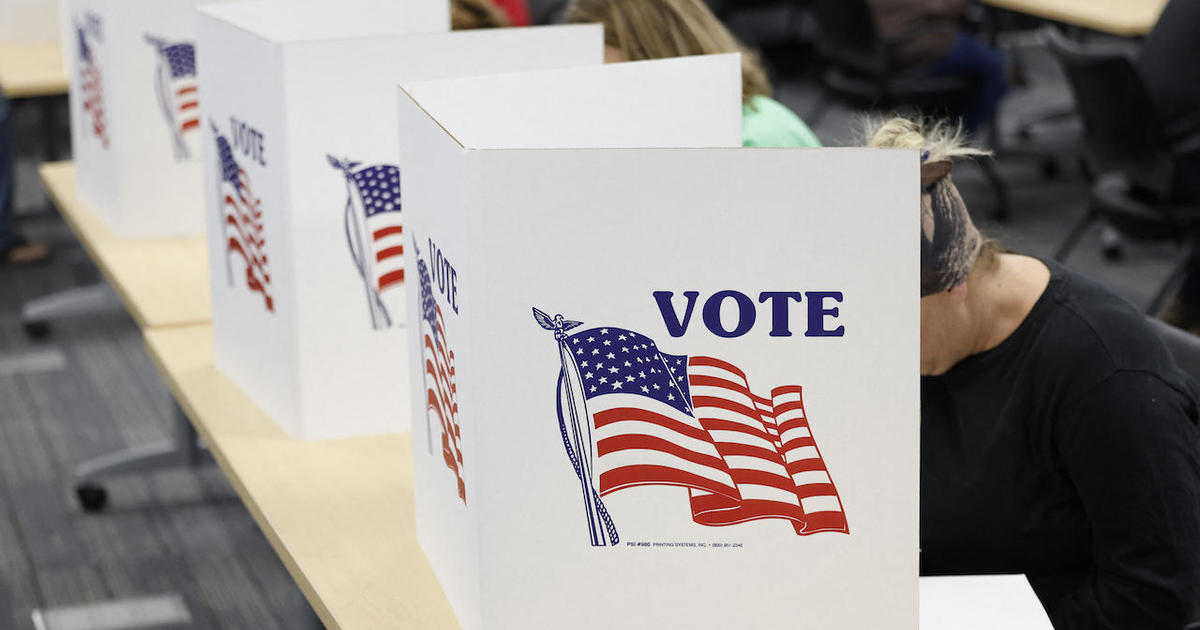
As the United States approaches Election Day, the atmosphere is filled with tension and anxiety, a sentiment that has prevailed throughout this entire election cycle. Voter Connie Wilson expressed her concerns, stating, “There’s a lot of drama everywhere. People have lost contact with humanity.”
Reflecting on the historical context, the nation was similarly anxious during George Washington’s inauguration at Federal Hall in Lower Manhattan. At that time, the country was burdened with debt, the Constitution was fragile, and the judicial system was still in its infancy.
Fast forward to the present day, where the first presidential election post-COVID-19 and the societal upheaval of 2020 has heightened the collective anxiety of the American people. A survey conducted by the American Psychological Association revealed that 69% of Americans are experiencing significant stress related to the election, with 72% fearing that the outcome could lead to violence. Additionally, more than half of the population is worried that the election results could signal the demise of democracy.
While there may not be a simple solution to alleviate our national unease, one principle remains steadfast—fair play. This entails accepting defeat gracefully, even when the margin of loss is razor-thin. A poignant example of this was demonstrated by Democrat Kimberly Pope Adams during her campaign for a seat in the Virginia House of Delegates.
Despite investing 18 months of campaigning and nearly $6 million in spending, Adams found herself trailing by 78 votes on election night. Rather than resorting to denouncing her opponent, alleging fraud, or claiming a stolen election, Adams chose to adhere to the state’s laws and requested a recount. The recount yielded an additional 25 votes for Adams, but it was insufficient to secure victory.
In reflecting on her defeat, Adams remarked, “It was heartbreaking. I’m not gonna lie. It was heartbreaking. But it wasn’t emotional because I didn’t believe it. It wasn’t emotional because I didn’t trust it. It was only emotional because it wasn’t what I hoped for, but I accept it.” Her graceful acceptance of the outcome serves as a valuable lesson in embracing democracy and our constitutional republic, emphasizing the importance of prioritizing the nation’s well-being over personal ambition.
Adams further emphasized the significance of acknowledging a narrow defeat, urging individuals to remember their values and the importance of abiding by the rules of the democratic process. Regardless of the outcome, whether in victory or defeat, it is essential to uphold the principles of democracy for the greater good of the nation.
In a time where political polarization and divisiveness have reached unprecedented levels, Adams’ example serves as a reminder of the inherent value of integrity, sportsmanship, and a commitment to upholding democratic norms. By prioritizing the integrity of the electoral process and accepting the outcome with grace and dignity, individuals can demonstrate their unwavering dedication to the democratic ideals upon which the nation was founded.
As Election Day approaches, the American people are faced with a critical choice—not only in selecting their representatives but also in upholding the fundamental principles of democracy. By embracing fair play, respecting the outcome of the electoral process, and prioritizing the collective well-being of the nation over individual interests, voters can reaffirm their commitment to the enduring values that define the American democratic system.
In a time of uncertainty and heightened anxiety, the importance of upholding democratic principles and respecting the outcome of the electoral process cannot be understated. As the nation navigates the complexities of the current political landscape, it is crucial for individuals to reflect on the lessons of grace, integrity, and sportsmanship exemplified by individuals like Kimberly Pope Adams. By embodying these values and prioritizing the greater good of the nation, Americans can collectively contribute to a more cohesive, inclusive, and resilient democracy for future generations to come.