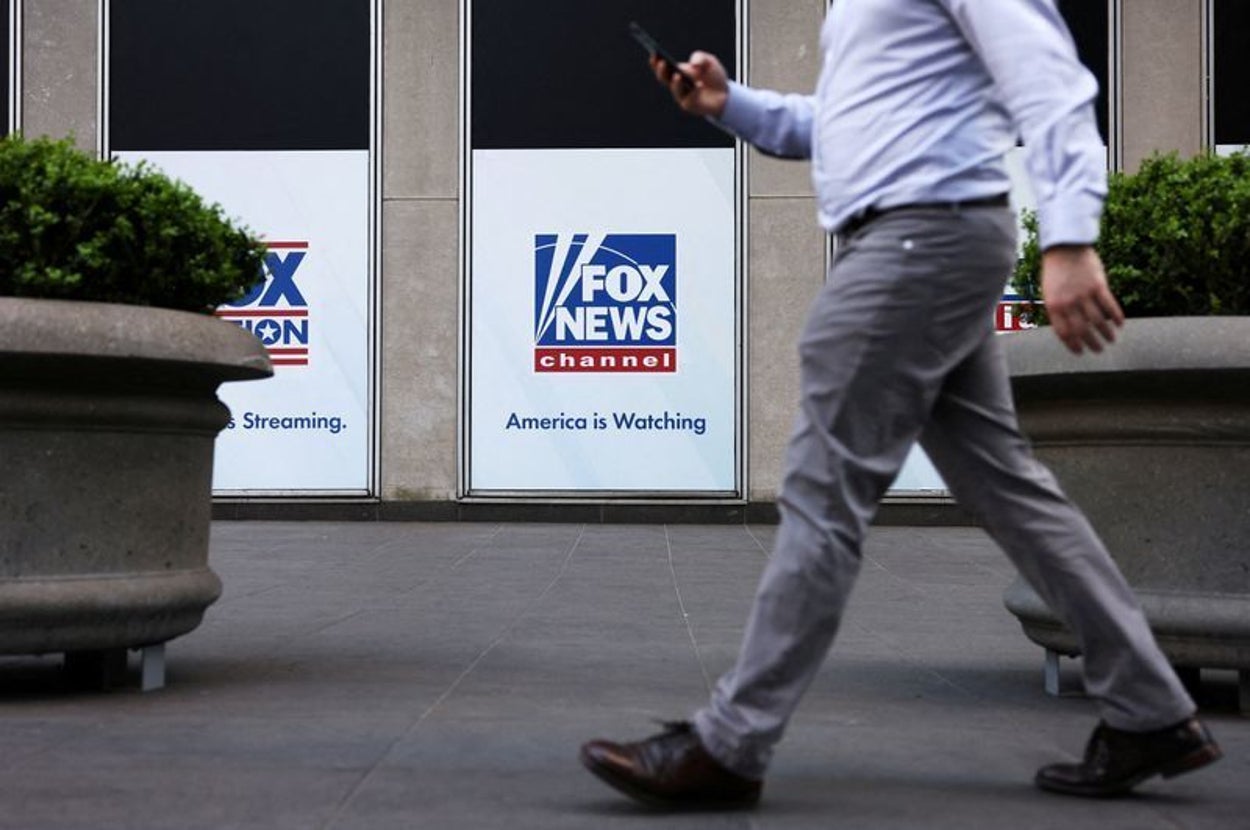
At the turn of December, an intriguing corporate drama unfolded at Fox News involving high-level engagements and contentious discussions over the coverage of President Donald Trump’s election fraud claims. In a moment of corporate upheaval captured within a trove of emails, Fox executive Suzanne Scott expressed severe disapproval towards a Fox reporter’s fact-check of one of Trump’s election-related conspiracy theories broadcasted live. Scott communicated to a fellow executive that such straightforward fact-checking must be halted immediately, noting pointedly that “This is bad for business.” The impetus behind her frustration likely mirrors the underlying tensions many news corporations face when editorial integrity collides with viewer expectations and business outcomes.
In parallel, court documents illustrate a scenario where Fox executives are portrayed deliberating over the need to maintain a delicate balance. They discussed the importance of “straddling the issue” to avoid alienating a significant portion of their viewer base, which favored Trump’s narratives. It reflects a broader media issue of how news outlets navigate highly polarized political landscapes without compromising on journalistic ethics or losing audience support.
Central to the evolving saga is Dominion Voting Systems, the electoral services company that found itself at the heart of numerous unfounded allegations following the 2020 U.S. Presidential elections. Dominion emerged not just to defend its reputation and business but pushed back with a legal force against Fox News by filing a potentially precedent-setting defamation lawsuit. Dominion’s legal team purportedly sent over 3,600 emails to Fox News in an effort to correct misreported information and counteract the spread of false claims aired between November 8, 2020, and January 26, 2021. Among these communications, they pinpointed 20 specific statements they deemed defamatory and legally actionable.
Presiding over the case, Judge Davis has already acknowledged that evidence compellingly supports the conclusion that none of the questioned statements relating to Dominion concerning the 2020 election hold any truth. However, the legal battle Dominion is gearing up for won’t be straightforward. Given the jurisprudential landscape shaped by the Constitution and Supreme Court precedents on defamation, Dominion faces the challenging task of proving “actual malice”. This legal standard requires that they demonstrate Fox News either knew the information broadcasted was false or exhibited a reckless disregard for the truth — a notably high bar intended to protect freedom of expression under the First Amendment.
Fox News’ legal representatives, on the other hand, contend that their coverage falls comfortably within the protective umbrella of the First Amendment. They argue that the broadcasters were merely presenting statements and claims made by newsworthy figures, namely Trump and his allies, thus constituting legitimate news reporting rather than deliberate misinformation.
Amid these assertions, Fox News issued a statement asserting that Dominion’s lawsuit is less about rectifying defamation and more a “political crusade” aiming at a substantial financial settlement, with profound implications for press freedom. Fox’s declaration fiercely defended its role and responsibilities as a news outlet, emphasizing that a ruling in favor of Dominion would not just impact Fox News but could set a restrictive precedent for journalistic practices across the board.
This litigation, which is anticipated to span approximately six weeks, has transcended beyond a mere legal dispute. It has ignited a significant discussion on the ethical responsibilities of news organizations in handling politically charged content, the extents of editorial freedom, and the protections afforded by the First Amendment. All eyes, particularly those of media professionals and legal experts, will be on how this case unfolds, given its potential to shape jurisprudential thresholds for news reporting in politically sensitive environments.
In sum, the case represents a crucial intersection of law, politics, and media ethics. It could potentially recalibrate the obligations of news entities toward the truth, particularly in an era where digital dissemination can amplify misinformation rapidly. As the trial progresses, it is expected to offer a rich tapestry of arguments and insights pertinent to the evolving dynamics of political reporting and free speech. The implications for how news organizations navigate the choppy waters of political reporting while maintaining public trust and adhering to legal norms are indeed profound and far-reaching.