Supreme Court Allows Expanded Trump Voter Verification Database to Proceed, Dealing Blow to Privacy Advocates
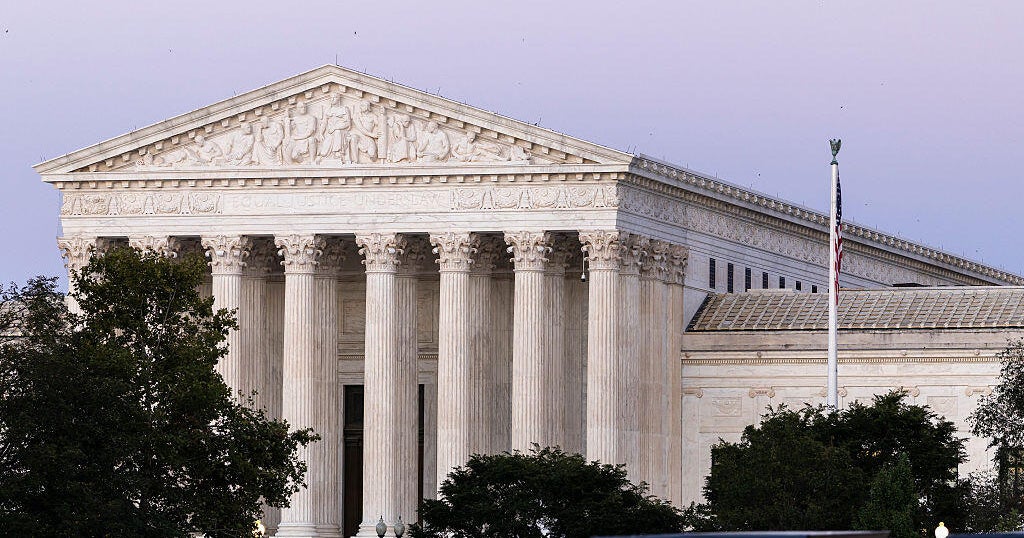
Washington — The Supreme Court on Friday sided with the Trump administration in its aggressive push to deploy a controversial federal database to help states scrub voter rolls for potential noncitizens, temporarily setting aside a lower court ruling that found the expanded system violated federal privacy laws.
In a 6-3 emergency decision, the justices granted the Justice Department’s request to stay a June ruling by U.S. District Judge Sparkle Sooknanan in Washington, D.C. That ruling had blocked the Department of Homeland Security’s overhauled database — the Systematic Alien Verification for Entitlements, or SAVE, system — which the administration had made available to states and localities seeking to verify the citizenship and immigration status of registered voters.
The Supreme Court’s unsigned opinion said voting rights groups challenging the modified database had raised claims that “likely lack merit,” and signaled that the justices were inclined to reverse the district court’s conclusion that the Trump administration had violated federal law. The decision is a significant victory for the administration, which has made election integrity a centerpiece of its broader agenda, but its practical impact on the upcoming midterm elections may be muted by an existing federal restriction.
Under federal law, states are barred from systematically removing ineligible voters from their registration lists within 90 days of an election. With the Nov. 3 general election less than 40 days away, the ruling is unlikely to lead to any large-scale purge before voters head to the polls. Still, the legal fight is far from over, and the Supreme Court’s action reshapes the battlefield as litigation continues in the lower courts.
Judge Sooknanan, a district court judge, had found that the Trump administration “knowingly trampled on the privacy rights of American citizens in a manner that threatens the sacred right to vote” through the overhauled SAVE system. She concluded that the administration had combined sensitive records from multiple federal agencies in a way that Congress never authorized, and that the resulting database contained citizenship data so unreliable that some U.S. citizens had already been wrongly removed from voter rolls.
The Supreme Court disagreed, at least for now. In its emergency order, the court wrote that under immigration law, “the Federal Government has an obligation to respond to requests from state and local election officials seeking to verify the citizenship of voters.” It added that the lower court’s order “prevents the Federal Government from using the program it believes is best suited to the task.”
The high court also said that blocking the expanded database, including its use for individualized inquiries, “inhibits the Federal Government’s efforts to assist state and local agencies in the proper administration of the midterm elections.”
Three liberal justices — Sonia Sotomayor, Elena Kagan, and Ketanji Brown Jackson — dissented. In a written dissent, Jackson argued that states could still use the revamped system for individualized voter-roll maintenance even without the broader relief the lower court had imposed. She warned that the potential harm to voters outweighed any harm to the government.
“[T]he harm caused by burdening or disenfranchising even a few lawful voters outweighs the nonexistent harm that the Government experiences when it is prevented from taking an action that it likely lacks the authority to take,” Jackson wrote, joined by her fellow liberal colleagues.
The SAVE database is part of a broader government-wide effort by President Trump to find evidence of widespread voting by noncitizens in federal elections — a phenomenon that studies and election officials have repeatedly shown to be extremely rare. The administration, however, has insisted that even isolated instances of noncitizen voting threaten the integrity of American elections and that the federal government must provide states with better tools to prevent it.
Voting rights organizations challenging the database, including the League of Women Voters and the Electronic Privacy Information Center, along with five individual voters, have warned that the modified SAVE system provides inaccurate and incomplete citizenship data to states. As a result, they say, some of their members and other lawful voters have had their registrations wrongfully canceled.
In a statement after the Supreme Court’s ruling, the coalition of plaintiffs expressed deep disappointment, saying the decision puts millions of Americans at risk of being targeted by an unreliable voter purge database in the weeks before the midterm elections. But they emphasized that the case is not over. “The D.C. district court ruled that the expanded SAVE program violated multiple laws,” the group said. “We will be doing everything in our power to protect Americans’ voting and privacy rights by ensuring that the district court decision stands.”
The Department of Homeland Security, for its part, hailed the ruling as a victory for election integrity. James Percival, the department’s general counsel, said in a statement that it was remarkable the administration had to file an emergency petition at the Supreme Court simply to use government data to stop noncitizens from voting illegally. “American elections are for Americans,” Percival said. “The Trump Administration and the Department of Homeland Security will use every tool at our disposal to secure our elections.”
Background: What is the SAVE database?
The SAVE system has existed in some form since 1986, primarily as a tool for states and federal agencies to verify immigration status for purposes of determining eligibility for public benefits, licenses, and other government services. But the Trump administration dramatically expanded its scope and function in response to an executive order signed in March of last year aimed at imposing new proof-of-citizenship requirements on voter registration.
Federal judges have since blocked those citizenship-related registration rules, but the expansion of the SAVE database proceeded. The executive order directed the Department of Homeland Security and the Social Security Administration to create a database that would allow state and local officials to verify the citizenship or immigration status of individuals attempting to register to vote, as well as those already on state voter rolls.
The overhaul went far beyond the original SAVE program. It was expanded to include records of natural-born citizens, not just noncitizens. It was given access to Social Security Administration records, including Social Security numbers. And it permitted bulk searches of records by entities using the database — a significant departure from the individualized checks the system was originally designed to perform.
In response, the League of Women Voters, the Electronic Privacy Information Center, and five individual voters sued the Department of Homeland Security, the Social Security Administration, and the Department of Justice. They argued that consolidating Americans’ sensitive personal records from multiple agencies into a single searchable database was unlawful, and that some states had partnered with the federal government to run their entire voter databases through the SAVE system. They presented evidence that U.S. citizens falsely identified as noncitizens were being incorrectly removed from voter rolls.
In court filings, the Trump administration defended the system, arguing that the SAVE program was being used with a “clear congressional directive to break down information silos between government agencies.” It also said that instances of improper removal were rare and that states bore responsibility for any voter removals because the federal government was merely providing information.
Judge Sooknanan was unpersuaded. In her June ruling, she rejected the administration’s arguments as “border on the absurd.” She found that the government had “haphazardly combined and repurposed the private information of millions of Americans, including citizenship data that they knew to be unreliable,” leading some states to remove U.S. citizens from voter rolls “based on inaccurate information.” She concluded that the overhauled system and related notices from DHS and the Social Security Administration were “contrary to law, arbitrary and capricious, in excess of statutory authority, and without observance of procedure required by law.”
The administration sought emergency relief from the U.S. Court of Appeals for the D.C. Circuit, but that court denied the request earlier this month. The administration then turned to the Supreme Court, asking the justices to intervene.
In filings with the Supreme Court, Solicitor General D. John Sauer called Sooknanan’s ruling “indefensible” and said it “threatens the integrity of upcoming elections.” He also argued that the judge exceeded her authority and that the voting rights groups bringing the lawsuit lacked standing to sue.
“SAVE does not disqualify any voter; instead, it merely notifies the States whether the federal government can confirm citizenship,” Sauer wrote. “Thus, any voter injury is caused by the States, not by the federal government, and would not be redressed by the relief the court entered against the federal government.”
Lawyers for the plaintiff groups pushed back in their own filings, arguing that “Congress has not authorized the federal government to create a master database of U.S. citizens.” They said the government “has recklessly created an error-laden master citizenship database that endangers millions of Americans’ privacy and voting rights.”
Friday’s Supreme Court decision does not finally resolve those questions. It merely stays the lower court’s ruling while the appeal proceeds. The underlying litigation will continue in the D.C. Circuit and potentially back to the Supreme Court. But the justices’ clear signal that the challengers’ claims “likely lack merit” suggests the administration may ultimately prevail on appeal.
For now, the ruling allows states and localities to continue using the expanded SAVE system, including for individualized requests to verify citizenship. Whether any state will attempt to use the database for broader voter roll maintenance in the immediate run-up to the midterms remains unclear, given the federal prohibition on systematic removals within 90 days of an election.
Voting rights advocates, however, remain deeply concerned. They argue that even individualized checks can lead to erroneous removals, and that the database’s flaws mean some citizens could be purged based on outdated or incorrect records. They also warn that the very existence of a centralized citizenship database raises serious privacy concerns, particularly for natural-born citizens whose data was never meant to be included in a system originally designed for immigration verification.
The case reflects a broader clash over the role of the federal government in election administration, the limits of executive authority, and the balance between election integrity and voting rights. With midterm elections approaching, both sides are bracing for further legal battles — and for the possibility that the Supreme Court may soon issue a more definitive ruling on the legality of the expanded SAVE system.