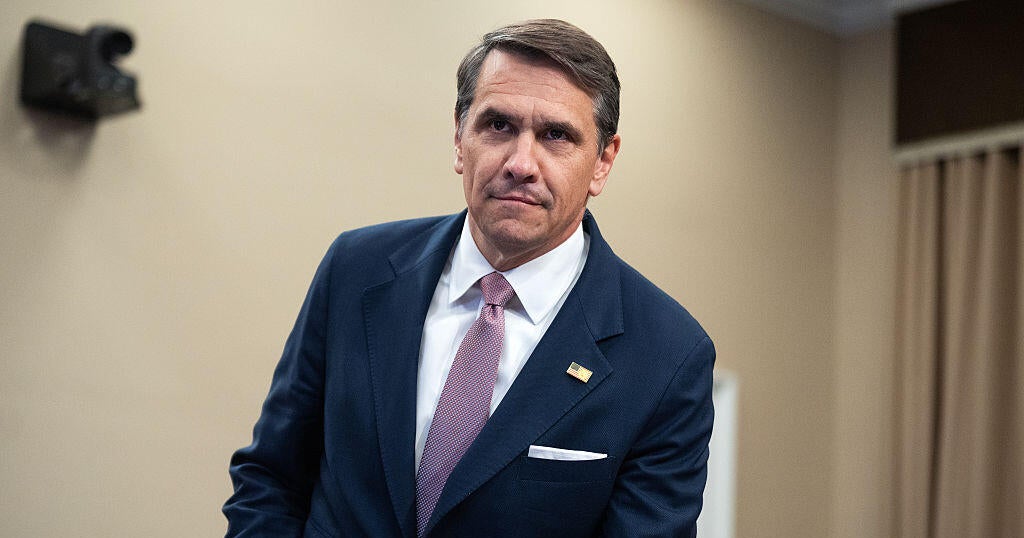
Washington – Todd Blanche, the Acting Attorney General, announced on a pivotal Tuesday that the Justice Department is officially halting its planned $1.8 billion “anti-weaponization” fund. This fund had been a contentious point and presented significant challenges to the advancement of the GOP agenda in Congress. “We are not moving forward with the fund. Period,” Blanche decisively told the members of the House Appropriations Committee.
During an intense exchange, Democratic Representative Grace Meng of New York sought confirmation from Blanche, asking, “Not moving forward ever?” To this, Blanche responded affirmatively, “Correct.” Meng probed further, requesting Blanche to solidify his commitment in writing, a request Blanche resisted by noting that his verbal testimony at the officially recorded hearing should suffice. “Why do I need to put something in writing if I’m telling you what we’re doing?” he argued, underscoring his point by refusing to provide additional written reassurance.
This move to stop the work on the fund followed closely after a district judge had temporarily blocked the establishment of the program, raising legal questions about its future. The fund had been under severe scrutiny and faced substantial pushback from Republicans on Capitol Hill, who warned that it could severely disrupt the GOP’s legislative agenda. This concern was evident as some Republicans expressed reservations that continued to hinder progress on funding critical departments like the Department of Homeland Security’s immigration enforcement agencies.
The discontinuation of the fund raises significant queries about how Blanche intends to navigate away from the program, considering it was part of a broader legal settlement. Skye Perryman, President and CEO of Democracy Forward, who was among those suing over the fund, commented on the importance of reliability in such declarations: “If you can say it on TV, you should say it in court.”
The broader implications of this decision extend to the previous settlement reached with former President Trump, involving the IRS. According to Blanche, while the fund is being abandoned, the rest of the settlement remains intact. This includes a controversial component that prohibits the government from auditing any of the prior tax returns of the president or his family. “It’s not moving forward. There’s a settlement,” Blanche clarified during heated discussions, pointing out the separate nature of these agreements and reinforcing that the IRS had followed customary procedures in reaching these settlements.
The reaction among Senate Republicans was a mixture of relief and lingering skepticism. Senate Majority Leader John Thune highlighted these sentiments before Blanche’s testimony, noting that he had spoken with Blanche and found his upcoming statements to be definitive and likely reassuring. He expressed hope that this clarity would fulfill the necessary certainty for both Senate and House Republicans regarding the pivotal reconciliation bill. However, Thune also cautiously added, “I’m not guaranteeing that happens yet,” acknowledging ongoing discussions within the party.
Senate Republicans, seeking further assurances, indicated their attention to Blanche’s testimony for final confirmation. Notably, Senator John Kennedy of Louisiana suggested that if the testimony aligned with expectations, it could expediently lead to legislative progress on reconciliation. Yet, former GOP whip and Texas Senator John Cornyn voiced a more uncertain tone, pointing out that Blanche’s assurances might not sufficiently convince everyone.
Adding to the political discourse, House Speaker Mike Johnson clarified on the same day that the fund was “off the table for consideration.” This statement came after his meeting with Mr. Trump at the White House, where they discussed the challenging prospects of advancing the fund given current vote tallies. Johnson relayed his understanding of the fund’s noble intent but recognized its complexities and potential misinterpretations that fueled opposition.
Meanwhile, on the political social platform X, Senator Lindsey Graham of South Carolina advocated for a modified approach, suggesting the establishment of an alternative weaponization fund aligned with the Federal Tort Claims Act, which would allow individuals with legitimate claims against the federal government to seek compensation.
This evolving narrative underscores a complex dialogue between legislative necessities, legal frameworks, political maneuvers, and public accountability. As the administration navigates these troubled waters, each statement and decision contribute to shaping the landscape of American political and legal discourse. It remains to be seen how these developments will impact the broader political dynamics in Washington and beyond.