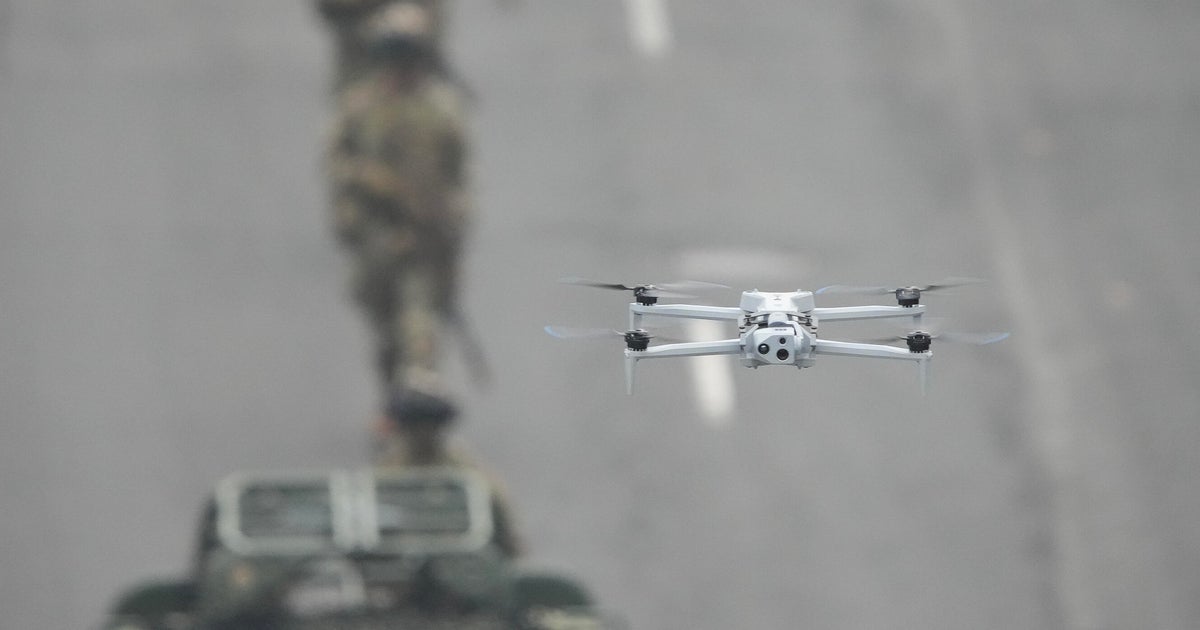
In Washington, an urgent note of caution is sounding within the corridors of the U.S. Department of Defense as military innovations, particularly in drone technology, race forward. Recent developments have highlighted a potentially dangerous oversight in the rush to expand the military’s drone capabilities: the sidelining of essential explosive safety measures. This caution comes amid an aggressive push by the military to leverage low-cost, expendable drones on the battlefield, a strategy underscored by a recent mishap involving a mini-drone that detonated, resulting in injuries to an Army Special Forces soldier.
The incident, detailed in a memo obtained by CBS News, casts a spotlight on the ongoing tensions between rapid technological advancement and the adherence to safety protocols. The memo, authored by an experienced Army explosive safety specialist stationed at Fort Polk in Louisiana, serves as a critical internal advisory against the backdrop of escalating drone warfare, notably influenced by the military tactics observed in the Russia-Ukraine conflict.
Drones have been part of the U.S. military arsenal for decades, prominently during the conflicts in Iraq and Afghanistan. However, the landscape of drone warfare has evolved significantly, particularly with lessons drawn from the ongoing conflict in Ukraine. These insights have propelled the Pentagon toward a substantial increase in the production and deployment of drones, aligning with directives such as President Trump’s executive order to boost unmanned aircraft system capabilities.
The internal Army memo underscores an unsettling scenario where the drive to quickly augment drone capacities is clashing with foundational safety practices. Written by a civilian U.S. Army employee with over two decades of combined military and civilian safety experience, the document cautions that the innovative spirit of U.S. Army Special Forces, while commendable, is being stretched thin by the overarching demands of drone warfare innovation. This, the specialist argues, is leading to a neglect of “basic explosive safety principles,” with potentially grave consequences.
Specifically, the memo recounts an episode at the Army’s Joint Readiness Training Center in Fort Polk, where a drone equipped with a small explosive device unexpectedly detonated within a training facility. The blast resulted in minor injuries to a soldier from the 3rd Special Forces Group, who suffered lacerations and a concussion while attempting to troubleshoot the device. Though not fatal, the incident exposes the fine line between functionality and safety, exacerbated by the use of the XM183 “MiniBlast” pyrotechnic cartridge, a product by Houston-based PR Tactical Corporation, designed to simulate combat conditions in training exercises.
The memo points to potential triggers for the detonation, such as a static electric charge or electromagnetic hazards, possibly exacerbated by a compromised relay switch. It also highlights that the XM183 has not received a “full material release” from the U.S. Army’s Combat Capabilities Development Command, indicating that the device may not have been fully vetted for safe operational use under all approved conditions.
The explosive safety specialist’s admonitions reached the director of safety at U.S. Army Special Operations Command at Fort Bragg, emphasizing the need for a reassessment of safety protocols. Meanwhile, Army Colonel Allie Scott from the U.S. Army Special Operations Command acknowledges the authenticity of the memo but describes the remarks on safety as subjective views rather than established facts.
Following the incident, discussions have emerged surrounding the procedural mechanisms for incident investigations. A spokesperson from the U.S. Army’s Combat Readiness Center at Fort Novosel indicated that the incident did not meet the investigatory threshold typically triggered by more significant damages or severe injuries. This revelation points to potential gaps in oversight and response frameworks pertaining to drone safety incidents.
In conversations with CBS News, representatives from PR Tactical Corporation withheld comments pending a comprehensive review of the incident report. This situation underscores the complex interdependencies between military suppliers, operational commands, and safety oversight bodies as they navigate the burgeoning demands of modern warfare technology.
As the U.S. military continues to expand its drone operations, fueled by geopolitical dynamics and technological advancements, the incident at Fort Polk serves as a poignant reminder of the critical balance between innovation and safety. It highlights an essential question facing military strategists and technologists alike: How can the U.S. military maintain its technological edge in drone warfare without compromising the very principles of safety and reliability that protect its forces? This question remains central as the Department of Defense deliberates on the future trajectories of its drone strategy, aiming to reconcile the rapid pace of innovation with the imperatives of safety and operational integrity.