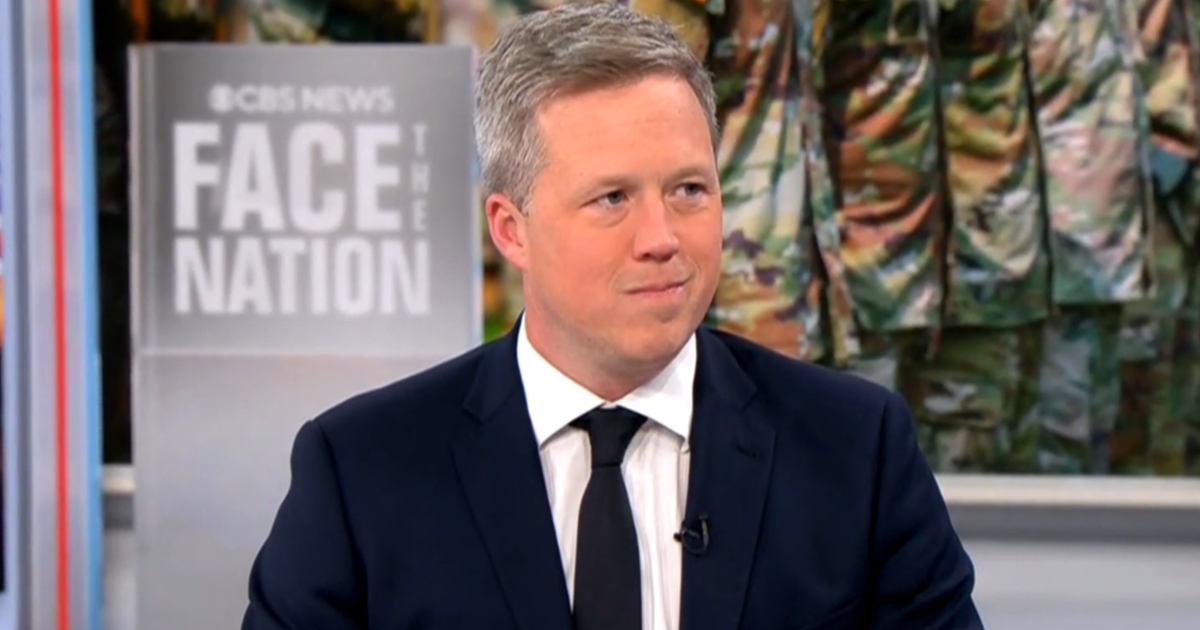
In a recent interview on “Face the Nation with Margaret Brennan,” the Secretary of the Army, Dan Driscoll, unveiled stark warnings about the burgeoning threats posed by unmanned aerial systems, commonly known as drones. He described these as “the threat of humanity’s lifetime,” underscoring the urgent need for robust national security measures. Driscoll, articulating a mix of caution and optimism, spoke about the rapid advancements in drone technology and the potential devastation these devices could cause if used maliciously.
The use of drones has escalated rapidly, becoming a central security concern for military and civilian sectors alike. Driscoll highlighted that drones are no longer just tools for surveillance or media capture; they have evolved into potential weapons capable of delivering destruction with alarming precision and stealth. Their affordability and the ease with which they can be manufactured—often with simple tools like 3D printers—make them accessible to not just state actors but also to non-state actors and individuals with nefarious intentions.
The conversation gravitated towards the implications of this technology on national security. Last week, Senator Tom Cotton, who chairs the Senate Intelligence Committee, provided CBS News with alarming data pointing to a “severe and growing” threat. According to reports, there were more than 350 unauthorized drone flights over roughly 100 military bases last year. These intrusions represent just a fraction of the incidents, with over 27,000 drone detections near the U.S. southern border in the latter half of 2024 alone.
These figures suggest a significant surveillance challenge, with drones frequently crossing borders undetected and appearing over sensitive sites, including during large public events such as NFL games. Although there was a slight decrease in unauthorized flights at sporting events last year, the general trend points to a steady increase, indicating a persistent and evolving threat landscape.
Acknowledging these challenges, Driscoll noted that the U.S. Army has been designated by the Pentagon as the lead agency to combat drone threats. This strategic move involves close collaboration with various law enforcement agencies across the nation to address not just the technological aspects but also the procedural and strategic responses required to mitigate such risks. The aim is to cultivate a “layered defense” strategy which would incorporate multiple levels of deterrents and counteractions, adapted to different scenarios whether they occur domestically or over foreign territories.
The complexity of this task is profound, involving intricate coordination between military commands and civilian aviation authorities, amongst others. Driscoll expressed a considerable degree of optimism about the U.S. ability to manage the airspace effectively, with reference to ongoing efforts to design a comprehensive detection and response system. This system aims to monitor drone activity across the country, ensuring that every object in the U.S. skies is identified and tracked.
Further expanding on the measures being implemented, Driscoll mentioned the proactive stance the U.S. is taking under President Trump’s leadership. The approach involves not just defensive strategies but also fostering American industrial capabilities in drone technology to reduce dependence on foreign drone technology, particularly from China. Driscoll outlined plans to invest heavily in essential components like sensors, brushless motors, and circuit boards — components currently dominated by Chinese manufacturers.
He revealed that the U.S. Army would expand its production capabilities to support these efforts, ensuring that American companies could compete more effectively in the global market. This shift, he suggested, would lead not only to greater security but also to economic benefits by empowering the domestic private sector.
These strategic moves come at a challenging time for the U.S. military, which is still grappling with the aftermath of a 43-day government shutdown. The shutdown, which resulted in significant financial constraints, highlighted systemic issues but, according to Driscoll, also showed the resilience and adaptability of U.S. institutions under crisis. He emphasized the Administration’s commitment to overcoming these hurdles and enhancing the overall preparedness of military personnel and infrastructure to handle new-age threats like drones.
The dialogue surrounding drones, as showcased in Driscoll’s remarks, underscores a pivotal moment in contemporary security affairs. The conversation reflects broader themes of technological adaptation, international competition, and the ongoing balance between innovation and regulation, particularly in sectors as critical as national defense and public safety. As drones continue to evolve both in capability and accessibility, the strategies discussed by leaders like Driscoll will likely play a fundamental role in shaping the future of global security landscapes.