President Donald Trump, in his second Inaugural Address, emphatically positioned himself as a staunch adversary of “cancel culture,” declaring a commitment to obstruct “government censorship” and staunchly advocate for “free speech.” This pledge was prominently featured in his campaign rhetoric and seemed to underscore his administration’s forthcoming policy direction concerning speech freedoms.
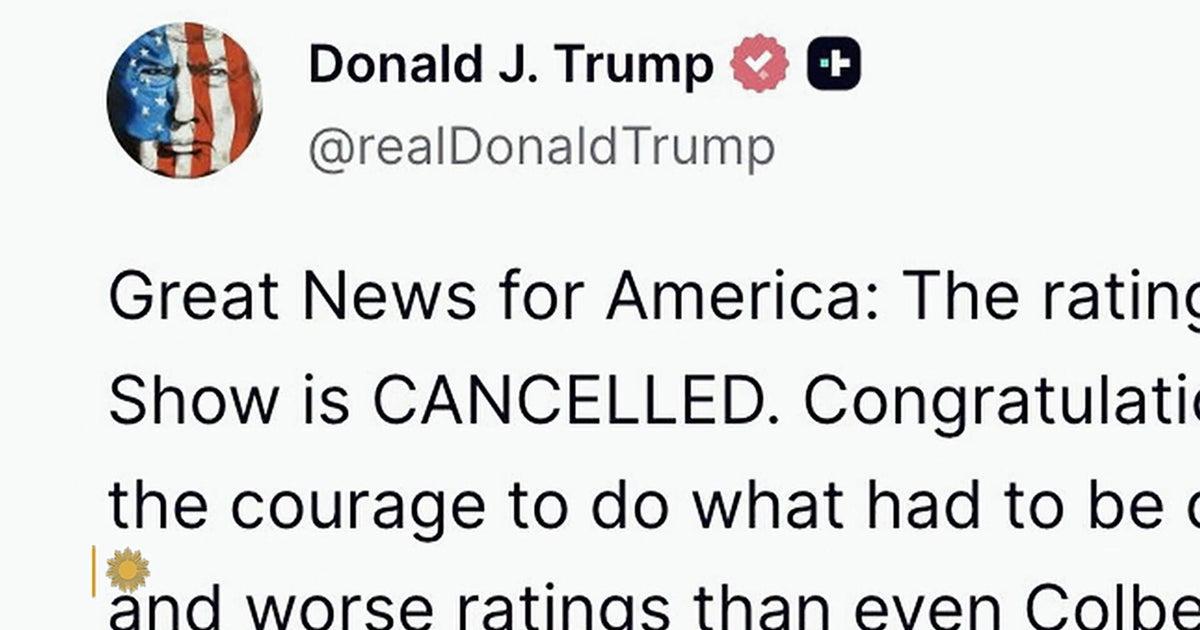
However, a recent development involving late-night TV host Jimmy Kimmel has cast a spotlight, once again, on the complexities and seeming contradictions in the President’s stance on free speech. Jimmy Kimmel, a well-known figure in television entertainment, has been an outspoken critic of various policies and actions of President Trump’s administration. This week, it emerged that ABC, the network broadcasting Kimmel’s show, made a decision to put the show on an indefinite hiatus. President Trump, rather than defend the principle of free speech he championed in his inaugural pledge, celebrated this move, which again brought his stance under scrutiny.
New York Times writer-at-large Jim Rutenberg has embarked on a detailed analysis of what he perceives as the Trump administration’s campaign against critical voices, especially those in the media. According to Rutenberg, this situation epitomizes a broader strategy by President Trump and his administration to either stifle dissent or use critical voices as a foil for rallying his base around the notion that mainstream media would typically be unfair towards conservative views. Rutenberg argues that this complicates the narrative around free speech and raises questions about its actual meaning under Trump’s leadership.
In his analysis, Rutenberg provides a broader historical and political context to understand why President Trump might seem contradictory in his actions versus his proclaimed ideals. The writer explores various instances during Trump’s tenure in office where actions taken either by the government or through encouragement of third parties have not necessarily aligned with a straightforward defense of free speech. For instance, Rutenberg recalls the administration’s handling of press briefings, where certain media outlets were occasionally barred from attending. These actions, he argues, betray a selective approach to who gets to enjoy the freedoms guaranteed under the First Amendment.
This focus on Kimmel’s suspension serves as a lens through which to view the ongoing debate on what constitutes acceptable speech and who gets to decide its boundaries. Rutenberg suggests that in celebrating the sidelining of a critical media voice, the administration signals an endorsement of punitive measures against dissenting voices, particularly when these dissenting voices are influential in the media landscape.
Further elaborating, Rutenberg delves into the essence of “cancel culture” — a term often invoked to describe a boycott or a collective shunning of individuals, usually celebrities or public figures, who have said or done something considered objectionable or offensive. It is an aspect of contemporary culture wars that has seen people on both ends of the political spectrum as victims and perpetrators. Trump’s vocal criticism of this culture clashes visibly with his reaction to actions taken against figures like Jimmy Kimmel, who arguably was penalized for exercising his free speech.
In dissecting these issues, Rutenberg seeks to offer a nuanced perspective on the current state of political discourse in America, particularly in how it treats the concept of free speech. By examining Trump’s reactions to various events concerning media freedom, he points out the potential dangers of a partial application of First Amendment rights. Rutenberg argues that such an approach can lead to a fracturing of public discourse, where only certain viewpoints are allowed to flourish while others are suppressed or penalized.
The analysis also addresses potential consequences for the broader media landscape and for public trust in media. With a president who seems to selectively champion free speech rights, there might be an erosion of trust among public segments toward the media entities labeled as either “friendly” or “hostile” depending on how closely their outputs align with the administration’s views.
To conclude his in-depth examination, Rutenberg questions what the future holds for free speech in America, positing that the current trajectory might be detrimental if left unchecked. He calls for a more robust defense of free speech that does not bend based on political affiliations or personal grievances—a call for returning to the fundamental principles that support open dialogue and dissent, which are vital to a healthy democracy.
This detailed exposition by Jim Rutenberg, therefore, not only critiques the contradictions apparent in President Trump’s administration’s dealings with free speech but also contemplates the broader implications of these actions on American society’s ability to engage in free and open discourse without fear of retribution or censorship.