In a recent display of the continually polarizing national debate on gun control, Representative Jamaal Bowman (D-N.Y.) fervently voiced his opposition to the GOP’s stance on gun safety measures. On a Wednesday at Capitol Hill, during an impromptu conversation with journalists, Bowman urged them to query Republican lawmakers about their strategies for tackling the escalating issue of gun violence in America. It was during this moment that Representative Thomas Massie (R-Ky.), known for his staunch support for the Second Amendment as the chair of the Second Amendment Caucus, entered the discourse with a controversial proposition that teachers in schools should be armed.
This suggestion triggered a passionate response from Bowman, who is not only a congressman but also a former educator with many years of experience. His reaction was one of disbelief and frustration, as he exclaimed, “Carry guns? More guns lead to more death,” a sentiment he reiterated loudly in the heat of the conversation. Massie’s reply to Bowman’s emotional outburst was a concise plea to “calm down,” which only fueled Bowman’s fervor as he retorted, “Calm down? Children are dying,” emphasizing his stance that more firearms are not the solution to the nation’s gun violence crisis.
The altercation occurred against the backdrop of recent legislative actions concerning gun control. In July, under a Democrat-led House, an assault weapons ban had been passed—a legislative move aimed directly at mitigating firearm-related violence. However, the bill found no footing in the Senate, and with the recent shift giving Republicans control of the chamber, it’s become increasingly unlikely that such measures would advance to President Joe Biden’s desk for enactment.
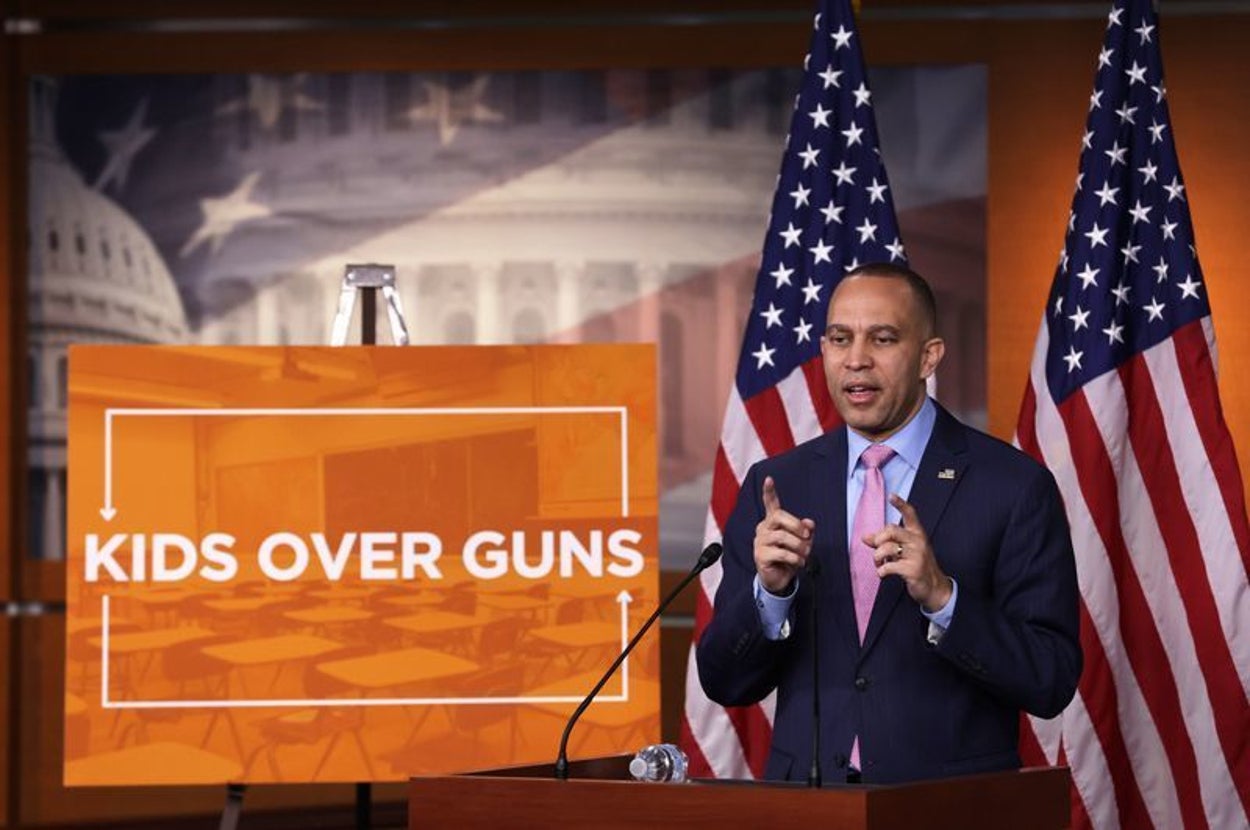
This incident sheds light on the deeply entrenched divisions and the heightened emotions surrounding the issue of gun control in the United States. A day following the heated exchange, House Democratic leader Hakeem Jeffries commented on the situation. While he had not spoken directly to Bowman about the incident, he acknowledged the high passions driving the debate. “Our children are being slaughtered in the streets of America,” Jeffries remarked, underlining the urgency and gravity that many Democrats feel concerning gun violence—a problem they see as unique to the United States at its current scale.
Jeffries’ commentary aligns with a broader Democratic frustration over the perceived inaction and opposition by GOP lawmakers concerning substantive gun control legislation. This frustration is accentuated by the grim statistics and recurring tragedies of mass shootings, which continue to ignite fierce debates over the Second Amendment rights versus public safety measures.
The discourse around gun control in America is as complex as it is divisive. Proponents of stricter gun laws argue that with the high rates of gun deaths and mass shootings in the country, there is a clear and urgent need to tighten regulations surrounding gun ownership and use. They cite statistics and tragedies as evidential support for more robust measures, insisting that a reduction in gun availability would inevitably lead to a decrease in gun violence.
Conversely, opponents, many of whom are staunch supporters of the Second Amendment, claim that gun ownership is a constitutional right that provides necessary personal protection. They argue that the solution to gun violence is more nuanced than merely restricting access to firearms. This camp often proposes alternatives such as enhancing mental health support, fortifying school security, and indeed, arming teachers—as suggested by Massie—as potential methods to deter or mitigate shooting incidents.
This clash of ideologies often results in a legislative stalemate, with each side holding firm to their beliefs and proposed solutions, making it challenging to advance any form of gun control legislation that does not align squarely with the prevailing party’s viewpoint at any given time.
The debate continues to evoke strong responses from various sectors of the public and within political circles, reflecting the complex web of cultural, constitutional, and safety concerns that Americans grapple with when discussing gun control. As the nation moves forward, it remains to be seen how lawmakers will navigate these turbulent waters and what measures, if any, will be implemented to address the chronic and deadly issue of gun violence in America. The incident on Capitol Hill between Bowman and Massie is just a recent manifestation of the ongoing struggle to find common ground in a deeply divided arena on an issue that continues to cost lives and stir deep emotional and political turmoil.