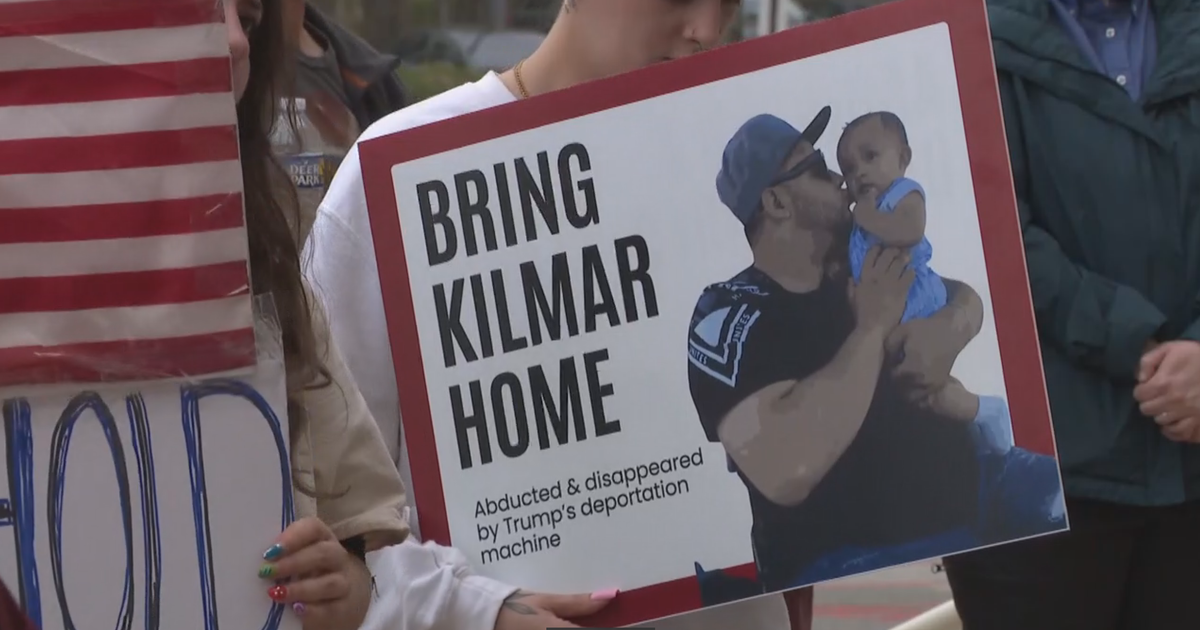
A federal judge’s recent ruling has sparked controversy and drawn attention to the Trump administration’s immigration policies. The case involves Kilmar Abrego Garcia, a 29-year-old Salvadoran national who was mistakenly deported to El Salvador despite having been granted protection from deportation by an immigration judge in 2019. The judge, U.S. District Judge Paula Xinis, ordered the administration to facilitate Abrego Garcia’s return to the U.S., but government attorneys argue that she overstepped her authority by making such a demand.
The Justice Department lawyers have filed an appeal with the 4th U.S. Circuit Court of Appeals, seeking to suspend Judge Xinis’ order. They argue that forcing the Executive branch to engage with a foreign power in a specific way violates the separation of powers outlined in the Constitution. The appeals court has asked Abrego Garcia’s lawyers to respond to the government’s filing by Sunday afternoon, setting the stage for a legal battle over the man’s return.
Abrego Garcia’s case has garnered widespread attention and support from activists and community members who believe that he should not have been deported. His wife, a U.S. citizen, has been vocal in her advocacy for his return, and dozens of supporters gathered at the federal courthouse in Greenbelt, Maryland, for Friday’s hearing. When Judge Xinis ruled in favor of Abrego Garcia, there was a sense of relief and celebration in the courtroom.
During the hearing, Justice Department attorney Erez Reuveni admitted that Abrego Garcia’s deportation was a mistake and that he should not have been removed from the U.S. or sent to El Salvador. However, he was unable to provide a clear explanation for why Abrego Garcia was arrested in Maryland in the first place. This lack of clarity and accountability has raised further questions about the government’s handling of immigration cases and the potential consequences for individuals like Abrego Garcia.
In response to the controversy surrounding the case, Attorney General Pam Bondi issued a statement emphasizing the Department of Justice’s commitment to advocating for the United States’ interests. She announced that any attorney who fails to uphold this commitment will face consequences, highlighting the seriousness of the situation and the need for accountability within the government.
Abrego Garcia’s attorney, Simon Sandoval-Moshenberg, has criticized the government for its lack of action in rectifying the situation. Despite acknowledging the error in deporting Abrego Garcia, the government has not taken concrete steps to secure his return. Sandoval-Moshenberg argued in court that there has been plenty of rhetoric and promises from the White House, but little actual progress in resolving the issue with the government of El Salvador.
The White House has attempted to portray Abrego Garcia as a member of the MS-13 gang, a claim that his attorneys vehemently deny. They argue that there is no evidence to support this accusation and that it is merely an attempt to deflect attention from the government’s mishandling of the case. The focus should be on ensuring Abrego Garcia’s safe return to the U.S. and holding those responsible for his deportation accountable for their actions.
The legal battle over Abrego Garcia’s case is likely to continue in the coming days as the appeals court considers the government’s request to suspend Judge Xinis’ order. The outcome of this appeal will have far-reaching implications for how immigration cases are handled and the rights of individuals who are caught up in the complex web of immigration enforcement policies. As the case unfolds, it will be important to monitor the developments and advocate for justice for Abrego Garcia and others like him who have been unjustly impacted by the immigration system.