The deadly earthquake that struck central Myanmar last week has left a trail of destruction and devastation in its wake. In the aftermath of the disaster, the Myanmar military has continued its operations and attacks, including airstrikes that have further exacerbated the already dire situation. According to Ravina Shamdasani, spokesperson for the High Commissioner for Human Rights, some of these attacks were launched shortly after the tremors subsided, showing a callous disregard for the well-being of the affected population.
“We urge a halt to all military operations and for the focus to be on assisting those impacted by the quake,” Shamdasani told journalists in Geneva. She reiterated the call for an “inclusive political solution” to end the ongoing conflict in Myanmar, which was sparked by the junta’s coup d’état in February 2021. The military’s tactics, which include using near-silent adapted paragliders to bomb communities, have only added to the suffering of the people.
James Rodehaver, Head of OHCHR’s Myanmar team, described the use of these paragliders as a particularly insidious method of attack. “What those are is an individual military operative who uses a hang-glider with a backpack attached to his back or torso with a large fan on it and he uses that to essentially paraglide using the fan as a motor over areas and drop hand-held bombs or munitions onto targets below,” he explained.
The situation in Myanmar has been further compounded by the military’s continued aggression, with at least 61 reported attacks across the country since the earthquake occurred. This includes 16 attacks that have taken place since the ceasefire announced by the military on 2 April. The UN human rights office, OHCHR, has been closely monitoring the situation and documenting the violations that have occurred in the aftermath of the disaster.
The urgent need for humanitarian assistance in Myanmar has been underscored by UN Secretary-General António Guterres, who has called for immediate and unrestricted access to the country. The earthquake has claimed more than 3,000 lives and left millions in urgent need of aid. Speaking from UN Headquarters in New York, Guterres described the situation in Myanmar as one of “utter devastation and desperation”.
The regions most affected by the earthquake, including Mandalay, Sagaing, Nay Pyi Taw, Bago, Magway, Shan South, and East, have suffered widespread destruction to critical infrastructure. Health facilities, road networks, and bridges have been severely impacted, making it difficult for aid to reach those in need. The UN World Health Organization has reported that electricity and water supplies remain disrupted, further exacerbating the challenges faced by the population.
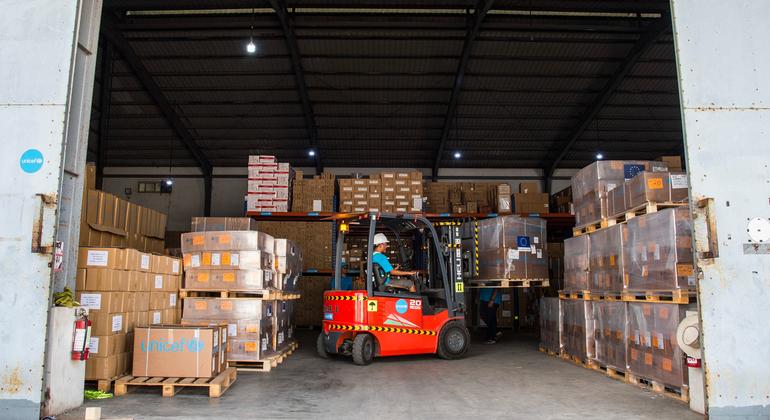
The UN refugee agency, UNHCR, has issued an appeal for $16 million to support 1.2 million survivors of the earthquake. Up to 80% of structures in Mandalay are estimated to have collapsed, making the need for assistance even more urgent. UNHCR has already deployed emergency relief supplies, including plastic sheets and kitchen sets, to 25,000 survivors in various regions of Myanmar.
The International Committee of the Red Cross (ICRC) has also been working to provide assistance to those affected by the disaster. Despite the obstacles and challenges faced by humanitarian organizations in accessing the affected areas, efforts are ongoing to deliver aid to those in need. The international community must come together to support the people of Myanmar during this difficult time and ensure that they receive the assistance they require to rebuild their lives.