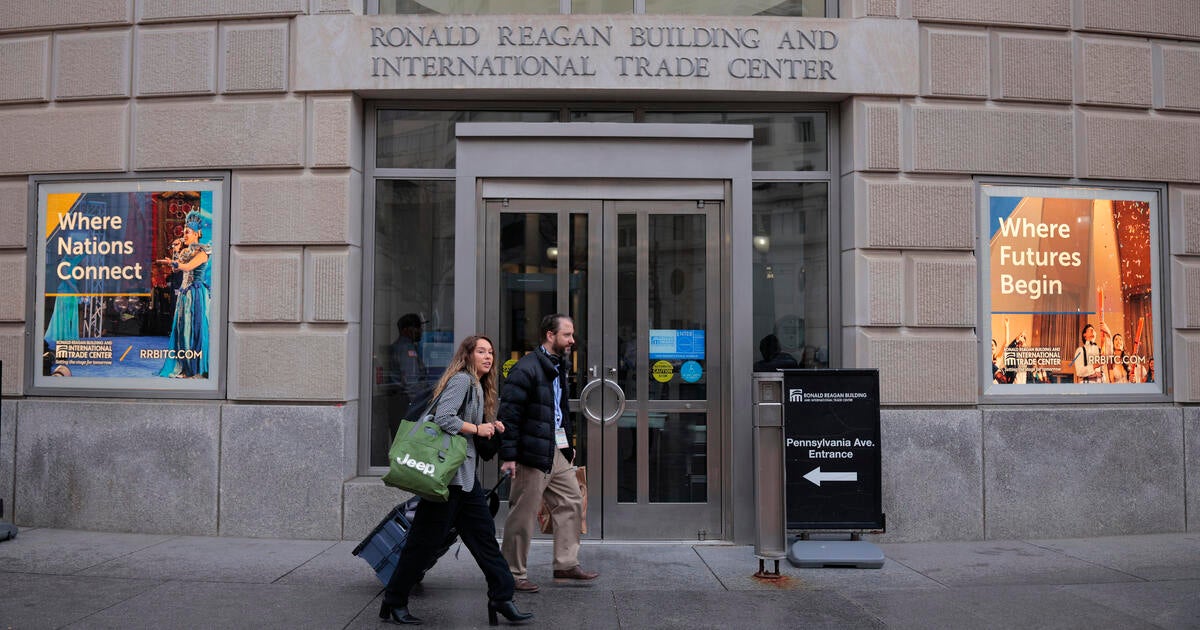
In the Ronald Reagan Building, the headquarters of the U.S. Agency for International Development (USAID), a directive to clear out classified safes and personnel documents has been issued. The instruction also includes the shredding or incineration of these records. This information was revealed by CBS News, which obtained screenshots of an email sent to USAID staff from two sources.
The email was dispatched by USAID acting executive secretary Erica Carr. In it, she instructed USAID staffers to begin clearing out classified safes and personnel documents at 9:30 a.m. Tuesday. The directive to shred sensitive documents was first reported by ProPublica.
The email instructed the staff to “Shred as many documents first, and reserve the burn bags for when the shredder becomes unavailable or needs a break.” The email further detailed instructions on the use of burn bags. If they had to be used, they should not be overfilled, and the bags needed to be closed with staples at the top. The only labels required on the burn bags were the words ‘SECRET’ and ‘USAID/(B/IO)’ written in dark sharpie if possible. The email also encouraged the staff to reach out if they required more burn bags or sharpie markers.
The documents set to be destroyed might serve as evidence in multiple court filings against the Trump administration and the government aid agency, according to a source familiar with the handling instructions of USAID records who spoke to CBS News.
White House deputy press secretary Anna Kelly, in a social media post, revealed that “The USAID building will soon be occupied by CBP.” She also mentioned that the email was sent to “roughly three dozen employees.” Kelly claimed that the documents set to be destroyed were “old, mostly courtesy content (content from other agencies), and the originals still exist on classified computer systems.”
An administration official told CBS News that the actions carried out were part of the process for U.S. Customs and Border Protection to be housed in that building and to clean up the workspaces involved in the transfer. The official reiterated Kelly’s statement concerning the content of the documents.
Approximately three dozen USAID staff received the email, all of whom possessed a Secret level security clearance or higher, and none were on administrative leave, the official informed CBS News. The staffers were all appointed by the departments that the documents pertained to, and any documents from a specific bureau or office that didn’t have someone who met those specific requirements to handle them were being held accordingly.
The official asserted that the move was “fully compliant” with the Federal Records Act.
Another email was received by USAID staff around midday on Tuesday, instructing them to visit the USAID annex offices in Washington on Wednesday, Thursday, and Friday to collect personal belongings. The email, acquired by CBS News, read, “Staff will be given 15 minutes to complete this retrieval and must be finished removing items within their time slot only.” This email appears to contradict the other email regarding how records should be handled.
The email stated, “While collecting their items, staff must ensure that proper records management practices are employed when identifying and/or disposing of records, pursuant to the Federal Records Act and ADS 502.”
On Tuesday, Democracy Forward and Public Citizen Litigation Group filed a motion for an emergency temporary restraining order to prevent what they termed the illegal destruction of federal records at USAID.
So far, the State Department has not responded to CBS News’ requests for comments on either the email or the list of USAID grants that have been terminated by the State Department. On Monday, Secretary of State Marco Rubio confirmed on his personal X account that 83% of USAID programs have been canceled.
In response to a question from CBS News about whether and when the full list of terminated grants would be made available to the public during the previous week’s State Department press briefing, spokesperson Tammy Bruce said she did not yet have an answer. She added, “It’s important, because many Americans have questions about the nature of the details of what’s happening.”
This situation underscores the complexities and intricacies of managing sensitive documents in government agencies, especially in times of transition or reorganization. The situation also raises questions about the balance between maintaining operational efficiency and ensuring transparency and accountability. The need to dispose of old or redundant records must be weighed against the potential value of those records for legal or historical purposes.