In the heart of Washington D.C., a critical decision awaits the United States Senate. On Monday, senators are set to cast their votes on the nomination of former GOP Representative Lori Chavez-DeRemer to lead the Labor Department under President Donald Trump’s administration. This vote holds significant implications for the future of labor relations and policies in America, adding to the intrigue surrounding this appointment.
Lori Chavez-DeRemer’s journey to this point has been an extraordinary one. She served a two-year term in the House of Representatives, carving her name into the annals of history by becoming the first Republican woman elected to represent Oregon in Congress. However, her political trajectory took a detour when she lost her reelection bid in November. Seizing the opportunity, President Trump nominated Chavez-DeRemer to the position of labor secretary. The upcoming confirmation vote comes at a time when nearly all of the president’s Cabinet nominees have already secured approval from the Senate.
Chavez-DeRemer’s political career is characterized by her history of support for pro-labor policies. This has significantly influenced her path to the nomination. Some might have assumed that her support for labor-friendly policies would have guaranteed a smooth journey to confirmation. However, contrary to these expectations, her path to confirmation did not appear to be a walk in the park.
Among her most vocal opponents was Senator Rand Paul, a Republican from Kentucky. Paul expressed strong opposition to her nomination, and in January, he even predicted that she would lose more than a dozen Republican votes. However, as the date for the confirmation vote approached, Chavez-DeRemer seemed to have rallied enough support to tip the scales in her favor, with backing coming from both Republicans and Democrats.
In the previous Congress, Chavez-DeRemer was one of only three Republicans who lent their support to the Protecting the Right to Organize Act, also known as the PRO Act. This proposed bill aimed to simplify the process for workers to unionize. When questioned about her support for the PRO Act during her confirmation hearing, Chavez-DeRemer responded candidly. She acknowledged that the act was flawed or “imperfect,” but she also reaffirmed her support for right-to-work laws. These laws give workers the freedom to choose whether or not to join a union, which is an essential principle in labor rights.
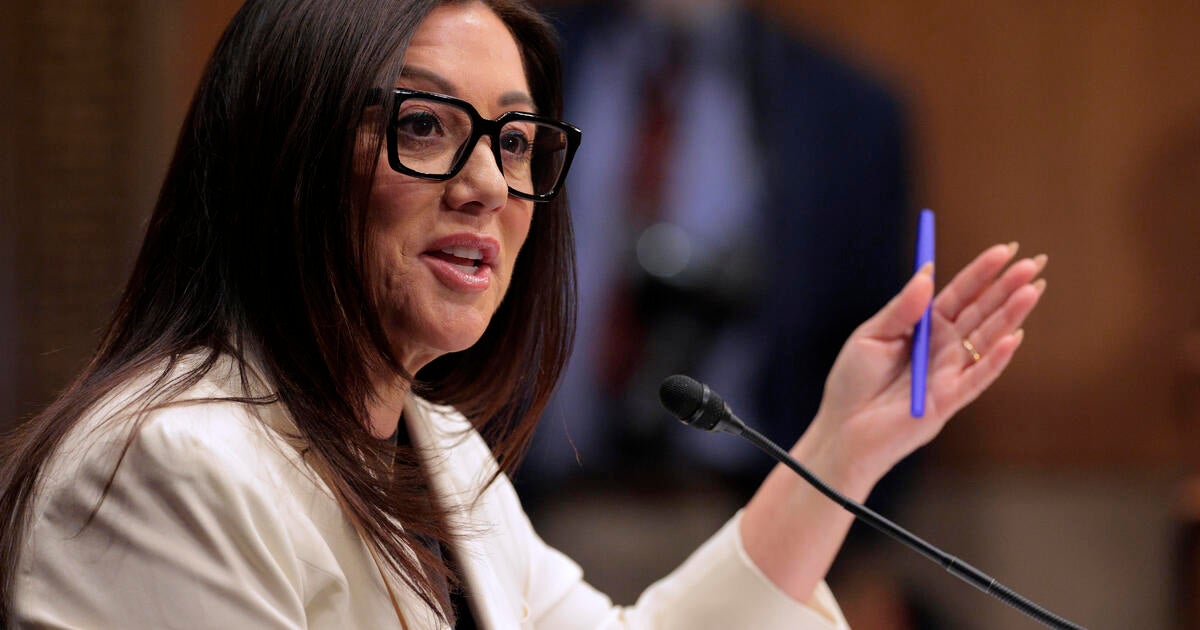
Chavez-DeRemer’s appearance before the Senate Health, Education, Labor, and Pensions Committee during her confirmation hearing was a pivotal moment in her nomination process. It was during this hearing that she had to address her past political decisions and clarify her position on crucial labor issues. Her candid responses and clear communication evidently played a significant role in winning over several of her critics.
However, the road to confirmation was not without obstacles. Rand Paul’s opposition to Chavez-DeRemer threatened to derail her advancement out of the committee. Despite this, three Democrats on the committee voted to move her nomination forward. This bipartisan support was also anticipated to carry over into the final confirmation vote. Despite some Democrats’ reluctance to support some of President Trump’s nominees amid intense criticism of the administration’s work so far, many expected Chavez-DeRemer to receive bipartisan support.
The confirmation vote came on the heels of a procedural vote that cleared Chavez-DeRemer’s nomination. This vote saw 66 senators voting in favor of advancing her nomination, with 30 against. Notably, 15 Democrats broke ranks to vote alongside all present Republicans except Rand Paul.
Chavez-DeRemer’s political views have, at times, diverged from those of the Trump administration. Despite these differences, she committed during her confirmation hearing to implement President Trump’s policy vision faithfully. She pledged to adopt the president’s guiding principle as her own, vowing to ensure a level playing field for businesses, unions, and, most importantly, the American worker.
In conclusion, the nomination of Lori Chavez-DeRemer to lead the Labor Department under President Donald Trump’s administration is a significant event. Her journey from the House of Representatives to the cusp of a key cabinet position is a testament to her political acumen and dedication to public service. The confirmation vote will undoubtedly have a far-reaching impact on the future of labor policies and relations in the United States. Regardless of the outcome, this event underscores the importance of open dialogue, bipartisan cooperation, and the careful consideration of nominees’ qualifications and policy stances in the democratic process.