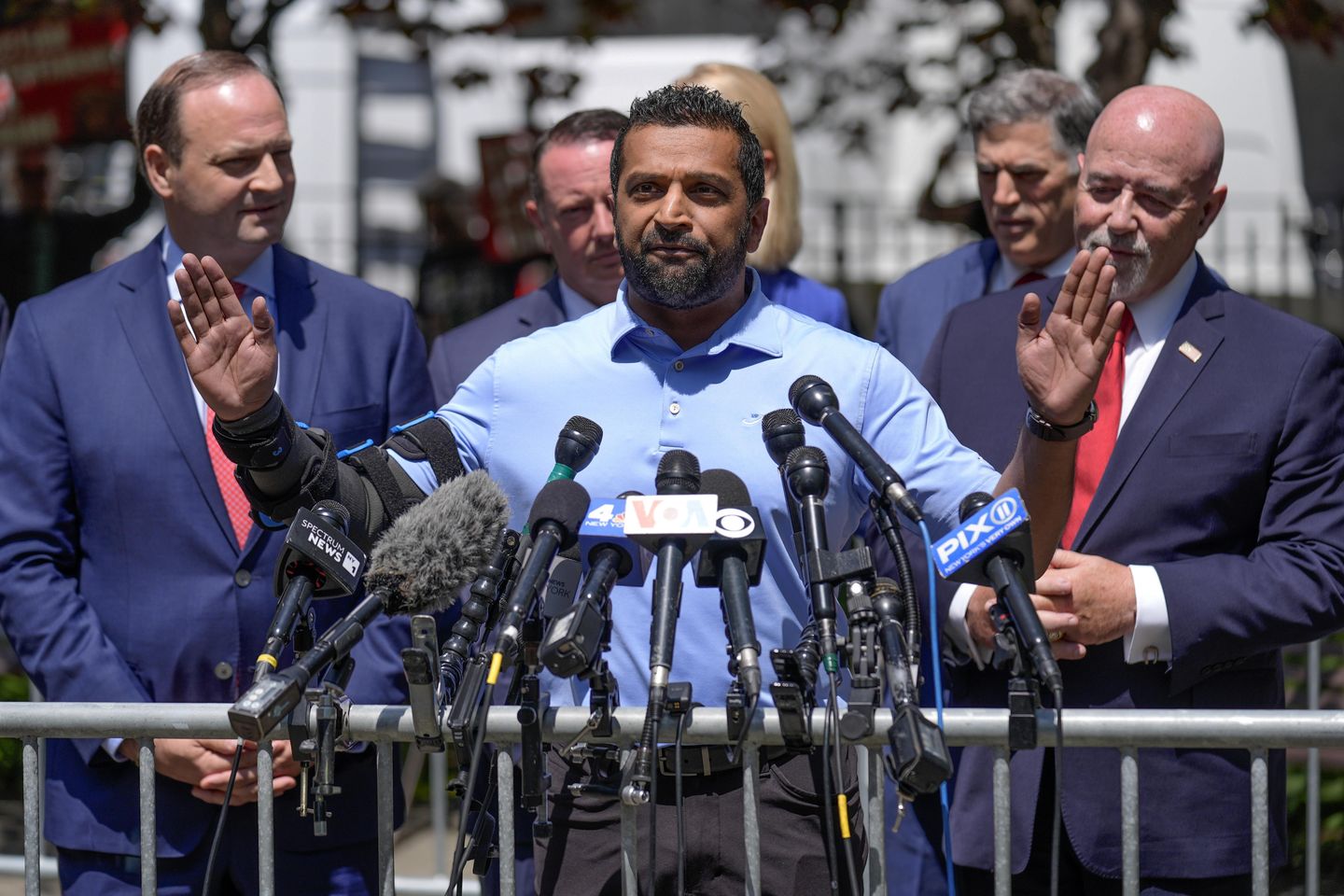
In a surprising move that has sparked controversy and debate, President-elect Donald Trump announced on Saturday that he wants Kash Patel, a staunch loyalist, to run the FBI. The announcement has raised concerns among critics who fear that Patel’s close ties to the President could compromise the independence and integrity of the nation’s top law enforcement agency.
Patel, a former aide to Rep. Devin Nunes and a key figure in the Republican-led investigation into the origins of the Russia probe, has been a vocal supporter of Trump and has often been seen as one of his most trusted allies. His appointment to lead the FBI would mark a significant departure from the tradition of appointing career law enforcement professionals to the position.
The decision to nominate Patel has already drawn criticism from both Democrats and some Republicans, who argue that his lack of experience in law enforcement and his close ties to the President make him ill-suited for the role. Critics also point to Patel’s history of controversial statements and actions, including his role in pushing conspiracy theories and his involvement in efforts to discredit the Russia investigation.
Despite the criticism, Trump has stood by his decision to nominate Patel, describing him as a “brilliant and talented individual” who will bring much-needed reform to the FBI. The President has also dismissed concerns about Patel’s lack of experience, arguing that his loyalty and dedication to the administration make him the right person for the job.
However, many legal experts and former law enforcement officials have expressed concerns about the potential consequences of appointing Patel to lead the FBI. They argue that his lack of experience and his close ties to the President could undermine the agency’s ability to conduct independent and impartial investigations.
The controversy surrounding Patel’s nomination comes at a time of heightened scrutiny of the FBI and the Justice Department. In recent years, the agencies have faced criticism for their handling of high-profile investigations, including the Russia probe and the investigation into Hillary Clinton’s use of a private email server.
Some critics see Patel’s nomination as part of a broader effort by the Trump administration to politicize the Justice Department and undermine the rule of law. They argue that appointing a political loyalist to lead the FBI could further erode public trust in the agency and compromise its ability to carry out its mission effectively.
Despite the concerns raised by his nomination, Patel has received some support from conservative lawmakers and commentators who see him as a welcome change from the status quo. They argue that his background in congressional investigations and his close ties to the President make him uniquely qualified to lead the FBI at a time when the agency is in need of reform.
The confirmation process for Patel’s nomination is expected to be contentious, with Democrats likely to raise questions about his qualifications and his ability to lead the FBI independently. However, with a Republican majority in the Senate, it is possible that Patel could be confirmed despite the opposition.
If confirmed, Patel would inherit a challenging set of circumstances at the FBI, including ongoing investigations into potential Russian interference in the 2020 election and the agency’s own internal reforms. It remains to be seen how he would navigate these challenges and whether he would be able to restore public trust in the agency.
Overall, President-elect Donald Trump’s announcement that he wants Kash Patel to run the FBI has sparked a heated debate about the future of the agency and the implications of appointing a political loyalist to lead it. As the confirmation process unfolds, the nation will be watching closely to see how Patel’s leadership would shape the FBI and its role in the American justice system.