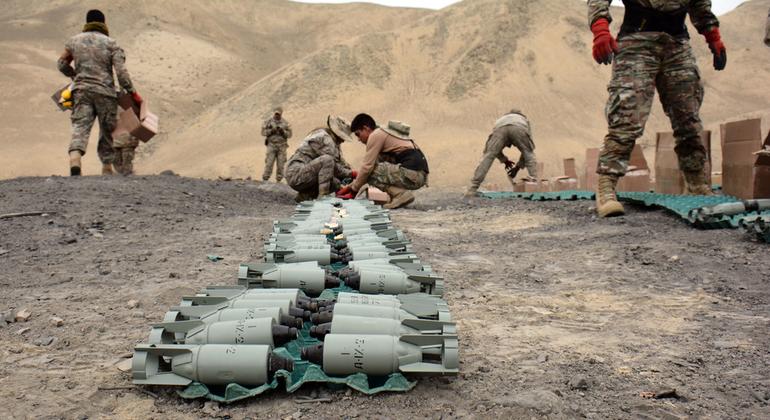
Cluster munitions continue to pose a significant threat to civilians around the world, with a staggering 93 per cent of global casualties in 2023 being non-combatants, according to the latest report from the Cluster Munition Coalition. The 100-page Cluster Munition Monitor 2024 highlights the devastating impact of these weapons on innocent people, particularly children, who accounted for nearly half of all those killed and injured by cluster munition remnants.
The Cluster Munition Coalition, a global civil society group operating in over 100 countries, has been working tirelessly to raise awareness about the dangers of cluster munitions and advocate for their elimination. Tamar Gabelnick, the director of the Coalition, expressed grave concern over the continued use of these weapons, stating that countries that have not banned cluster munitions are not only putting civilians at risk but also undermining the international treaty that prohibits these inhumane weapons.
The report, which will be presented to the 12th Meeting of States parties to the Convention on Cluster Munitions at the UN in Geneva, highlights the urgent need for all countries to join the treaty and work towards ending the suffering and casualties caused by cluster munitions. The Convention on Cluster Munitions, adopted in May 2008, prohibits the use, production, and stockpiling of cluster munitions, as well as mandates the clearance of contaminated areas and support for victims.
Despite the progress made with 112 States joining the ban, including South Sudan as the latest country to accede to the convention, there are still concerns about violations and new use of cluster munitions. The report reveals that cluster munitions were deployed in Ukraine by both Russian and Ukrainian forces in 2023, in violation of the treaty. Additionally, new use of these weapons was reported in Myanmar and Syria, further highlighting the need for stronger enforcement of the ban.
The number of manufacturers of cluster munitions has also increased, with Myanmar joining the list of countries producing these weapons. This raises concerns about the proliferation of cluster munitions and the potential for more civilian casualties in conflict zones. The report underscores the deadly legacy of cluster munitions, which, like landmines, continue to pose a threat long after conflicts have ended.
One of the most alarming aspects of cluster munitions is their indiscriminate nature, as many submunitions fail to explode on impact, leaving behind dangerous remnants that can harm civilians for years to come. The report identifies a total of 28 countries and areas that are contaminated or suspected to be contaminated by cluster munition remnants, highlighting the widespread impact of these weapons on communities and the environment.
The use of cluster munitions not only causes immediate harm to civilians but also hinders economic development and access to essential services such as healthcare and education. The report notes that attacks on civilian objects, including schools and hospitals, have had devastating consequences on communities, further underscoring the need for stronger action to eliminate these weapons.
In light of these alarming findings, the Cluster Munition Coalition is calling on all countries to join the Convention on Cluster Munitions and work towards a world free of these indiscriminate and deadly weapons. The international community must take urgent action to prevent further civilian casualties and ensure that those affected by cluster munitions receive the support they need to rebuild their lives.
As the report is presented to the Meeting of States parties in Geneva, there is hope that renewed efforts will be made to strengthen the implementation of the convention and hold accountable those responsible for violations. The protection of civilians in conflict zones must be a top priority for all countries, and the elimination of cluster munitions is a crucial step towards achieving lasting peace and security for all.