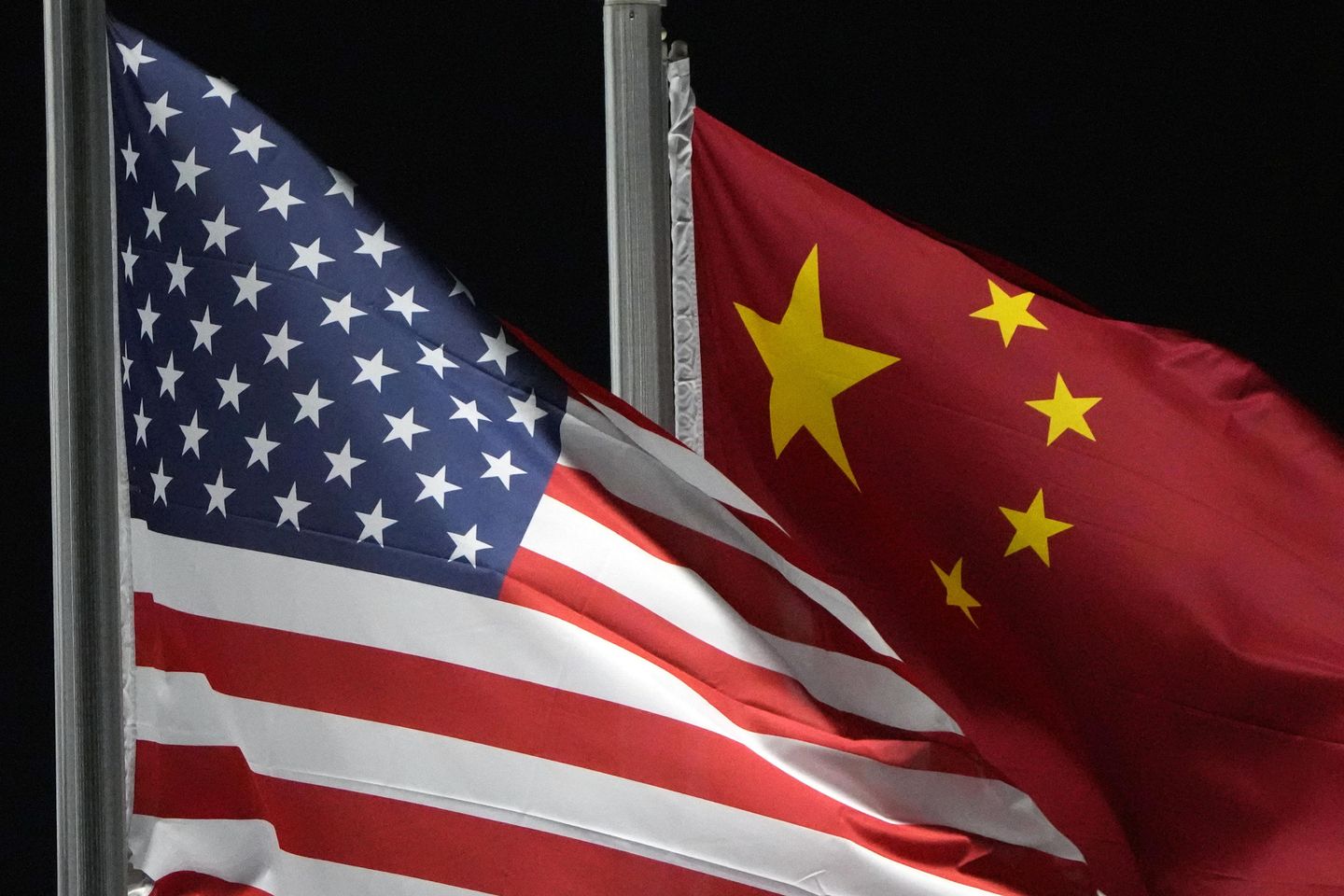
The upcoming presidential election in November has the potential to be a defining moment in determining which nation will take the lead on the world stage in the coming decades. The two main contenders in this race are the United States and China, both global superpowers with significant influence and resources at their disposal.
For years, the United States has been considered the world’s preeminent superpower, with a strong economy, military, and cultural influence. However, in recent years, China has been rapidly rising in power and influence, challenging America’s position as the dominant global force.
One of the key factors in this competition between the two nations is economic power. China has emerged as a major economic powerhouse, with a booming manufacturing sector, a large consumer market, and significant investments in infrastructure and technology. The Chinese government’s ambitious Belt and Road Initiative, which aims to build a network of infrastructure projects connecting China to countries around the world, is a clear demonstration of China’s economic ambitions.
On the other hand, the United States has faced economic challenges in recent years, including stagnant wage growth, rising income inequality, and a shrinking middle class. The Covid-19 pandemic has further exacerbated these economic problems, leading to record levels of unemployment and a sharp decline in economic growth. The Trump administration’s trade wars with China and other countries have also had a negative impact on the US economy, leading to higher costs for American consumers and businesses.
In addition to economic power, military strength is another key factor in the competition between the US and China. The United States has the world’s most powerful military, with a vast network of bases around the world, advanced weapons systems, and a massive defense budget. However, China has been rapidly modernizing its military in recent years, investing in new technologies such as hypersonic missiles, cyber warfare capabilities, and anti-satellite weapons. The Chinese navy has also been expanding its presence in the South China Sea and other strategic regions, challenging America’s naval dominance in the region.
Cultural influence is another important aspect of the competition between the US and China. The United States has long been a cultural superpower, with Hollywood movies, American music, and American fashion dominating global markets. However, China has been investing heavily in promoting its own culture and soft power around the world, with initiatives such as the Confucius Institutes, which promote Chinese language and culture in foreign countries. Chinese companies such as Huawei and TikTok have also become global brands, challenging American tech giants like Apple and Google.
The outcome of the upcoming presidential election could have far-reaching implications for the competition between the US and China. A victory for President Trump would likely mean a continuation of his policies towards China, including tariffs, trade wars, and a confrontational approach to Chinese expansionism. On the other hand, a victory for Joe Biden could signal a shift towards a more diplomatic and multilateral approach to China, seeking to engage with Beijing on issues such as climate change, nuclear proliferation, and global health.
Ultimately, the competition between the US and China is not a zero-sum game. Both nations have a stake in maintaining a stable and prosperous global order, and cooperation between the two countries is essential for addressing common challenges such as climate change, terrorism, and pandemics. However, the rivalry between the two nations is likely to continue for the foreseeable future, as both seek to assert their influence and protect their interests on the world stage. The outcome of the upcoming presidential election will be a crucial factor in determining which nation will lead in this competition in the coming decades.