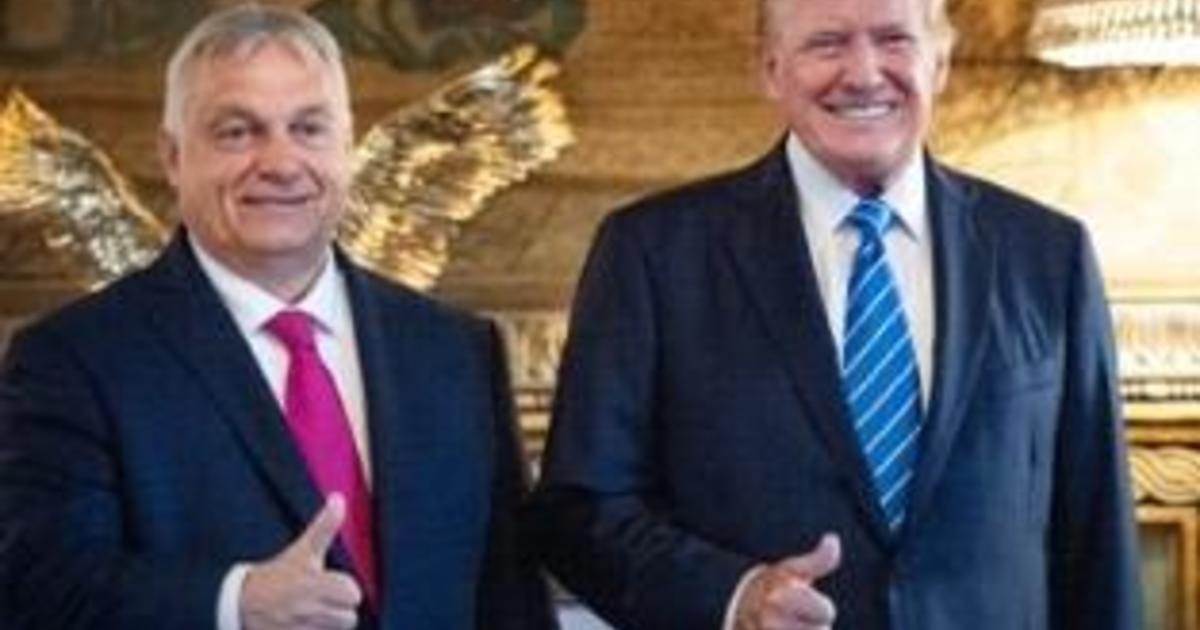
Hungary’s Prime Minister, Viktor Orbán, has been making headlines for his recent diplomatic visits to Russia and China, in addition to his meeting with former President Donald Trump in Florida. This move has raised concerns among Western allies, who view Orbán’s actions as potentially undermining the unity of the European Union and NATO.
Orbán’s meeting with Trump at Mar-a-Lago, the former president’s beachside compound, was portrayed as a discussion on ways to achieve peace. Orbán shared a photo of the two leaders on social media, along with a caption indicating that Trump would be the one to solve the issue. This meeting marked the latest stop on Orbán’s self-proclaimed “peace mission” to find a resolution to Russia’s war in Ukraine.
The Hungarian leader has openly endorsed Trump’s candidacy in the upcoming presidential election and expressed optimism that the Republican candidate could bring an end to the conflict in Ukraine. Orbán’s support for Trump stems from his admiration for the former president’s approach to international relations and his belief that Trump is a man of peace.
Orbán’s foreign policy has drawn criticism for its divergence from the positions of other EU and NATO members. His visits to Moscow and Beijing, in addition to his meeting with Trump, have raised questions about Hungary’s alignment with the broader Western alliance. Some European leaders have expressed concern over Orbán’s independent diplomatic initiatives and their potential impact on regional security and stability.
The European Union has long been critical of Orbán’s leadership in Hungary, citing concerns about his government’s restrictions on immigration, LGBTQ+ rights, and attacks on press freedom and judicial independence. Orbán’s embrace of what he calls “illiberal democracy” has further strained Hungary’s relations with the EU and raised questions about the country’s commitment to democratic values.
Orbán’s visit to Kyiv, where he met with Ukrainian President Volodymyr Zelenskyy, was seen as a positive step by some observers. However, his subsequent trip to Moscow to meet with Russian President Vladimir Putin drew condemnation from Kyiv and other European capitals. Orbán’s engagement with both Russia and China has fueled speculation about his foreign policy objectives and raised concerns about Hungary’s alignment with authoritarian regimes.
NATO Secretary-General Jens Stoltenberg emphasized the importance of unity among alliance members in supporting Ukraine and upholding shared values. Stoltenberg’s comments underscored the challenges posed by Orbán’s independent diplomatic initiatives and their potential impact on NATO’s cohesion and effectiveness. European leaders have been engaged in discussions on how to address the implications of Orbán’s foreign policy choices and ensure the alliance’s solidarity in the face of evolving geopolitical challenges.
President Biden’s administration has expressed reservations about Orbán’s meetings with Trump and other world leaders, cautioning against actions that could undermine U.S. foreign policy objectives. White House national security adviser Jake Sullivan emphasized the importance of consulting with key allies and coordinating efforts to address shared security concerns. Sullivan’s remarks underscored the need for a unified approach to international relations and the importance of upholding democratic values and principles.
As Orbán continues to pursue his “peace mission” and engage with world leaders, questions remain about the implications of his independent diplomatic initiatives for Hungary, the European Union, and NATO. The outcome of Orbán’s meetings with Trump, Putin, and Xi Jinping will likely shape the future of Hungary’s foreign policy and its relationship with key international partners. Amidst growing tensions and uncertainty on the global stage, Orbán’s actions have sparked debate and raised concerns about the direction of Hungarian diplomacy and its impact on regional stability and security.