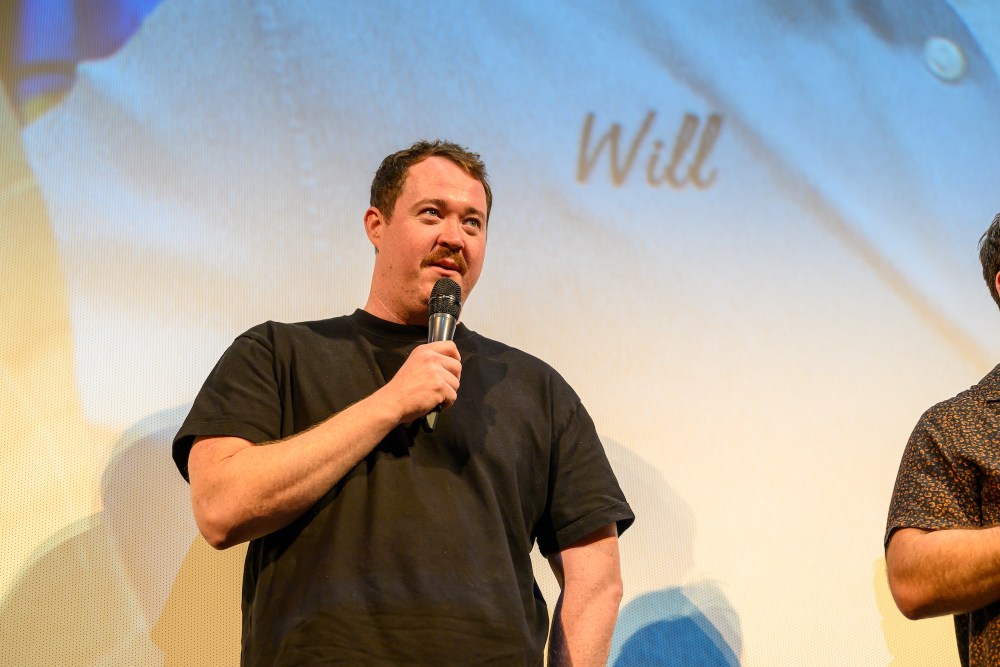
Shane Gillis Breaks Silence on Controversial ‘SNL’ Monologue, Admits His Joke Was a Victim of the ‘Climate’
Shane Gillis is finally speaking out about the firestorm that erupted over his Saturday Night Live monologue last month, and according to the comedian, the show’s producers never signed off on the jokes that landed him in hot water. During a lengthy appearance on The Joe Rogan Experience podcast, released Friday, November 13, Gillis addressed the backlash head-on, revealing new details about what happened behind the scenes before he took the iconic Studio 8H stage—and why he ultimately decided to delete his social media accounts in the aftermath.
The 38-year-old comedian, who has built a career on pushing boundaries, made headlines on October 10 after his SNL monologue included a crude and widely condemned segment about women’s workout attire. Gillis described women who wear tight, revealing clothing to the gym in terms that many viewers found offensive, and the ensuing backlash was swift, loud, and unrelenting. Hollywood celebrities, social media users, and commentators alike weighed in, with many accusing Gillis of contributing to a culture of misogyny at a time when conversations about how women are perceived and treated had never been more critical.
Now, Gillis is pushing back on the narrative that his remarks were carefully vetted by the long-running sketch show. Appearing alongside podcast host Joe Rogan, Gillis claimed that SNL personnel did not pre-approve the controversial jokes before he delivered them live on national television. “Not to defend SNL — they don’t approve it,” Gillis said, according to the episode. “I mean, they could shut it down.” He then recalled the conversation he had with the show’s team before walking onto the stage. “I’m giving you a solid C minus of a monologue, but I promise there’s no controversy,” he told them.
That promise, of course, did not hold. The monologue sparked immediate outrage, and Gillis found himself at the center of a media storm that quickly overshadowed his return to the show—a return that was itself already steeped in controversy. For many, the moment felt like a flashpoint, a glaring example of how far comedy can go before it crosses a line, and the reaction was split between those who saw a comedian doing his job and those who saw a harmful pattern of behavior being broadcast to millions of viewers.
The offending comments came during a segment in which Gillis admitted he hadn’t been to the gym in a long time, then marveled at what he described as a cultural shift in women’s fashion. “I haven’t been to the gym in so long, I didn’t know women just dress like whores now? Look, I’m sorry, there’s no other way to describe [it],” he said at the time. He went on to describe the kinds of shorts he was referring to, offering a vivid and graphic description that many viewers found degrading. “Have you seen it? I’ve seen it. You’ve seen the shorts? They’re those neon, like, artificial bait-colored [shorts], and the wrinkles go around the cheeks and all combine at the butthole. And don’t look! You’re not allowed to look.”
The language was explicit, and the internet reacted accordingly. The controversy unfolded at an especially sensitive moment. Just days before the episode aired, the public was still processing the news of the Jane Doe Cornell gang rape allegations, a case that had already ignited widespread conversations about sexual violence, victim blaming, and the ways in which women are conditioned to police their behavior in public spaces. In that context, Gillis’s words were seen by many as more than just a poorly conceived joke. They were viewed as part of a broader cultural problem—one in which women’s bodies are constantly scrutinized, objectified, and judged.
One of the most prominent voices to speak out against Gillis was Schitt’s Creek star Dan Levy. Taking to Instagram on October 11, Levy delivered a passionate and emotional response to the monologue, making it clear that he was not going to let the moment pass in silence. “Women wearing short shorts to the gym does not make them whores,” Levy said in a video shared with his followers. “It makes the men calling them whores misogynists. There’s a difference there.” Levy, who has long used his platform to advocate for equality and inclusion, went on to point out an apparent double standard in how bodies are treated in public spaces. He noted that he had “seen more men’s nipples at the gym than I’ve ever seen women showing their bodies off,” a remark that underscored his frustration with the way women are held to an entirely different standard.
Levy did not stop there. He expressed disbelief that such comments could air on live national television without consequence, and he called on men to do more to push back against misogyny in all its forms. “But I’m speechless that something like that can exist on live national television,” he continued. “And to be perfectly honest, more men need to be standing up in opposition to it because it’s complacency that has created the environment [in] which women are sexually assaulted, and it’s a conversation as opposed to a crime.” He added that this was not simply a women’s issue but “an everybody issue,” arguing that when men objectify women in the media, it creates a ripple effect that normalizes treating women as objects in real life. “They are not objects. They are superior human beings to men, OK? And I’m sorry if this gets me in trouble with the internet, but f***.”
Levy’s words struck a chord, and his video was shared widely across social media. It also helped frame the debate in terms that went beyond comedy. The question was no longer just whether Gillis had told a tasteless joke, but whether that joke—and the applause it received—reflected a deeper sickness in the culture.
But not everyone was ready to condemn Gillis. As the backlash continued to grow, a number of fellow comedians and celebrities came to his defense, arguing that his remarks had been taken out of context or that the outrage was disproportionate to the crime. Among those defenders were Saturday Night Live alumni Dana Carvey and David Spade, as well as British comedian Jimmy Carr. During an October episode of the Fly on the Wall podcast, Carvey, 71, admitted he didn’t understand the uproar. “I just didn’t understand the kerfuffle only because, to me, I just saw it as what we call it — I’ll just say it — a joke,” Carvey said alongside Spade, 62. “Like, when you say jokes, you’re not literally saying women are whores. You are literally joking. Isn’t that kind of the idea? No? Did I just get canceled?”
That line—the idea that a joke is not literal—became a central theme in the defense of Gillis. Supporters argued that comedy has always pushed boundaries and that the role of a comedian is to provoke thought, not to be taken at face value. But critics countered that the joke was not just edgy; it was cruel, and it was aimed at an already marginalized group in a way that reinforced harmful stereotypes. They pointed out that intent and impact are two very different things, and that regardless of what Gillis meant, the effect of his words was to validate misogyny.
During his conversation with Rogan, Gillis himself seemed to acknowledge that the timing of his joke was part of the problem. He admitted that the reaction had been shaped by the broader cultural moment, and that his words landed differently than they might have in another era. “[It] obviously had a lot to do with the climate,” he said. Gillis also revealed that he had chosen a different strategy in handling the fallout this time around. “The first time I got fired, I kept social media. This time, I just deleted everything immediately.”
The first time Gillis got fired, of course, was not from a short hosting stint but from the SNL cast itself. In 2019, Gillis was hired as a featured player on the legendary sketch show, but he was let go just four days later after audio clips of him using racial and homophobic slurs on his podcast resurfaced online. At the time, SNL stated that they had not been aware of his offensive remarks before hiring him. Gillis issued a statement but notably did not apologize for the comments, a decision that drew sharp criticism and that has followed him ever since. His return to the show as host last month was seen by many as an attempt at rehabilitation, but the monologue controversy proved that the wounds were far from healed.
Now, with his social media deleted and the dust beginning to settle, Gillis is left to navigate the aftermath of yet another scandal. Whether his career will recover remains to be seen. In the world of comedy, controversy is often a double-edged sword—it can damage a reputation, but it can also generate attention and even sympathy. Gillis’s appearance on Rogan’s podcast, where he was able to offer his side of the story in an unfiltered and relatively friendly environment, was likely an attempt to shape the narrative in his favor.
Still, the broader debate he has reignited is unlikely to disappear anytime soon. The intersection of comedy, gender, and power is one of the most contested cultural battlegrounds of our era, and Gillis has become a symbol of that friction. To his fans, he is a truth-teller willing to say the things others are too afraid to say. To his critics, he is a reminder of how far society still has to go in respecting women.
In the weeks since the incident, the conversation has continued to evolve. Some have called for SNL to take more responsibility for the content it airs, while others have defended the show’s decision to allow comedians to take risks. Lorne Michaels, the longtime SNL producer, has previously dismissed the backlash against Gillis’s casting as an “overreaction,” and it seems likely he would take a similar stance on this latest chapter.
As for Gillis, he remains characteristically unapologetic, even as he acknowledges the climate that made his joke so controversial. Whether that approach will serve him well in the long run is unclear, but one thing is certain: the conversation is far from over.