Trump Claims Republicans Would Have Won 2026 Midterms in a ‘Landslide’ If He Were on the Ballot
President Donald Trump has insisted that the Republican Party would have emerged victorious in the 2026 midterm elections in spectacular fashion — if only voters had seen his name on the ballot. In a late-night Truth Social post on Tuesday, November 3, Trump, 80, declared that GOP losses were entirely attributable to his absence from the race. “I wasn’t on the ballot and if I was, we would have won IN A LANDSLIDE! Thank you for your attention to this matter. President DONALD J. TRUMP,” the president wrote. At the time of publication, CNN had projected that Democrats would take control of the House of Representatives, a major setback for the Republican Party and for Trump’s second-term agenda.
The post marked the culmination of a months-long effort by Trump to make the midterms a referendum on his own political persona, rather than simply a verdict on the Biden administration or the state of the economy. In the run-up to Election Day, the president had repeatedly encouraged Americans to pretend that his name was on Tuesday’s ballot, urging supporters to treat the vote as a personal endorsement of his leadership. That message appeared to resonate with his loyal base, but the projected Democratic victory in the House suggested that it had not been enough to overcome the broader political headwinds facing the president and his party.
Trump’s late-night social media outburst was not his first attempt to redefine the meaning of the election results. Hours before the polls closed, he had offered a colorful and characteristically dramatic prediction about his own future should the American public ever turn against him. During a phone interview on the Tuesday episode of Fox & Friends, Trump said that if voters ever grew tired of him, he would not simply fade into political obscurity — he would relocate to Israel and seek a new career as prime minister.
“If people ever get tired of me in the U.S., I’ll move to Israel and become prime minister,” Trump stated during the live call. The remark was met with immediate speculation and mockery, with critics noting that the prime minister of Israel is not a position that can be claimed by an American political leader on a whim. But Trump has never been shy about making grand pronouncements, and he doubled down on his assertion that he remains immensely popular, both at home and abroad. “I’m at 99 [percent approval],” he claimed. “I have the highest approval rating of anybody in history.” No such poll was cited to support the statement, and the available polling data painted a very different picture. According to a CNN poll conducted between October 13 and October 26, the president’s disapproval rating in the United States registered at 64 percent, a number that would suggest far more Americans are dissatisfied with his performance than approve of it.
Undeterred, Trump continued to project confidence, frequently brushing aside unfavorable statistics and insisting that the media had misrepresented his standing with the public. During the same Fox & Friends appearance, he also weighed in on a matter of international significance: American military aid to Israel. Trump stated that he did not believe Israel needed the assistance any longer, even as the country remained embroiled in complex security challenges. “Israel’s our No. 1. We give them more than anybody else, and they no longer need it,” the president said. “We’ve been doing it for years. I’ve been doing it. But Israel is a very thriving country. They don’t need it. If they did need it, I would say keep it going.” The comments were notable given the long history of bipartisan support for military aid to Israel and the sensitive nature of U.S. foreign policy in the Middle East. Trump’s remarks suggested a willingness to reassess longstanding commitments, though he did not indicate whether any policy changes would follow.
In the final hours before the election, however, Trump found time for a lighter subject. During a Monday, November 2, appearance on the podcast “Pod Force One,” the president was asked by host Miranda Divine to rank the most attractive members of his current administration. Trump, always happy to offer an opinion, listed Vice President JD Vance, Secretary of State Marco Rubio, and Treasury Secretary Scott Bessent as his top picks. The question, delivered with a playful tone, seemed to catch Trump in an unusually expansive mood.
“Which one of those three? Or is it somebody else? Pete Hegseth?” Divine pressed, referring to the Secretary of War, who is also widely regarded as one of the more photogenic figures in the administration. Trump chuckled at the question, but he was cautious not to leave anyone out. “Pete’s a good-looking guy,” he said. “You’re going to get me in big trouble when you ask me those questions. Why do you do that? I think they’re all great looking.” He then elaborated on his selections, offering a somewhat unusual verbal assessment of each cabinet member’s appeal. “I’ll tell you what, Marco’s really a great hot politician in the sense that he’s done great. JD, the same thing. They’re all doing great. Scott Bessent is central casting, right? If I was going to do a movie on the Treasury, I’d pick him for the lead. They’re all good.”
The comments were classic Trump: equal parts compliments, self-promotion, and humor, delivered in a way that keeps his supporters entertained and his detractors exasperated. But behind the jokes about cabinet aesthetics, the political reality facing the administration was serious. The 2026 midterms were widely seen as a critical test of Trump’s influence over the Republican Party, and the early projections suggested that the party had fallen short. For months, Trump and his allies had worked to frame the election as a choice between his vision for America and the failures of the opposition. He held rallies, posted relentlessly on social media, and urged his followers to turn out in record numbers. Yet the projected loss of the House signaled that many voters were not convinced.
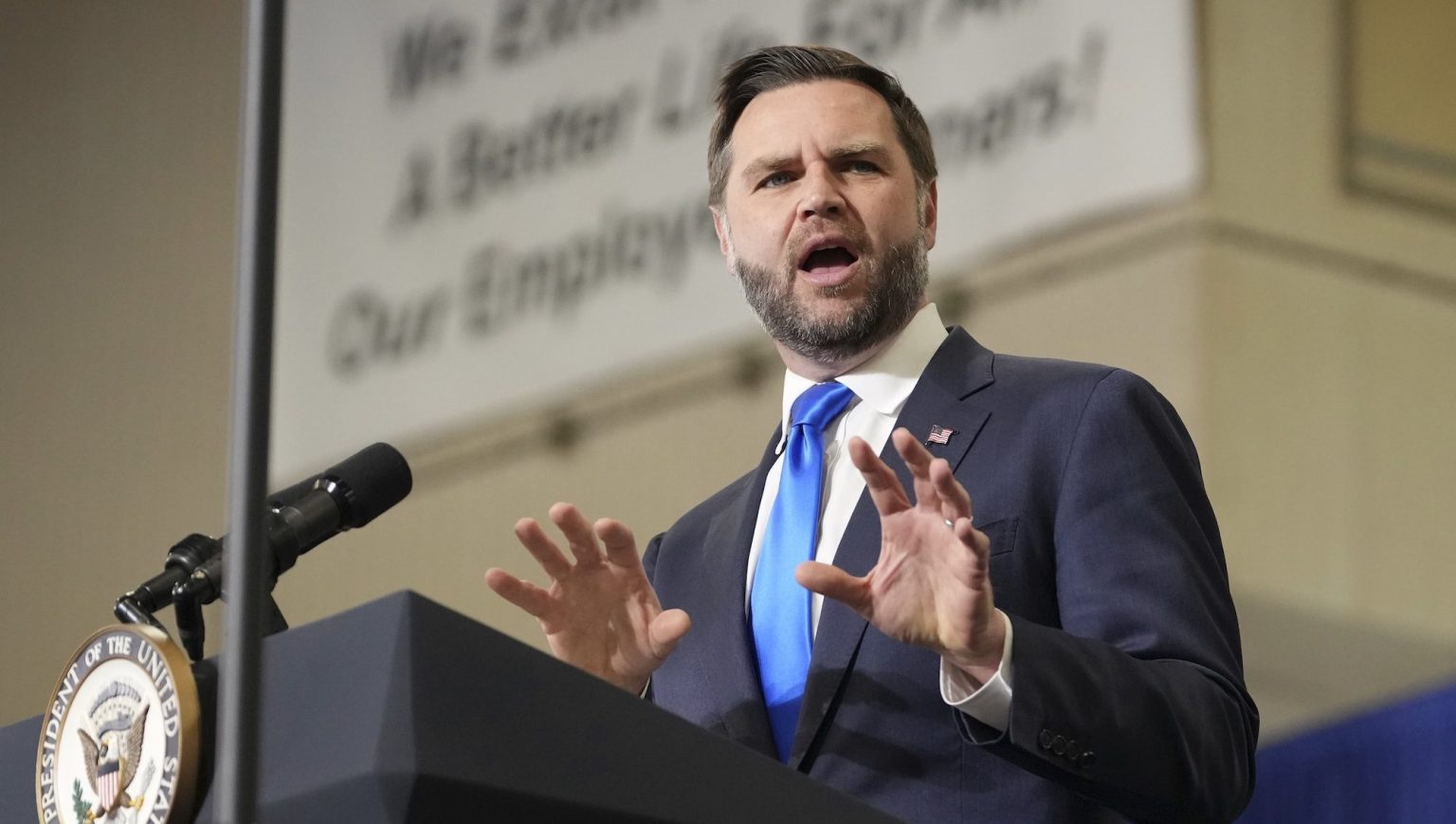
The president’s allies, meanwhile, have spent the weeks leading up to the election trying to shore up support for the administration in the face of historically low poll numbers. Vice President JD Vance, for example, made a direct appeal to voters during a September appearance on the “All In” podcast, begging Americans to give the Trump administration “another chance.” Vance, 42, acknowledged that the administration faced criticism and frustration, but he argued that the policies being implemented would ultimately benefit the country. “Give us another chance,” he pleaded, addressing the public directly. The interview was part of a broader campaign by administration officials to reassure voters that the president was focused on their concerns and that the negative polling was not indicative of the administration’s true record.
First Lady Melania Trump has also stepped into the fray, offering a supportive account of her husband’s leadership. In a Wednesday, September 23, appearance on Fox & Friends, Melania said that Donald Trump was working hard in his second term amid the difficult political climate. “He’s very focused. He has a lot on his plate,” she said. The First Lady insisted that her husband was doing “the best he can” and portrayed him as a dedicated leader navigating complex challenges. Her comments were seen as an effort to humanize a president whose public image often oscillates between combative and theatrical. Even as Trump joked about moving to Israel and ranking the physical attractiveness of his cabinet, Melania’s remarks reminded voters of the personal dimensions of political life.
For now, the full consequences of the 2026 midterm results remain to be seen. Trump’s claim that he would have secured a landslide victory had he been on the ballot is impossible to verify, but it reflects his unshakable belief in his own political appeal. It also raises questions about the future direction of the Republican Party, which has become increasingly defined by Trump’s personality and his willingness to challenge conventional political norms. Whether the projected Democratic takeover of the House will alter that dynamic is unclear. What is clear is that Trump intends to remain at the center of the conversation, whether through Truth Social posts, cable news interviews, or podcast appearances. His exit from the stage, if it ever comes, will likely be as unconventional as everything else about his political career.
In the meantime, the president’s comments about Israel, his approval rating, and the aesthetics of his cabinet will continue to generate discussion and debate. Supporters see a leader who speaks his mind and refuses to be bound by political correctness. Critics see a president who is out of touch with the concerns of ordinary Americans and preoccupied with personal image. Both interpretations were on full display in the final days before the election. Trump’s late-night boast about winning in a landslide may not match the projected reality of the midterm results, but it serves as a reminder that he is not going to accept defeat quietly. And with the 2028 presidential election already looming on the horizon, the political world will be watching closely to see what Trump does next.