Trump Claims Republicans Would Have Won Midterms in a Landslide if He Were on the Ballot
President Donald Trump is making a bold claim in the aftermath of the 2026 midterm elections: Republicans would have cruised to victory if his name had actually been on the ballot. The president, who spent the final months of the campaign imploring supporters to treat the midterms as a referendum on his leadership, took to Truth Social late Tuesday night to offer his immediate and unvarnished assessment of the election results.
“I wasn’t on the ballot and if I was, we would have won IN A LANDSLIDE! Thank you for your attention to this matter. President DONALD J. TRUMP,” Trump, 80, wrote on Truth Social in the late hours of November 3.
The post came at a moment of significant political turbulence for the president and his party. At the time of publication, CNN had projected that Democrats would take control of the House of Representatives, a major blow to the Republican Party’s hopes of maintaining unified control of Congress during the second half of Trump’s second term. The projection marked the latest in a string of discouraging signals for the administration, which had been battling historically low approval ratings and intense voter dissatisfaction heading into Election Day.
Trump, however, was not willing to accept the results as a reflection of Republican weakness. Instead, he framed the outcome through the lens of his own political brand, suggesting that only his presence on the ballot could have mobilized the voters needed to secure a decisive Republican victory. The president’s message was consistent with a strategy he had embraced throughout the campaign season: encouraging Americans to imagine that his name was on the ballot even when it was not. In the days and weeks leading up to the election, he repeatedly told supporters at rallies and in social media posts that a vote for any Republican should be treated as a vote for him, and he urged them to pretend they were casting their ballots for Trump himself.
But even as Trump projected confidence about what might have been, his pre-election comments revealed a more complicated relationship with the voting public. Hours before his Truth Social declaration, Trump made headlines during a phone interview on Fox & Friends by suggesting that he would not hesitate to leave the country if Americans ever turned against him. “If people ever get tired of me in the U.S., I’ll move to Israel and become prime minister,” Trump told the show’s hosts.
The comment, delivered in his trademark off-the-cuff style, was met with surprise by some viewers and derision by critics, but Trump quickly pivoted to what he described as his extraordinary popularity. “I’m at 99 [percent approval]. I have the highest approval rating of anybody in history,” he claimed during the same interview. Those remarks stood in stark contrast to data published by CNN, which conducted a poll between October 13 and October 26 that found the president’s disapproval rating in the United States registered at 64 percent. The gap between Trump’s self-assessment and the polling numbers underscored the challenges facing Republicans as they headed into the midterms.
During the Fox & Friends appearance, Trump also weighed in on a major foreign policy issue: United States military aid to Israel. The president’s comments suggested a potential shift in the long-standing American commitment to providing military assistance to its closest ally in the Middle East. “Israel’s our No. 1. We give them more than anybody else, and they no longer need it,” Trump said during the live phone interview. “We’ve been doing it for years. I’ve been doing it. But Israel is a very thriving country. They don’t need it. If they did need it, I would say keep it going.”
The remarks were notable for their brevity and their departure from the typical language used by American presidents when discussing the U.S.-Israel relationship. While Trump did not explicitly call for an immediate end to military aid, his suggestion that Israel no longer required the assistance raised questions about the future direction of U.S. foreign policy under his administration. Supporters read his comments as a recognition of Israel’s military and economic strength, while critics worried that reducing aid could destabilize the region and weaken a key strategic alliance.
Trump, however, seemed determined to keep the focus on domestic politics and his own personal appeal. In the lead-up to the election, he managed to find time for lighter fare, including a memorable ranking of the most attractive members of his administration. During the Monday, November 2, episode of the podcast “Pod Force One,” host Miranda Divine asked the president to name his favorite cabinet members in terms of personal appearance. Trump responded by listing Vice President JD Vance, Secretary of State Marco Rubio, and Treasury Secretary Scott Bessent as his top choices.
Divine, 65, pressed the president further, asking whether one of the three stood above the rest or whether someone else, such as Secretary of War Pete Hegseth, might be in the conversation. The question prompted a chuckle from Trump, who then joked that Divine’s line of questioning could land him in hot water. “Pete’s a good-looking guy,” Trump said. “You’re going to get me in big trouble when you ask me those questions. Why do you do that? I think they’re all great looking.”
The president then offered a more elaborate explanation of his rankings, praising each of the men he had singled out. “I’ll tell you what, Marco’s really a great hot politician in the sense that he’s done great. JD, the same thing. They’re all doing great. Scott Bessent is central casting, right? If I was going to do a movie on the Treasury, I’d pick him for the lead. They’re all good,” Trump said. The comments were classic Trump, blending personal observations about appearance with political praise for his chosen officials.
The podcast appearance was just one of several unconventional moments in the final stretch of the midterm campaign. Trump’s willingness to discuss topics ranging from his cabinet’s looks to his hypothetical future as Israeli prime minister reflected his broader approach to political communication, one that often defies traditional expectations and keeps the media cycle focused on his latest remarks.
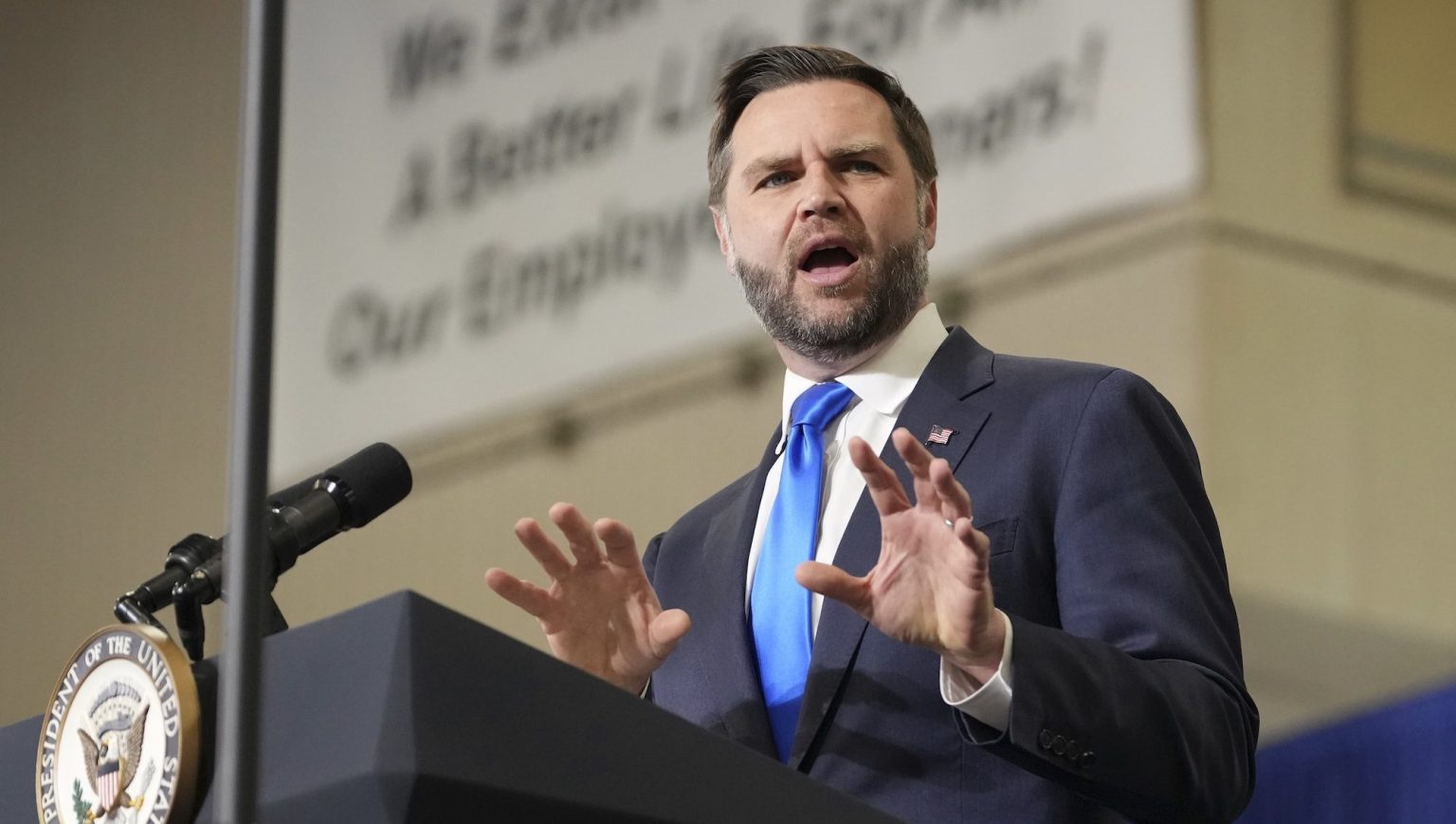
At the same time, other figures in the administration were working to shore up support for the president and his agenda. Vice President JD Vance had spent considerable time in the weeks before the election appealing directly to voters, pleading with them to give the Trump administration another chance despite what polls described as historically low approval numbers. Speaking on the “All In” podcast on Tuesday, September 15, Vance, 42, made an emotional pitch: “Give us another chance.” The vice president’s language suggested that the administration was aware of the public’s frustration but believed it could still win over voters if given additional time to deliver on its promises.
First Lady Melania Trump also stepped into the public eye to defend her husband, insisting that he was working hard in his second term and that criticism of his performance was unfair. “He’s very focused. He has a lot on his plate,” Melania, 56, said during a Wednesday, September 23, appearance on Fox & Friends. Her comments were part of a broader effort by the administration to counter negative narratives as the midterms approached.
The 2026 midterm elections were widely viewed as a referendum on Trump’s presidency, and the results appear to reflect significant public dissatisfaction. Voter turnout was high, and Democrats managed to make gains in key districts that had previously been considered safe for Republicans. The party’s projected takeover of the House signaled a return to divided government in Washington, a development that is likely to complicate Trump’s legislative agenda over the remaining two years of his term.
For Trump, however, the night was not about accepting defeat. His Truth Social post served as a reminder that he remains unwilling to concede that the political environment has turned against him. Whether his claim that he would have delivered a landslide victory for Republicans can ever be tested remains unclear, but the president’s confidence is unlikely to waver in the coming weeks.
As the dust settles on the 2026 midterms, political analysts are already speculating about what the results mean for the future of the Republican Party and for Trump’s influence within it. Some Republicans may argue that the party needs to distance itself from the president in order to appeal to a broader electorate. Others, including Trump himself, are likely to double down on the idea that his brand of politics remains the key to victory.
For now, Trump’s attention appears focused on defending his legacy and positioning himself for whatever comes next. Whether that involves another campaign for the White House, an unexpected move to Israel, or simply serving out the remainder of his term, the president seems determined to remain the center of the political universe. His late-night Truth Social message was a reminder that, even after a disappointing election night for Republicans, Trump is not going to fade quietly into the background. In his view, the 2026 midterms were not a rejection of his movement. They were simply a reminder of what happens when he is not on the ballot.