Shia LaBeouf Opens Up About Marriage to Mia Goth: “It’s Better on the Other Side”
In December 2016, Shia LaBeouf was feeling something he had never quite expected: genuinely optimistic about marriage. The actor, known for his intense roles in films like Transformers: Dark of the Moon and his equally intense public persona, sat down with E! News and shared a strikingly heartfelt perspective on his recent wedding to actress Mia Goth. Gone was the cynical, guarded version of LaBeouf that audiences had seen in countless interviews. In his place was a man who believed in partnership, family blending, and the unexpected joy of saying “I do.”
“It’s better on the other side,” LaBeouf told the outlet at the time. He made it clear that this wasn’t just a casual remark—it was a genuine admission that his expectations about marriage had been completely turned upside down. Like many people, he had grown up listening to warnings from those who came before him, people who described marriage as the end of fun, the beginning of compromise, or the point at which romance becomes routine. But LaBeouf wasn’t having any of that. “I’ve been lied to my whole life,” he confessed. “You always hear these people who are all cynical, like, ‘Ah, man, once you get married everything changes.’ But for the better though!”
The actor’s enthusiasm was palpable. He wasn’t just surviving married life; he was embracing it with open arms. And part of that excitement centered on the idea of building something new. Family, tradition, and shared celebrations were suddenly at the forefront of his mind. “I’m about to create some new ones,” he said, referring to memories. “My mom will be involved, her mom will be involved. I’ll probably have to do Hanukkah and Christmas and Kwanza and the whole nine.”
That image—LaBeouf juggling multiple holiday traditions with a smile—was a far cry from the troubled star often spotted in increasingly complicated public incidents. It suggested a man who was ready to settle into a different chapter, one that involved in-laws, holiday decorating, and the kind of domestic chaos that comes with blending two families. For fans of the couple, it was a heartwarming sign that things were going well.
LaBeouf and Goth’s relationship had moved quickly, but it wasn’t without a strong foundation. The two met on the set of Lars von Trier’s controversial 2013 film Nymphomaniac, where Goth played a younger version of the character portrayed by Charlotte Gainsbourg. At the time, LaBeouf was emerging from a period of highly publicized personal struggles, and Goth was a rising model and actress with a quiet, enigmatic presence. Their connection was reportedly immediate. They were seen together more frequently in 2015, and by early 2016, rumors began to swirl that the relationship had become serious. Those rumors proved true when the couple tied the knot in October 2016 in Las Vegas—an appropriately unexpected setting for a pair who always seemed to defy Hollywood convention.
The wedding was kept remarkably understated, especially by celebrity standards. There were no elaborate designer gown features, no magazine exclusives, no massive guest list of industry A-listers. Instead, reports indicated that the ceremony took place at a small Las Vegas wedding chapel, with only a handful of close friends and family in attendance. For LaBeouf, an actor who had spent much of his career under the glare of enormous publicity, the intimate nature of the ceremony seemed to be exactly what he wanted. It also matched the way he talked about Goth in the aftermath of the wedding—not as a Hollywood power partner, but as a person he genuinely wanted to build a life with.
That sense of authenticity came through in his E! News interview. When he spoke about involving both mothers in the family’s future traditions, he didn’t sound like someone trying to craft a perfect public relations narrative. He sounded like a husband who was genuinely thinking about the details of life after the wedding. The mention of Hanukkah and Christmas, plus his joking acknowledgment of Kwanzaa, highlighted the reality of a couple from different backgrounds figuring out how to create a shared space. It was a small moment of relatability from a man who was rarely described as conventional.
The timing of the interview also mattered. December 2016 was a moment of calm and hope for the couple. The wedding was still fresh. The early months of marriage were unfolding without major public controversy. LaBeouf, who had been known for erratic behavior, seemed steadier. He was working on projects, appearing more grounded in interviews, and speaking about his personal life with a clarity that had sometimes been missing in previous years. For those who followed his career, the transformation was noticeable. Marriage, at least in that moment, seemed to be providing something that other attempts at stability hadn’t.
It wasn’t just about the romance, either. LaBeouf’s comments reflected a deeper desire for family connection. Growing up in a complicated household, with parents who had their own struggles, the actor had often spoken about feeling disconnected from traditional family experiences. The idea of creating new memories—not erasing the past, but building something better for the future—was a significant step. By involving his mother and his mother-in-law, he was signaling that this new chapter wasn’t meant to isolate him from his roots. It was meant to expand his world. The image of LaBeouf navigating multiple holiday celebrations was, in a way, a symbol of his willingness to embrace the responsibilities and joys of family life.
Of course, the story of LaBeouf and Goth did not remain locked in that hopeful December glow. In the years that followed, the couple faced serious challenges. Reports of strain, substance abuse issues, and legal troubles began to surface. In 2018, Goth filed for divorce, bringing what had begun with such optimism in Las Vegas to an apparent end. The split made headlines, and fans who remembered LaBeouf’s enthusiastic comments about marriage were left to wonder what had gone wrong. The intervening years were difficult, marked by public setbacks, therapy, and a long road toward personal accountability on LaBeouf’s part.
Yet the story didn’t end there. In a surprising turn, LaBeouf and Goth reconnected. By 2022, reports emerged that the two had not only reconciled but had welcomed a child together. The news was met with a mixture of surprise and hope, with many noting that the couple had managed to find their way back to each other after one of the most public implosions in recent Hollywood memory. It was a complicated conclusion to a complicated love story, one that had clearly involved more than a few ups and downs.
Looking back at LaBeouf’s December 2016 comments, it’s easy to see both the sincerity and the fragility of that moment. He was not wrong to want a better life. He was not wrong to believe in the possibility of change. Marriage, as he discovered, could indeed be better on the other side—but only when both people are willing to do the work to stay there. The intervening years proved that LaBeouf still had a great deal of work to do. His journey has included apologies, therapy, and a recognition of the harm he has caused. It has also included moments of genuine connection and growth, including his reconciliation with Goth.
That particular December interview remains a fascinating time capsule. It captures a rare moment of unguarded optimism from a man who often guarded himself with chaos. The quotes are simple, almost ordinary: marriage is better than expected, family traditions are important, and creating new memories is something to look forward to. But in the context of LaBeouf’s life, they feel significant. They show a person reaching for something steadier, something warmer. They also show that he understood, even then, that love is not just about the two people at the center of it. It’s about mothers, holidays, shared histories, and the willingness to make space for something new.
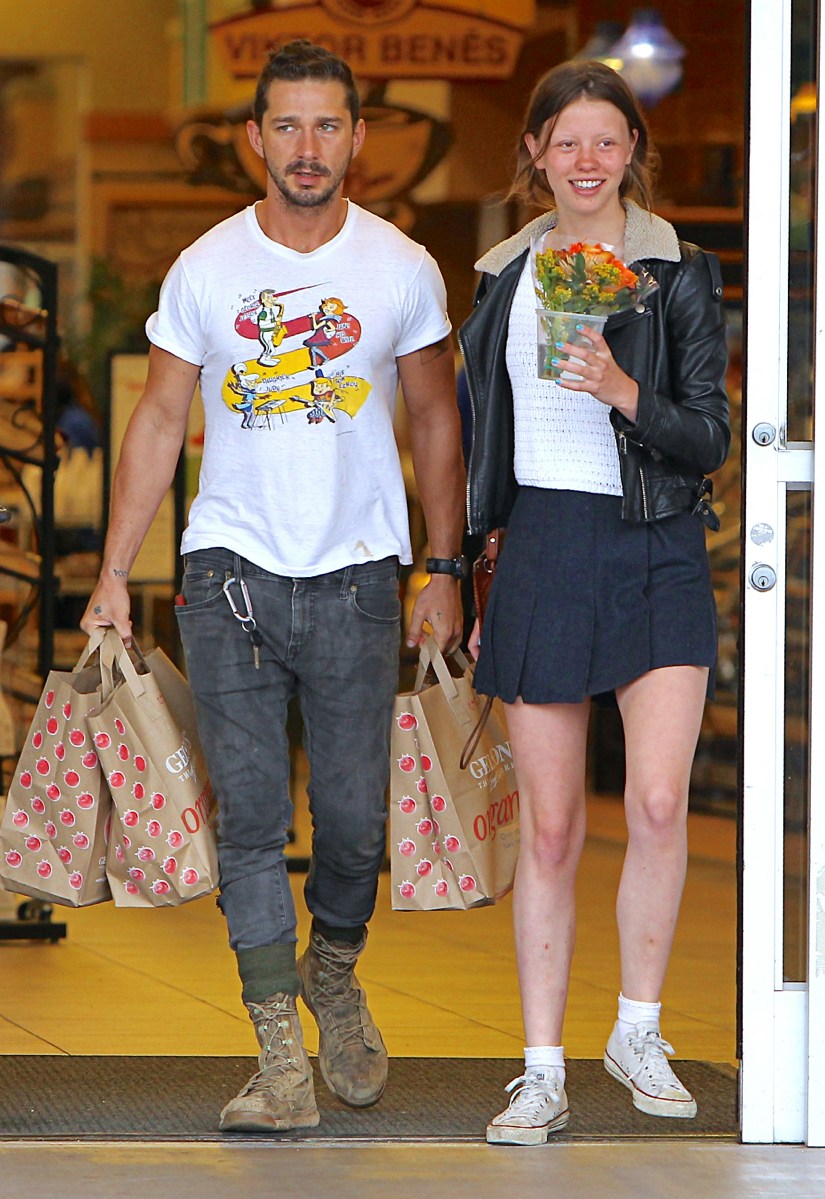
Today, the story of Shia LaBeouf and Mia Goth is still being written. They have experienced heartbreak, separation, and reconciliation. They have been private when they wanted to be and public when they had no choice. Through it all, the photograph from December 2016 remains a reminder of a time when the future felt full of possibility. It may not capture the full complexity of their relationship, but it captures something essential: the hope that comes at the beginning of a shared life. And for that, it is worth remembering.
In the end, LaBeouf’s words to E! News were not just a comment on marriage. They were a reflection of a deeper desire—to be different, to do better, and to believe that the other side of a commitment can be a place of joy. Whether that joy lasted or not, the sentiment was real. And for a moment, at the end of 2016, Shia LaBeouf allowed himself to believe that everything was going to be all right.