NASA’s Artemis II Archive Opens a New Window on Humanity’s Return to the Moon
If you thought the public had already seen everything there was to see from NASA’s Artemis II mission, the agency has thrilling news: you were wrong. This week, NASA posted more than 800 gigabytes of science data, images, videos, and audio recordings from the historic lunar flyby, making it available to scientists, space enthusiasts, and curious members of the public. The enormous collection has been published on the newly highlighted “Artemis II: Sights & Sounds of Science” website, and it is already being called one of the most complete, transparent, and exciting releases of mission material in the modern era of human spaceflight.
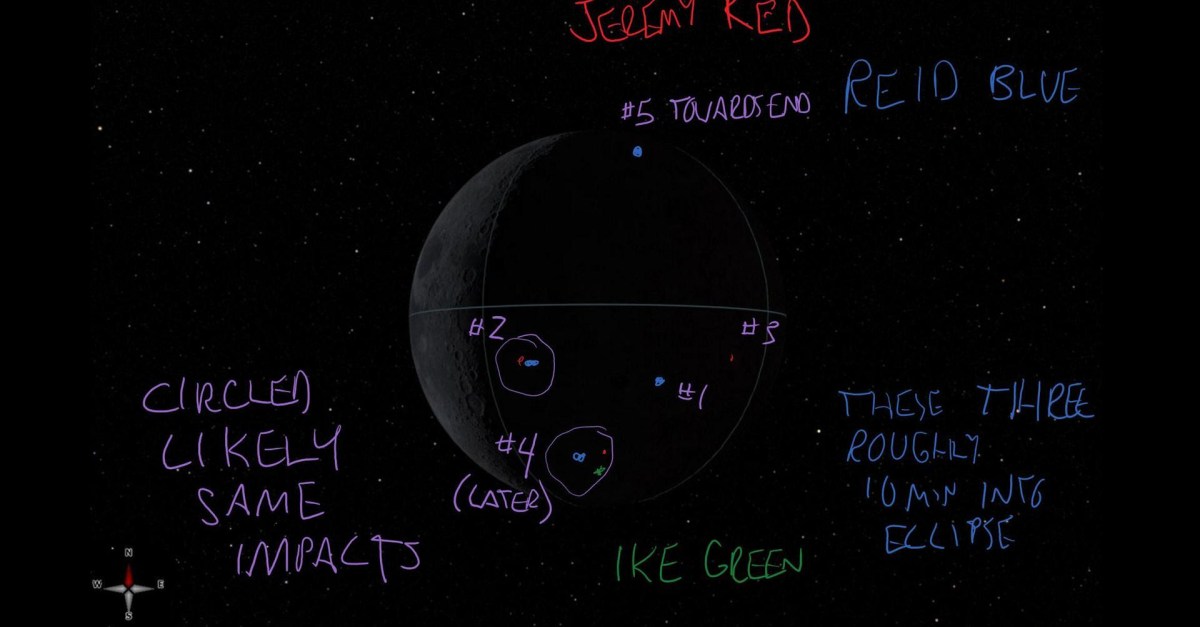
The archive is far more than a simple highlight reel. It contains more than 11,000 photographs and video clips, over eight and a half hours of audio, and a series of crew-annotated images that reveal exactly what the astronauts noticed as they traveled around the Moon. Among those annotations is a striking example: the crew marked the location where they observed impact flashes on the dark side of the Moon. For the first time, members of the public can see those observations through the astronauts’ own eyes, with their own notes, in ways that were previously fenced off in internal mission reports. Together, the newly released material offers an unprecedented view inside one of the most ambitious and widely watched space missions in decades.
The Artemis II mission represented a giant leap forward for NASA’s lunar exploration program. After an era dominated by robotic probes and automated observatories, Artemis II returned human beings to the vicinity of the Moon for the first time since the Apollo program. The crew traveled beyond low Earth orbit, looped around the lunar far side, and pushed human spaceflight deeper into space than any crewed mission in more than half a century. Along the way, they collected image after image, made careful observations, and communicated their findings back to the teams in Houston. The mission was not just a test of spacecraft systems; it was a scientific expedition, and the full depth of that expedition is only now becoming clear.
The newly released archive changes the public narrative in a fundamental way. Until now, much of what people saw from Artemis II was carefully selected, polished, and released in short bursts: a photograph of the Moon rising, a video of the spacecraft’s first hours, a transmission from mission control. This new release, by contrast, is raw and comprehensive. The more than 11,000 photos and videos cover the mission from liftoff to splashdown, including moments that never made it into official news conferences. The eight and a half hours of audio include exchanges between the astronauts and mission control, the quiet moments inside the spacecraft, and the excited voices of engineers and scientists reacting to the crew’s observations in real time. It is an enormous dataset, but it also feels personal, intimate, and unmediated.
Perhaps the most immediately gripping item in the archive is the footage of the crew telling the ground team back in Houston about their observation of impact flashes on the Moon’s dark side. The clip captures a moment of genuine scientific wonder. The voices of the astronauts are focused and precise as they describe what they saw, while the mission controllers in Houston respond with unmistakable enthusiasm. Impact flashes are not entirely new to lunar science; they have been detected before by telescopes on Earth and by instruments in lunar orbit. But the flashes observed by the Artemis II crew were different. They were subtle, brief, and faint, occurring on the side of the Moon that was cloaked in darkness during that phase of the mission. What made the moment even more extraordinary is that these may have been the faintest impact flashes ever observed with the human eye. The possibility alone was enough to electrify everyone on the audio loop.
To understand why this observation matters, it helps to remember what an impact flash actually is. The surface of the Moon is constantly being struck by small meteoroids and tiny pieces of debris left over from the formation of the solar system. When one of these objects slams into the lunar surface at high speed, the kinetic energy of the collision is converted into heat and light, producing a brief flash that can last only a fraction of a second. Because the Moon has virtually no atmosphere, that flash is not dimmed or scattered by air. It is a direct, unfiltered signal of a collision happening millions of miles off in the blackness of space. Most impact flashes are studied with telescopes and automated cameras, but having trained observers fly past the Moon and describe them in real time is something else entirely. The crew’s ability to see these faint flashes with their own eyes, amid the darkness of the lunar far side, is a testament to the unique role humans can play in scientific exploration.
The crew-annotated images in the archive add another layer of richness. In some cases, the astronauts marked the exact part of the lunar surface where they saw the impact flashes, providing a visual reference that future researchers can use to correlate crew observations with instrument data. These annotations are more than simple labels; they are records of human attention, indicating what stood out to people who had traveled 250,000 miles from Earth. They show where the astronauts looked, what they found interesting, and how they interpreted the unfamiliar landscape of the lunar far side. For planetary scientists, this is invaluable. Automated systems are excellent at collecting data, but they are not always good at knowing what is surprising, what is anomalous, or what deserves a second look. The annotated images from Artemis II help bridge the gap between raw scientific data and human curiosity.
The audio portion of the archive is just as significant. More than eight and a half hours of audio may sound like a small slice of a multi-day mission, but the recordings are carefully curated to capture the most scientifically meaningful and historically important exchanges. They include conversations between the four astronauts, their communications with the team at NASA’s Johnson Space Center in Houston, and the reactions of mission controllers as new data arrived. Listening to those recordings, researchers can study not only the technical details of the mission but also the human experience of flying around the Moon. They can hear the moment of tension, the moments of awe, and the quiet professionalism that defined the crew’s behavior. For historians and behavioral scientists, the audio is a treasure trove. For the general public, it is a chance to feel as though they are sitting in the capsule alongside the astronauts.
The release also comes with a preliminary lunar science report, which gives context to the data and offers early interpretations of what the crew observed. That report is an important starting point for scientists who want to dig deeper into the archive. It will likely be followed by peer-reviewed studies, updated models, and new discoveries as researchers compare the crew’s observations with the abundant imagery and instrument readings. NASA’s decision to package all of this together — data, images, videos, audio, and preliminary scientific findings — reflects a broader shift toward open science. By giving everyone access to the raw material of the mission, the agency is inviting the whole world to participate in the process of discovery.
For space enthusiasts, the archive is a reminder that no amount of live coverage can ever capture everything about a mission. There are always moments that happen off-camera or away from the official feeds, observations that are too subtle for a television broadcast, and conversations that never reach the public until much later. The Artemis II release changes that. It allows people to revisit the mission not through a polished documentary, but through the unedited, richly detailed record of what actually happened. It is, in a very real sense, a time capsule from one of the most significant moments in modern spaceflight.
The expedition itself was historic in many ways. The crew of Artemis II included astronauts from NASA and the Canadian Space Agency, representing a new era of international collaboration in deep-space exploration. Their journey around the Moon was a stepping stone toward future lunar landings, long-duration missions, and eventually human exploration of Mars. Every image they captured, every audio recording they made, and every annotation they added is part of a larger story that is still unfolding. The newly released archive helps ensure that story is not told only through the filtering lens of carefully controlled public affairs, but through the direct evidence of the people who were there.
In many ways, the most exciting part of this release is that it reminds us the mission is not really over. The spacecraft may have splashed down weeks or months ago, but the scientific work continues. The data released this week will be studied for years. Astronomers will use the observations of impact flashes to refine their models of meteoroid populations near the Moon. Planetary scientists will analyze the annotated images to make new geological maps of the far side. Behavioral researchers will study the voice recordings to understand how crew members communicate during periods of extraordinary stress and wonder. And the public will simply explore, clicking from one image to the next and sharing the discoveries they make along the way.
Perhaps the most powerful thing about the archive is that it contains both grand spectacle and intimate detail. There are images of the Moon that will hang in museums someday, and there are moments of human emotion that will resonate long after the technical details have been forgotten. The footage of the crew telling Houston about the impact flashes is one of those moments. It captures the pure joy of scientific discovery, the moment when a faint point of light on a pitch-black lunar surface becomes proof that the universe is still active, still surprising, and still worth exploring. The excitement in the room is unmistakable. You can hear it in the astronauts’ voices. You can hear it in the responses of mission control. And now, thanks to the release of over 800 gigabytes of data, you can be part of that moment for yourself.
The Artemis II archive is more than a collection of files. It is an invitation. It asks us to look closer, to listen carefully, and to remember that the greatest discoveries are often the ones no one expected. NASA has posted the data, the images, the videos, and the audio in an open and accessible format, and the rest is up to us. The mission may have ended, but the journey of exploration has only just begun.