‘It’s Better on the Other Side’: How Marriage Changed Shia LaBeouf’s Outlook in December 2016
In December 2016, Shia LaBeouf was radiating a kind of contentment that seemed a world away from the turbulent, complicated public image he had built for himself over the previous decade. The Transformers: Dark of the Moon actor had just married actress Mia Goth, and in an interview with E! News, he made one thing very clear: his once-skeptical attitude toward marriage had completely changed. “It’s better on the other side,” LaBeouf explained, referring to the unexpected emotional payoff of committing his life to someone. “I’ve been lied to my whole life. You always hear these people who are all cynical, like, ‘Ah, man, once you get married everything changes. But for the better though!’”
There was something undeniably sincere in that sentiment. LaBeouf had never been one to sugarcoat his feelings, but this was different. He was not talking about his latest movie or a public controversy. He was talking about his personal life, his relationship, and a quiet version of happiness that he had rarely allowed himself to acknowledge in front of cameras. After years of chaotic headlines and intense self-examination, he seemed genuinely surprised to find himself on the other side of a wedding ceremony, smiling and excited about the future.
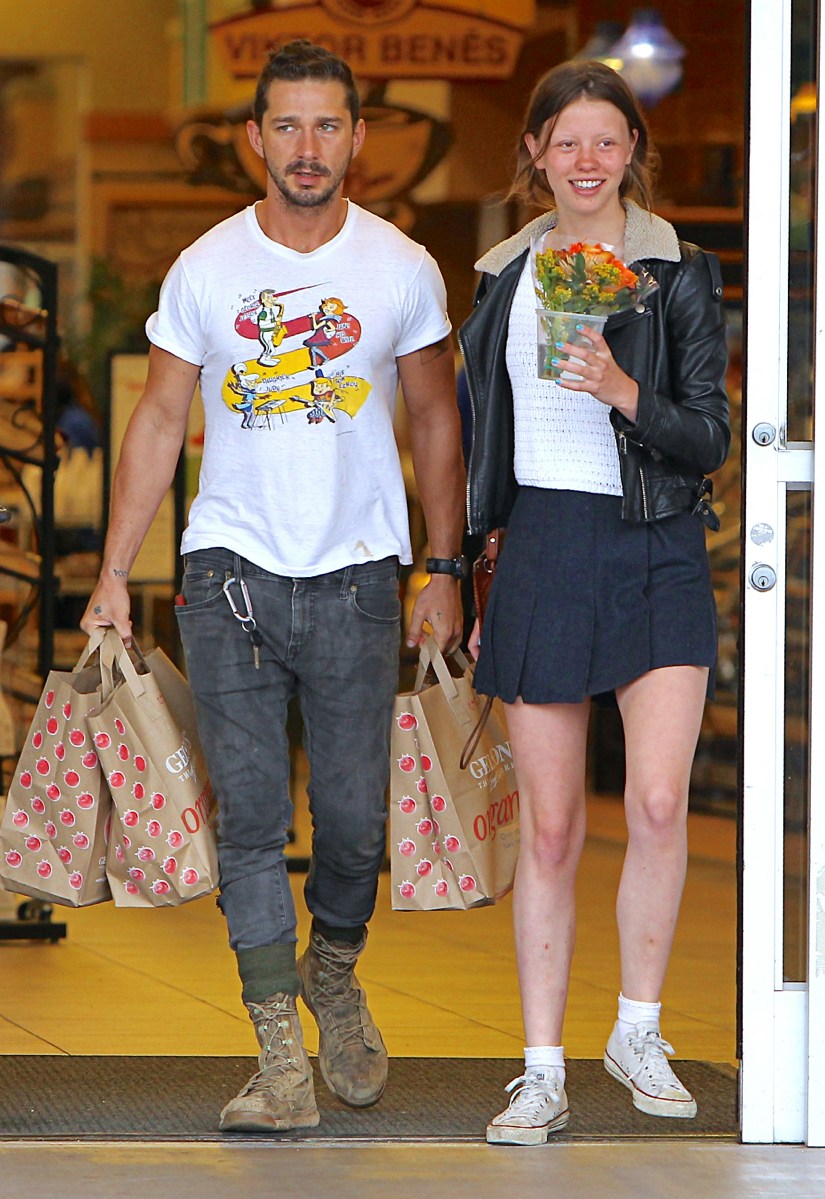
The couple’s love story began under unusual circumstances. LaBeouf and Goth first crossed paths on the set of Nymphomaniac, the provocative Lars von Trier film that had brought them both into a creatively intense world. At the time, Goth was relatively new to the industry, but her willingness to dive into challenging material made her a natural match for LaBeouf’s own artistic sensibilities. They were first romantically linked in 2013, when photos emerged of them walking together in Los Angeles. From the very beginning, there was a sense that this was not a typical Hollywood pairing. Both actors seemed to value privacy and emotional depth over the usual celebrity publicity cycle.
By 2016, their relationship had quietly evolved into something solid. Reports surfaced that they had tied the knot in Las Vegas that October, in a ceremony that was refreshingly modest for two movie actors. There were no massive celebrity guest lists, no elaborate media events, and no heavily staged magazine exclusives. It was an intimate, low-key affair that felt like a deliberate break from the kind of overproduced celebrity weddings that usually dominated tabloid coverage. For LaBeouf, who had spent years fighting against the machinery of stardom, the simplicity of it all seemed fitting.
In his E! News interview, LaBeouf did not just gush about the pleasures of being married. He also spoke with genuine excitement about building a family and creating new traditions. “I’m about to create some new ones,” he said, referring to the memories he and Goth would make together. “My mom will be involved, her mom will be involved. I’ll probably have to do Hanukkah and Christmas and Kwanza and the whole nine.” The quote was charmingly honest, capturing a man who was eagerly preparing to step into a larger, more complicated family life. It was a far cry from the image of LaBeouf as a brooding artist struggling under the weight of his own fame.
That image had been thoroughly cemented in the years before his marriage. LaBeouf had been arrested multiple times, publicly clashed with paparazzi and fans, and become known as much for his erratic behavior as for his impressive acting résumé. He once wore a paper bag over his head that read “I AM NOT FAMOUS ANYMORE.” He staged public performance art stunts that left audiences uncertain whether they were watching a profound meditation on celebrity or an elaborate cry for help. He had struggled with alcohol, anger, and the overwhelming pressures of being constantly watched. For many observers, LaBeouf was a cautionary tale: a talented young man whose demons seemed to be gaining on him.
But the December 2016 interview told a different story. The man speaking with E! News sounded grounded, optimistic, and deeply appreciative of the woman by his side. He credited marriage with changing his perspective in ways he had never anticipated. For years, he said, he had been surrounded by cynics who warned him that tying the knot would destroy his freedom or snuff out his creativity. Instead, he had found the opposite. Marriage had opened a new door. It had given him a base, a partner, and a reason to look forward rather than back. “But for the better though!” he added, as if correcting the record on all the negative things he had ever heard about commitment.
Mia Goth, for her part, was already establishing herself as one of the most compelling young actresses of her generation. Though she was often described in the press as LaBeouf’s wife, her work spoke for itself. She had appeared in Nymphomaniac and would go on to star in a string of ambitious, genre-defying films including A Cure for Wellness, Suspiria, and the X horror franchise. Her performance in Pearl, in particular, became a sensation, showcasing the kind of fearless, emotionally unsparing acting that few performers are willing to attempt. She was not someone who needed the spotlight, but she could command it whenever she chose. That made her a fitting partner for LaBeouf, who had always seen himself as a serious artist trapped in a celebrity machine.
Of course, their relationship and all its “ups and downs” would continue to evolve over the years. The title of the original gallery — Shia LaBeouf and Mia Goth’s Relationship Ups and Downs Through the Years — hints at the complexity of their bond. In 2018, reports emerged that the couple had split, with some sources indicating that Goth had filed for divorce. Fans were disappointed, but not entirely surprised given the intense pressures of their lives and careers. Yet the story did not end there. LaBeouf and Goth eventually found their way back to each other, and by the early 2020s, they had welcomed a child together. Their journey was never a straight line. It was a winding, often messy path marked by reconciliation, growth, and a persistent desire to make things work.
Looking back at LaBeouf’s December 2016 comments, it is easy to see why they struck such a chord. The actor, who had publicly struggled with anger, addiction, and the aftershocks of childhood fame, was admitting that love had changed him. He was not pretending to have all the answers. He was simply saying that he had been wrong about marriage. He had expected the cynics to be right. He had expected commitment to feel like a trap. Instead, he discovered that it felt like liberation. That is a compelling narrative, especially from someone who had spent so many years playing the role of the outsider.
The holidays he mentioned in that interview — Hanukkah, Christmas, Kwanza — were more than just throwaway words. They represented the beautiful, chaotic blending of two families. They represented compromise, shared traditions, and the work that goes into creating a home. For a person like LaBeouf, who had spent much of his life in transit or in trouble, the idea of building something stable was transformative. It was the kind of domestic happiness that he had probably never allowed himself to imagine.
In the years since, LaBeouf’s career has become more selective, and he has spent long stretches out of the public eye. Goth, meanwhile, has continued to rise, becoming one of the most critically celebrated actresses of her era. Their relationship remains a subject of fascination, not because it is perfect, but because it is human. Every marriage has periods of closeness and distance. Every couple has to negotiate the tension between individual ambitions and shared dreams. LaBeouf and Goth have faced that tension publicly, under the glare of tabloid cameras, and they have somehow continued to find their way back to one another.
But the most enduring image of them may still be the one from December 2016 — that optimistic moment before everything became even more complicated. It was the moment LaBeouf stood in front of a reporter and insisted that marriage had made his life better. It was the moment he shrugged off the cynics and embraced the future. “I’ve been lied to my whole life,” he said, repeating the warning he had heard countless times before. Then he added the crucial amendment: “But for the better though!”
It was a simple statement, but it spoke to something profound. Love, even imperfect love, is worth the risk. Family, even a complicated family, is worth the effort. And sometimes, the very thing you are most afraid of — commitment, vulnerability, the loss of the freedom you think you need — turns out to be the only thing that can set you free. That was the message Shia LaBeouf seemed to be offering in that December 2016 interview. It is a message that has stayed with audiences ever since, because it offers hope that change is possible, even for the most unlikely people.