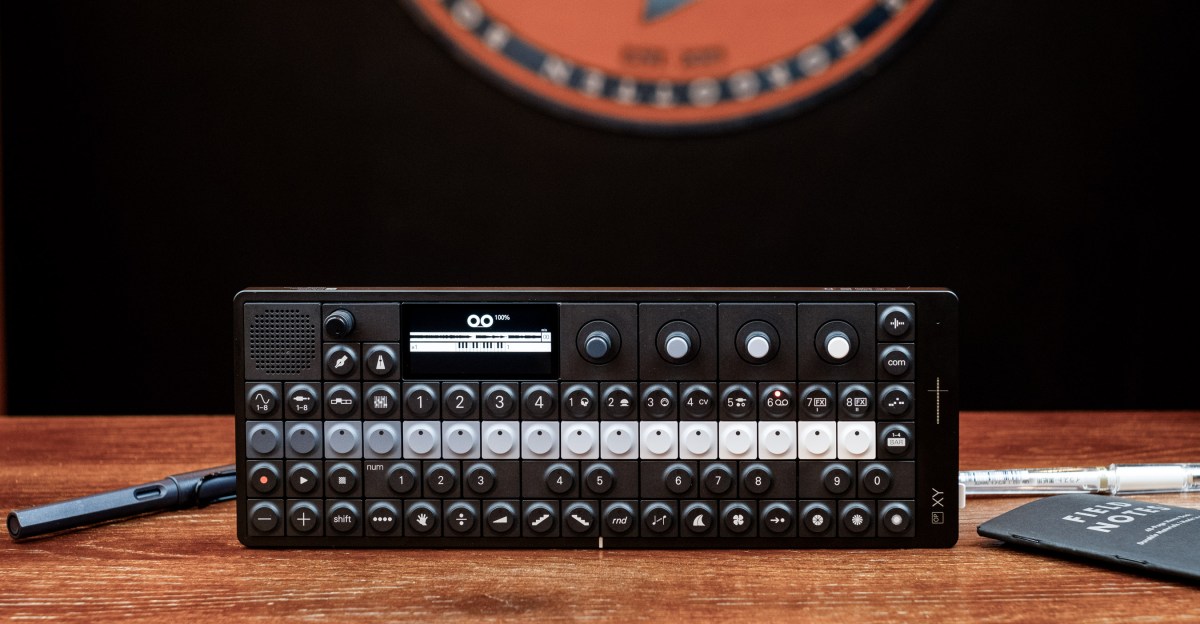
Teenage Engineering Confirms Exit from Synthesizers: OP-1 and Beyond
In a disclosure that has sent shockwaves through the music technology world, Teenage Engineering founder Jesper Kouthoofd has confirmed that the company is planning to stop making synthesizers altogether. The announcement, delivered internally as part of a reorganization last fall, includes the iconic OP-1 — the instrument that launched the company into the global spotlight in 2011 and has remained central to its identity ever since.
Kouthoofd’s revelation makes clear that one of the most influential hardware synth manufacturers of the past decade is walking away from the category entirely. The OP-1, beloved by bedroom producers and touring professionals alike, will not be spared. According to Kouthoofd, the decision is final and rooted in a fundamental reshaping of what the Swedish company intends to become.
“Everyone was like, ‘What are you talking about?’ But I’ve come to the conclusion that, for us, the products aren’t the business,” Kouthoofd said. “We can be so much more than that.”
The quote captures the philosophical shift driving one of the most striking corporate pivots in modern musical instrument manufacturing. Teenage Engineering, which has often operated more like a consumer electronics brand than a traditional synth company, appears to be shedding its most iconic hardware line in pursuit of something less tangible and far more expansive.
The Legacy of the OP-1
First introduced in 2011, the OP-1 was unlike anything else on the market when it arrived. With its distinctive orange-and-cream chassis, quirky tape-style workflow, and a dizzying array of synthesized voices, drum machines, and effects, it was less a conventional keyboard workstation and more a piece of portable art. Musicians embraced it for the way it seemed to encourage accidental creativity. Its tiny keys, custom display, and unique storage system practically demanded that users think differently about composition.
Over the years, the OP-1 became a cultural phenomenon. It appeared on stages with major headliners, in studios alongside classic instruments, and in thousands of YouTube videos showcasing its playful interface. Special editions were released, each one snapped up by collectors within minutes. The device received firmware updates long after competitors would have moved on, and a revised version – the OP-1 Field – was introduced, refining the hardware while retaining everything that made the original so valued.
Telling those who have followed the company from the beginning that Teenage Engineering has no intention of making any more synthesizers feels almost like saying a beloved chef is closing the kitchen and opening a bookstore. The OP-1 has been that closely associated with the Teenage Engineering brand, representing its design language, its eccentricity, and its refusal to conform to established industry patterns.
A Reorganization and a Surprising Internal Reaction
Kouthoofd revealed that the decision came together as part of a broader reorganization effort initiated last fall. The plan, kept largely under wraps until now, was delivered to his team directly. The response, by his own account, was one of intense disbelief. It is not hard to understand why. Teenage Engineering has spent years perfecting compact, highly expressive hardware instruments, from the OP-1 to the more accessible Pocket Operator series. For many employees, the synthesizer line was the company’s beating heart.
Yet Kouthoofd appears to view the situation differently. In his telling, the physical products were only ever an expression of something larger, not the core itself. The staff working under him, however, were taken completely by surprise. The conversation around the conference table must have been filled with the kind of existential questions that few companies would dare to face head-on. If we stop making synthesizers, what are we? If the OP-1 goes away, what will the world remember us for?
Those questions tie directly into the organizational shift that is now underway. Teenage Engineering, lean by nature and shaped by founder-led decisions, has repeatedly shown that it is willing to challenge assumptions. This move is arguably its most defiant yet. Rather than riding the analog revival boom or chasing another flagship hardware release, the company appears to be betting that its true future lies elsewhere.
“The Products Aren’t the Business”
Kouthoofd’s phrase deserves careful examination. On its surface, it could be read as a strange dismissal of the very instruments that gave Teenage Engineering its name. But it can also be interpreted far more broadly. Modern successful companies often outgrow the original objects they made. Apple is not merely a computer company. Amazon is not merely an online bookstore. In that sense, Teenage Engineering may be following a familiar trajectory, seeking to move past the constraints of a single product category in order to build a larger and more durable enterprise.
Throughout its history, Teenage Engineering has shown an appetite for projects that lie adjacent to, but not fully inside, the synthesizer market. The company has designed everything from portable speakers and turntables to lighting products and home audio systems. It has collaborated with furniture makers, streaming services, and automotive brands. It has also demonstrated a relentless interest in user experience, industrial design, and the emotional connection between people and objects.
If the products are not the business, then what is? Kouthoofd’s answer is intentionally broad: “We can be so much more than that.” That vision could encompass software, applications, design consultancy, partnerships, entertainment experiences, or even a move into entirely undefined territories. Teenage Engineering has always behaved like a lifestyle-oriented brand with a highly developed sense of whimsy. It is not difficult to imagine the company lending its creative engines to unusual new launches that have nothing to do with making musical instruments.
Industry Implications
The music hardware industry is famously resilient, but it has also grown increasingly crowded in recent years. The interest in compact, portable synthesizers has attracted a wave of boutique competitors and established brands alike. While Teenage Engineering never lacked for attention, the manufacturing environment has become more challenging. Global supply chain issues, rising component costs, and the sheer difficulty of producing complex analog-and-digital hybrid instruments can pressure even the most recognized names.
For Teenage Engineering, stepping away from synthesizers may be a way to avoid the high costs and long lead times associated with hardware development. The company could instead focus on products with faster development cycles, higher recurring revenue potential, or simpler logistics. Kouthoofd’s language suggests a visionary shift rather than a defensive retreat, but the practical effects are the same: the OP-1 will no longer be produced, and the synthesizer line is being retired.
Fans and collectors will likely respond in predictable ways. Already scarce instruments may become even more sought after. The OP-1 has held its value remarkably well over the years, and a formal retirement may send resale prices climbing. More than the financial impact, though, the emotional ripple is significant. For an entire generation of musicians, Teenage Engineering represented a certain idea of what music technology could be. The company proved that devices could be joyful, unconventional, and deeply personal. That legacy will not disappear with this announcement, but it will inevitably take on new meaning.
Looking Ahead
Exactly what Teenage Engineering will do next remains shrouded in ambiguity, and Kouthoofd seems to prefer it that way. The company has often teased future projects with elaborate visuals and sparse copy, letting the community speculate and unpack the clues. Moving away from synthesizers gives the team the freedom to redefine itself in a way that is not bound by legacy expectations.
The phrase “We can be so much more than that” is not about discarding the past. It is about refusing to be trapped by it. The OP-1 will remain a milestone, a touchstone, a gateway into the company’s rich and unusual imagination. But its creator is clearly looking forward. The reorganization last fall was the first step. The public confirmation is the second. What follows is likely to feel entirely different from what has come before.
Whether Teenage Engineering’s next act includes music at all remains to be seen. Kouthoofd’s announcement is carefully worded, leaving the door open for software, service-based offerings, or even a return to hardware categories that are not traditionally described as synthesizers. The company could devote its attention to mobile applications, cloud-based creative tools, or standalone gear designed for entirely separate purposes. The common thread will be design, innovation, and a willingness to take risks.
For those who grew up watching Teenage Engineering’s small orange devices become symbols of modern music production, the news is bittersweet. Yet Kouthoofd’s confidence is undeniable. His team may have been stunned by the announcement, but he appears entirely convinced that this extraordinary decision is the correct one.
As the company rewrites its own narrative, the broader lesson is that even the most beloved products are temporary. What lasts is the capacity to imagine something new. Teenage Engineering has now made clear that its ambitions extend far beyond the synthesizer. In doing so, it may have closed one chapter and opened another of equal, perhaps greater, significance. The world will now wait to see where that restless creativity takes them next.