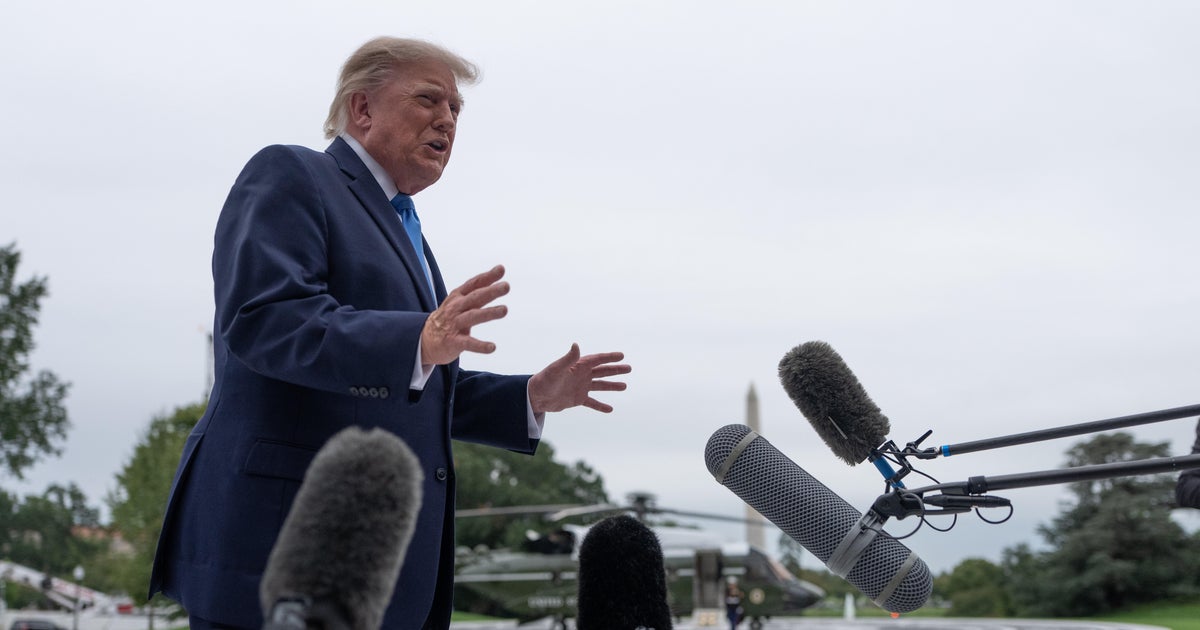
Washington — President Trump announced Sunday the formation of a new federal initiative called the “Super Intelligence Force,” just days after hosting executives from the country’s leading artificial intelligence companies at the White House. The announcement arrives amid intensifying public debate over the risks and benefits of rapidly advancing AI technology, and as lawmakers and advocacy groups increasingly demand stronger guardrails.
In a post on Truth Social, the president described the new task force as a direct response to what he called the “Historic White House Accord on Super Intelligence.” He wrote that the world’s most important technology companies had come together and confirmed their responsibilities to the American people. He then declared the creation of the Super Intelligence Force, or SIF, which he said would coordinate with the federal government to make sure that the United States continues to lead the world in the field.
Trump also noted that “super intelligence” is the phrase he has directed federal agencies to use in place of “artificial intelligence.” The terminology shift is part of a broader effort by the administration to frame the technology as a top strategic priority, particularly as international competition intensifies. The new task force, according to the president, will engage with a wide range of stakeholders, including consumers, public interest groups, religious organizations, infrastructure providers, and leaders from across the technology industry.
At the head of the Super Intelligence Force will be Jay Clayton, the Director of National Intelligence. CBS News reported last week that Clayton was widely expected to be tapped for the role of AI czar, based on information from sources familiar with the matter. Trump had hinted at that possibility after his White House meeting with the heads of major AI firms, telling reporters that he planned to name an AI czar within three or four days. Clayton’s selection signals that the administration views AI not only as an economic issue but also as a matter of national security and intelligence.
Joining Clayton in leading the new force are several other prominent figures. Andrew Ferguson, the chairman of the Federal Trade Commission, will also be among the leaders. In addition, Emil Michael, who currently serves as Under Secretary for Research and Engineering and Chief Technology Officer at the Pentagon, will have a key role. Scott Kupor, the director of the Office of Personnel Management, rounds out the leadership team. The president said that all of these officials will report directly to him and to White House Chief of Staff Susie Wiles. This structure suggests that the Super Intelligence Force will operate with a high degree of authority across multiple government agencies, from national security to consumer protection to federal workforce management.
The announcement follows a high-profile meeting at the White House last week that brought together the leaders of some of the most powerful AI companies in the world. Among those in attendance were representatives from OpenAI, Anthropic, Google, Meta, Nvidia, and SpaceXAI, the AI venture associated with Elon Musk. During that meeting, according to the White House and the companies themselves, the executives signed a set of voluntary safety standards intended to address concerns about the potential dangers of advanced AI systems.
Trump called those standards “morally binding,” emphasizing that the companies involved had shown a willingness to monitor their own work. He told reporters that he was seeing “tremendous self-policing” within the industry, and that the companies understood they had a duty to police themselves. The president’s characterization of the voluntary standards reflects his preferred approach to AI regulation so far: a light-touch framework in which the government provides guidance but the private sector takes the lead in enforcing safety practices.
According to a copy of the one-page accord that Trump shared on Truth Social, the technology companies committed themselves to a detailed system of oversight. The agreement includes what the president called “four layers of controls and audits” to ensure that AI models behave as intended. Those layers include internal evaluations conducted by the companies themselves, audits carried out by an external firm, and reviews by each company’s board of directors. The executives also agreed to meet regularly to establish standards and share best practices for improving the safety of their systems.
The accord, though brief, represents a significant moment in the ongoing relationship between the U.S. government and the artificial intelligence industry. For years, experts have called on policymakers to move beyond voluntary commitments and adopt legally enforceable rules for AI development. Some have warned that without mandatory oversight, companies may cut corners in the race to build more powerful systems. Others have argued that regulation could stifle innovation and hand a competitive advantage to countries like China, which are investing heavily in their own AI programs.
Trump’s announcement of the Super Intelligence Force appears intended to strike a balance between those concerns. By placing a national intelligence official at the helm, the administration is signaling that AI development is tied directly to national security. At the same time, by including the FTC chairman, the task force is expected to keep a close eye on consumer protection issues, including privacy, bias, and market competition. The involvement of the Pentagon’s chief technology officer further underscores the military dimension of AI, which is already being used in surveillance, logistics, and autonomous systems. And the presence of the Office of Personnel Management director suggests that the federal government is also thinking about how AI will reshape its own workforce and hiring practices.
The president’s decision to replace the term “artificial intelligence” with “super intelligence” in federal language could have broader consequences as well. Some researchers use “superintelligence” to describe a hypothetical form of AI that surpasses human intelligence in almost every domain. By adopting that language, the administration may be preparing the public for a future in which AI systems take on increasingly autonomous roles in decision-making, from military targeting to medical diagnosis to financial management. Critics of the terminology argue that it risks overhyping current AI capabilities, while supporters say it accurately reflects the trajectory of the technology and the need for urgent attention.
The creation of the Super Intelligence Force comes at a moment of growing political pressure. Democratic lawmakers have introduced legislation that would mandate safety testing and transparency for large AI models. Public interest groups have filed complaints about algorithmic discrimination and consumer harms. Some tech industry leaders have themselves called for regulation, including Sam Altman of OpenAI, who has testified before Congress about the potential existential risks of advanced AI. Trump’s task force is expected to serve as the primary coordinating body for the federal government’s response to these issues.
While the president framed the initiative as a bold step toward maintaining American leadership, questions remain about how much power the task force will actually wield. The voluntary nature of the accord signed at the White House means that companies are not legally bound to follow through on their promises. Whether the Super Intelligence Force can compel compliance will depend on the authority assigned to its leaders and the willingness of Congress to provide additional statutory support. For now, the president’s announcement sends a clear message: the United States intends to be the global leader in super intelligence, and the federal government is now organized to make that happen.
The task force will also have to navigate a complicated landscape of state-level regulation, international treaties, and corporate interests. Some of the same companies that signed the White House accord are also lobbying heavily in Washington and in state capitals. They are simultaneously developing cutting-edge AI products and competing fiercely with one another for market share. Whether the Super Intelligence Force can bring them together in a spirit of collaboration remains to be seen, but the mere creation of the body marks a major development in the national conversation about AI.
As the White House moves forward, officials are likely to face difficult questions about the boundaries of “super intelligence” and the meaning of “control and audits.” The one-page accord gives only a broad outline, leaving many of the details to be worked out in future meetings. The president’s announcement on Sunday sets the structure, but the substance will be defined by the actions of the task force over the coming months. In the meantime, the world will be watching to see whether the United States can translate its industrial dominance in AI into a durable system of governance that earns public trust and keeps pace with the technology it was created to oversee.