A Justice’s Roots: Samuel Alito Reflects on Baseball, the Court, and the Cost of Dobbs
Nearly six decades after he last roamed the infield as a boy, Justice Samuel Alito returned to the gritty New Jersey ball field where he once played second base. The game had changed, he noticed, but so had the field itself. The pebbles were bigger back then, he said, and the dirt more uneven. To most people, those might seem like insignificant details, but to Alito they carried real meaning. A rougher infield, he explained, makes it harder for fielders to handle ground balls.
His mind drifted to his childhood double-play partner, his best friend Ronnie, who played shortstop. “He had a stronger arm,” Alito remembered, “so we were the double-play combination.” Then he paused and laughed. “In my fantasy, we did it all the time. But maybe we did it once or twice.”
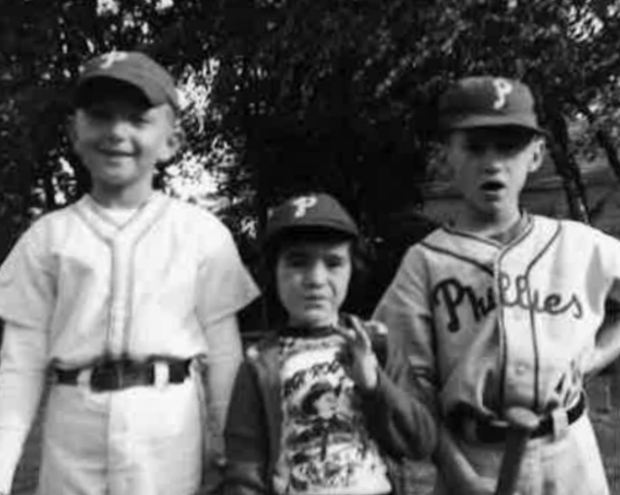
Baseball was more than a childhood hobby for Alito. It was a passion, and he was no fair-weather fan. His beloved Philadelphia Phillies were among the worst teams in the majors, but he stayed loyal. “It’s a sign of bad character if you abandon your team just because they’re having a bad streak,” he said. “Some people would think I could be quite stubborn, but I’ve stuck with the Phillies through thick and thin. Hope springs eternal.”
Sixty years have passed since he played on that field and walked the hallways of his old high school, where he was valedictorian, student council president, newspaper editor, and a member of the debate and track teams. Surveying the familiar-but-changed surroundings, he said, “It seems familiar, and also seems somewhat different.”
Dressed in a rumpled polo shirt and khakis, without the black robe, Alito went largely unrecognized near Trenton. Yet this is a man who has shaped American law for two decades as one of the most influential conservative justices on the Supreme Court.
A Public Image He Doesn’t Recognize
The Court is known as the Roberts Court, after Chief Justice John Roberts, but in many ways Alito is its conservative leader. His legal views on abortion, affirmative action, voting rights, and religious liberty are now the law of the land. To critics, he is a villain who has stripped away rights from women and minorities. He has been described as “angry,” fueled by “grievance,” or “seeking revenge for the ‘60s.” Alito calls that portrait a caricature.
“The idea that I’m angry and that I’m bitter and that I’m trying to get revenge for something that I experienced at an earlier point in my life is a caricature,” he said.
He insists he is applying the Constitution as the framers intended. But his influence extends beyond his own vote. Among the nine justices, Alito is particularly skilled at assembling five votes for a majority on the Court’s hardest and most divisive cases. That includes his 5-4 majority opinion in Dobbs v. Jackson Women’s Health Organization, which overturned Roe v. Wade and returned the question of abortion to the states.
The justice often publicly portrayed as unyielding is, behind the scenes, a conservative uniquely able to find common ground. It is a skill formed on the fields and classrooms of Hamilton Township: focus, attention to detail, loyalty, and the ability to adjust to the playing field.
A Book, a Decision, and the Question of Retirement
Despite his discomfort with the public spotlight, Alito has written his first book, So Ordered: An Originalist’s View of the Constitution, the Court and Our Country. A collection of speeches, it is both a defense of his “practical originalist” approach and a warning that America’s constitutional system is under strain.
After two decades as a justice, Alito said he considered retiring earlier this year. Now 76, he acknowledged, “It’s something I think that somebody at my age has to think about every term.” Some conservatives had urged him to step down while Republicans controlled the Senate, but Alito said that didn’t factor in. “It’s too hard to predict what the political situation will be,” he said, “and what any president might do with respect to a replacement.”
He decided to stay. “I think I can still make a contribution,” he said. “And it’s hard to give up the opportunity to do something that I think will be good for the Constitution and good for the country as long as I’m able to do it.”
He declined to define his legacy, but he pointed to a cohesive body of work: protecting free speech, defending religious liberty, and restoring what he calls the original structure of government.
The Leak That Changed Everything
The opinion that will most define Alito is Dobbs. Months before the Court released it, a draft of his opinion was leaked to Politico—an unprecedented breach with lasting consequences. Alito said he was “stunned.” He recalled learning about it during a regular lunch among the justices, when the chief justice informed them of the leak.
“It was quite a shock,” Alito said. “But within a relatively short period of time, the thought occurred to me, and I think to the others in the majority, that this would endanger us. And it made us targets for assassination.”
Security was ramped up. A month later, a would-be assassin approached Justice Brett Kavanaugh’s Maryland home in the middle of the night, carrying a gun, ammunition, duct tape, zip ties, and other tools. He was intent on killing justices to prevent the Dobbs decision. At the last moment, his sister talked him out of it. He was arrested and later convicted.
Alito said whoever leaked the draft knew it could put the justices in danger. Politico has defended publication as news of great public interest. The leaker has never been identified, and Alito called the suggestion that a conservative leaked it to lock in votes “implausible.”
Building Majorities and Staying True
Outside the Court, few understand Alito’s powerful role within it. The liberal icon Justice William Brennan used to say the most important thing for a Supreme Court justice is knowing how to count to five. Alito, reserved and unassuming, uses a different method. Rather than force of personality, he uses precision and patience, finding a rationale a majority can agree with.
“The most important thing is to be true to the Constitution. Getting to five is important. But you should not try to get a majority opinion if that means sacrificing something that is important,” he said.
His temperament owes much to his father, whose nickname in high school was “Silent Sam.” “My father believed very strongly that you should never show emotions in public,” Alito said. His mother was more hot-tempered. “I feel these two tendencies inside me,” he said, smiling.
He credits his father for sharpening his writing and thinking. They would sit at the kitchen table, going over every sentence and every word. His father’s lesson: if writing is hard to understand, the problem is that you haven’t thought it through.
Obergefell, the Flags, and Criticism From All Sides
Alito is clear that Dobbs did not call into question Obergefell v. Hodges, the landmark ruling on same-sex marriage. “I did not think that there was any realistic prospect that it would be overruled,” he said, because people have organized their lives around it. It is different from Roe, he argued, because the reliance is more concrete.
Dobbs also brought new scrutiny. Alito faced questions about a 2008 trip to Alaska on a billionaire’s private jet. Then came reports about flags flown outside his homes—an upside-down American flag and an “Appeal to Heaven” flag. He told Democratic senators that his wife, Martha Ann, was fond of flying flags and that he had no involvement. “She’s a very independent person,” he said.
He believes the flag controversy was part of an effort to force him to recuse himself from a case involving President Trump. He said there was no reason to step aside.
Alito also said the praise and criticism from presidents bother him. “We are not part of any political movement, and we are not attempting to further any political agenda,” he said. Criticism from both sides, he argued, damages the Court.
The Changing Docket and the Cost of Service
Since the start of the second Trump administration, Alito said, emergency applications “have gone through the roof.” Presidents from both parties have grown frustrated with Congress and used their own power, leading to constant legal clashes. The Court has struggled to provide full deliberation in cases that arrive with urgent demands.
The external pressures have taken a toll. Justices travel with security, some wear bulletproof vests, and family members have received threats. Alito said he lost friends because of his decisions, particularly Dobbs. He does not regret writing the opinion. “No, not at all,” he said. “It was a privilege to be able to write it.”
Friendship and a Father’s Legacy
Amid the divisions, Alito cherishes his friendship with retired Justice Stephen Breyer, a liberal. Breyer would often burst into Alito’s chambers, prompting Alito’s clerks to call him Kramer from “Seinfeld.” Alito recalled how Breyer lit up lunchtime, talking about cases, literature, music, and the world. Breyer said their friendship showed how justices can be personal friends despite disagreeing on legal results.
In his chambers, Alito’s “prized possession” is his father’s birth record from Italy—a document showing that his father was born to peasant parents who could not read or write. Alito’s father came to America, grew up in poverty, and became a lawyer and public official. His mother was a trailblazing high school principal.
“They really did believe in the American dream,” Alito said. He keeps the birth record near his official Supreme Court portrait. Together, they tell the story of the father’s humble origins and the son’s achievements.
“It is the American dream,” Alito said. “And it’s been a dream that’s been realized by generation after generation.”