F-35 Parts Diverted to Hong Kong: Pentagon Investigates, Taiwan Tensions Loom
In a startling logistics breach with national security implications, the Pentagon is investigating how a shipment of F-35 fighter jet parts bound for the United States from overseas was diverted along the way. A defense official confirmed to CBS News that the military is now working to recover the components. A source familiar with the incident said the shipment was redirected to Hong Kong. Bloomberg News subsequently reported that the parts are now in Chinese hands, though the Pentagon has declined to confirm that assessment.
The episode centers on components described by the F-35 Joint Program Office as unserviceable, meaning they were not fit for current use and were being transported either for repair or replacement. According to the defense official, the parts were in transit from Australia to the United States when the diversion occurred. The official said the F-35 Joint Program Office and the Department of Defense were aware of a shipment issue involving unserviceable F-35 Lightning II components. The official added that the military is actively working with U.S. authorities and industry partners to retrieve the components, investigate the incident, and place safeguards to avoid a future occurrence.
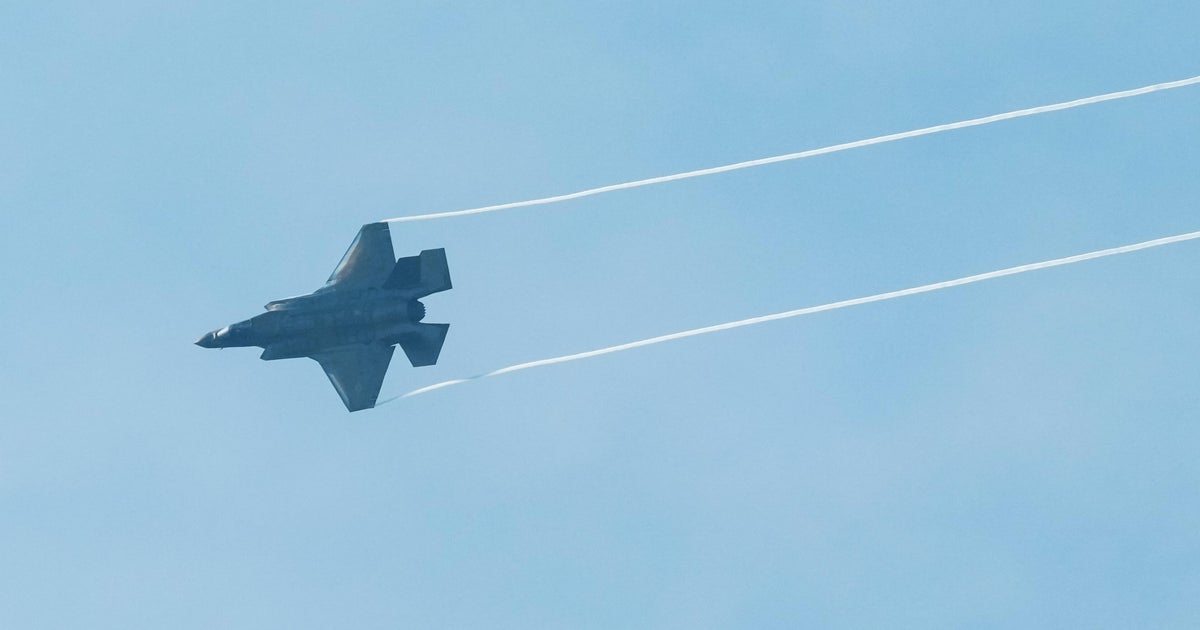
The F-35 Lightning II is the most advanced fighter jet in the U.S. military’s arsenal, and the F-35A variant is its newest version. Capable of flying at speeds up to 1,200 miles per hour and carrying a payload of 18,000 pounds, the aircraft is a cornerstone of American air superiority and a crucial element of allied defense networks. The specific components lost in the diversion are reportedly related to the plane’s canopy and weapons bay door. Although these parts fall short of the plane’s most sophisticated avionics — the kind of electronics and targeting systems that would be of greatest immediate value to an adversary — they are not without intelligence value. The canopy, for example, is coated with radar-absorbent material that helps the F-35 evade enemy radar. Even a used or unserviceable part can reveal details about the materials, coating chemistry, manufacturing techniques, and design tolerances that go into the aircraft’s stealth capability.
For global competitors like China, the acquisition of such components could aid in reverse-engineering efforts. While a canopy or weapons bay door will not hand over the F-35’s most closely guarded secrets, it provides a tangible sample of the engineering approach used to make the aircraft less visible to radar. Analysts have long noted that Chinese efforts to close the stealth gap have benefited from studying captured, salvaged, or diverted U.S. military hardware. Even relatively minor components can confirm or refine assumptions about how the F-35 is constructed and where its vulnerabilities might lie.
The timing of the disclosure adds another layer of sensitivity. The diversion has come to light just as Chinese President Xi Jinping visited President Trump in Washington. It is not clear whether the missing F-35 parts were raised during their summit, but military issues almost certainly were on the agenda. Xi arrived with expectations that he would press the President to curb U.S. support for Taiwan, a self-governed island that China views as part of its territory. Beijing has repeatedly demanded that Washington halt all arms sales to Taiwan and oppose any moves toward Taiwanese independence. Those demands have created a growing dilemma for successive U.S. administrations, which have balanced commitments to Taiwan’s security against the risk of provoking Beijing.
At the heart of that dilemma is a decades-old policy known as strategic ambiguity. Under that approach, the United States has avoided explicitly stating whether it would intervene militarily if China were to attack Taiwan. The policy is intended to keep both sides guessing: Beijing cannot assume the U.S. would stay out; Taipei cannot assume the U.S. would rush to its defense. If the Trump administration were to end that ambiguity by making a clear commitment, it would represent a fundamental shift in U.S.-China relations and could reshape the security landscape of the Asia-Pacific region.
Earlier this year, after a summit between Trump and Xi, the President said he had made no commitment either way on whether to move forward with a pending arms sale to Taiwan. Since then, the arms package has remained in limbo, despite repeated calls from lawmakers in both parties to approve it. The delay has become a flashpoint in Washington, with members of Congress increasingly frustrated by what they see as a failure to follow through on statutory and policy commitments to Taipei.
On Wednesday, that frustration spilled over into an unusually direct letter to Secretary of State Marco Rubio and Defense Secretary Pete Hegseth. Republican Senators Mitch McConnell, John Cornyn, and Lisa Murkowski asked why the State Department had not obligated $300 million in foreign military financing that Congress approved for 2026, and why the Defense Department had not provided Taiwan with $1 billion appropriated by Congress for security cooperation. They also demanded to know why the administration had not approved $14 billion in military sales to Taiwan that Congress passed earlier this year.
In their letter, the senators argued that the funds and weapons are critical to the kind of deterrence by denial that will prevent conflict. They added that it is especially confusing that the Administration would withhold approval of the very arms purchases it aggressively pushed Taiwan to make. That quote captures the mood among many senior lawmakers, who see the administration’s reluctance as a dangerous retreat from a posture of strength in the Indo-Pacific.
The diversion of the F-35 parts is likely to intensify scrutiny of the administration’s handling of sensitive military matters. The Pentagon has not said how the shipment was diverted, who was responsible, or when it was discovered. The fact that a U.S. military cargo could be routed to Chinese territory without detection raises troubling questions about the security of global logistics networks. If routine shipments of sensitive aircraft components can be intercepted, what else might be vulnerable? The Pentagon’s promise to place safeguards suggests the investigation has already identified gaps in the process.
The incident also underscores the difficulty of protecting military technology in an era of globalized supply chains. F-35 components are produced around the world, including in Australia, and shipped to the United States for final assembly, repair, and maintenance. Each transfer point is a potential vulnerability. The military has extensive procedures for tracking sensitive cargo, but this episode shows that those procedures are not infallible.
The retrieval of the components will be a complex diplomatic operation. Because the parts are now reportedly in Chinese hands, the United States cannot simply demand their return and expect immediate compliance. The issue could become entangled in the broader state of U.S.-China relations, which are already strained by tariffs, technology competition, espionage concerns, and the Taiwan question. The Pentagon’s statement said it is working with U.S. authorities and industry partners to recover the components, but it did not say whether direct contact with Chinese officials has been made.
For now, the public knows the key facts: a shipment of unserviceable F-35 parts was diverted to Hong Kong; the parts are now in China; the Pentagon is investigating; and the U.S. military is trying to get them back. The full implications may not be known for some time. But the incident is a reminder that the battle over military superiority is not fought only in the air, but also in the warehouses, ports, and shipping routes that supply the world’s most advanced weapons. Every component of the F-35, from its radar-absorbing canopy to its weapons bay door, represents years of research, billions of dollars in investment, and the technological edge that the United States relies on to maintain its strategic advantage.
As the investigation continues, lawmakers are likely to demand answers not only about how the parts were diverted, but also about what it means for U.S. credibility in the Pacific. The combination of a missing F-35 shipment and stalled arms sales to Taiwan could leave an impression of a superpower losing control of both its hardware and its alliances. The Pentagon and the administration will need to move quickly to restore confidence, both at home and among allies who depend on American military leadership.