Democrat Demands Trump’s Arlington ‘Military Complex’ Plan Be Rejected Over Reagan Airport Safety Risks
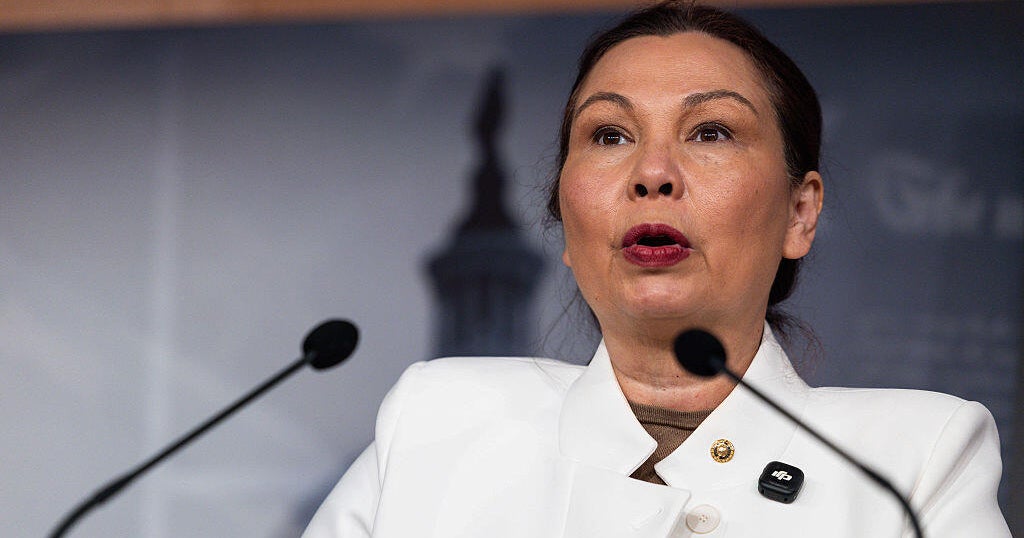
Sen. Tammy Duckworth, an Illinois Democrat and decorated Iraq War veteran, is demanding that the Pentagon and the Federal Aviation Administration reject President Trump’s proposal to transform a planned triumphal arch near Arlington National Cemetery into a so-called “top grade Military Complex” equipped with snipers and capable of storing, launching, and landing drones — all within the flight path of Washington’s Ronald Reagan National Airport.
In a sharply worded letter to Defense Secretary Pete Hegseth and FAA Administrator Bryan Bedford, Duckworth accused the administration of pushing a reckless and unnecessary vanity project at a time when federal agencies have failed to implement critical aviation safety reforms recommended after the deadly January 2025 midair collision near Reagan Airport.
“The FAA and DoD must reject this foolhardy plan and instead focus on increasing the safety of the airspace,” Duckworth wrote.
The letter, exclusively obtained by CBS News, was sent Friday. In it, Duckworth, who serves as the ranking Democrat on the Senate Subcommittee on Aviation, Space, and Innovation, did not hold back in her criticism of the president’s weekend social media announcement. She described it as part of “bizarre, unhinged early morning social media rants” and accused administration officials of “wasting time, energy and taxpayer dollars on yet another Trump vanity project.”
Trump’s proposal, posted on Truth Social, called for converting plans for a massive 250-foot triumphal arch near Arlington National Cemetery into a military facility. The arch is already under construction and sits in a sensitive area near the nation’s capital, just miles from the approach and departure corridors used by commercial aircraft flying into and out of Reagan National Airport.
Last week, the FAA determined that the arch itself poses no hazard to flights. But Duckworth called that review incomplete, arguing that it failed to account for the additional military functions Trump has proposed, including stationing snipers on the structure and operating drones in the already congested airspace.
“It is disturbing to see federal officials devote enormous attention to an unnecessary, proposed structure while the NTSB and the public are still demanding action on recommendations intended to prevent another catastrophic collision in our skies,” Duckworth wrote. “The American people cannot afford to stand witness to Trump’s risky plan to place a 250-foot structure along a busy approach path, especially if he follows through on plans to station snipers on the arch and fly drones … in the already congested airspace.”
Duckworth, a former U.S. Army helicopter pilot who lost both of her legs while serving in Iraq, has been a leading voice on aviation safety issues in Congress. Her letter demands answers to a series of pointed questions, including whether the FAA considered the proposed use of the arch as a military complex during its safety assessment. She also asked Secretary Hegseth to disclose which military entity, if any, had requested that the arch be converted into a military complex, and what threat assessment supports that request.
The senator requested responses by Oct. 5.
The controversy comes at a time when federal aviation officials are still grappling with the fallout from one of the deadliest aviation disasters in recent U.S. history. In January 2025, an American Airlines regional jet landing at Reagan National Airport collided with a U.S. Army Black Hawk helicopter, killing all 67 people aboard both aircraft. The crash sent shockwaves through the Washington region and prompted an extensive investigation by the National Transportation Safety Board.
The NTSB ultimately issued 52 safety recommendations in the wake of the collision. Thirty-five of those recommendations were directed to the FAA, and according to the NTSB, only three have been closed. Earlier this month, the NTSB said the FAA’s responses to 11 of those recommendations were unacceptable. All 13 recommendations directed at the Pentagon remain open.
Duckworth seized on that record in her letter, arguing that the administration’s focus on a controversial monument project represents a dangerous distraction from the urgent work of preventing another catastrophe.
“It is particularly outrageous,” she wrote, “that this proposal comes after the joint failure of the FAA and the Department of Defense to effectively implement corrective actions that were recommended by the NTSB following the January 2025 midair collision near Ronald Reagan National Airport.”
The senator’s criticism was echoed by other Democratic lawmakers. Rep. Don Beyer, a Democrat from Virginia, issued a statement earlier this week condemning the proposal. “Putting a drone launching site directly in the landing path for DCA is a stupid, dangerous, and unworkable idea,” Beyer said, using the airport’s official code.
Reagan National Airport is one of the busiest and most complex airspace environments in the country. It sits just across the Potomac River from Washington, D.C., and its flight paths take planes directly over Arlington National Cemetery, the Pentagon, and other sensitive sites. The airspace is heavily restricted and requires careful coordination between civilian air traffic controllers and military aviation authorities. The addition of a 250-foot structure, let alone one with snipers and drones, would create new risks in an environment already crowded with commercial flights, military helicopters, and government aircraft.
The idea of placing a military complex atop a monument near Arlington National Cemetery has also drawn criticism from aviation safety experts, who note that drone operations near a major airport pose serious collision hazards. Drones operating in the same airspace as passenger jets could interfere with pilots, air traffic controllers, and onboard safety systems. Stationing snipers on the structure would add another layer of complexity, raising questions about security protocols, liability, and the potential for accidental discharges or other incidents.
Federal agencies have so far been tight-lipped about the proposal. The FAA and the Department of Defense both declined to comment on the arch, referring inquiries to the White House. White House officials have not yet responded publicly to Duckworth’s letter.
The proposal has also reignited debate about how taxpayer money is being spent on major construction projects in the Washington area. The triumphal arch has already generated significant controversy due to its size, location, and cost. Critics argue that the project is being pushed through without adequate public review or environmental assessment. Duckworth’s letter suggests that converting it into a military installation would only magnify those concerns.
“This is not about honoring our nation’s heroes,” Duckworth wrote. “This is about one man’s desire to leave a grandiose monument to himself, no matter the risk to the flying public, the safety of our servicemembers, or the integrity of our sacred ground at Arlington National Cemetery.”
The timing of the demand is significant. Congress is currently in the middle of a heated budget cycle, with negotiations over defense spending, FAA reauthorization, and infrastructure funding all on the table. Duckworth, as ranking member of the Senate aviation subcommittee, is well positioned to press the issue through oversight hearings, budget riders, and public pressure on federal agencies.
Her letter also signals that the fight over the project is likely to continue beyond the Oct. 5 deadline. If the Pentagon and FAA do not provide satisfactory answers, Duckworth could push for congressional hearings, subpoenas, or legislative measures to block the project.
For now, the future of the proposed military complex remains uncertain. The FAA has said the arch itself is not a hazard to air navigation, but that assessment was made before Trump’s proposal to add military features. Whether the FAA will revisit that determination in light of the new proposal is unclear.
Duckworth, however, made her position unmistakable. In her letter, she urged both agency leaders to reject the plan outright and redirect their attention to the NTSB recommendations that remain unimplemented.
“The traveling public deserves better than to be used as unwitting test subjects for a president’s vanity project,” she wrote. “I urge you to do the right thing and reject this dangerous proposal once and for all.”