Coast Guard and FBI Board Cyber-Hit Tankers Bound for Texas as Investigation Intensifies
U.S. Coast Guard personnel and FBI agents boarded two energy tankers headed for Texas last month after the vessels were struck by suspected cyberattacks during their voyages across the Atlantic, according to U.S. officials. The operation, which involved cyber specialists and federal law enforcement, highlights growing alarm over the vulnerability of commercial shipping to digital intrusions.
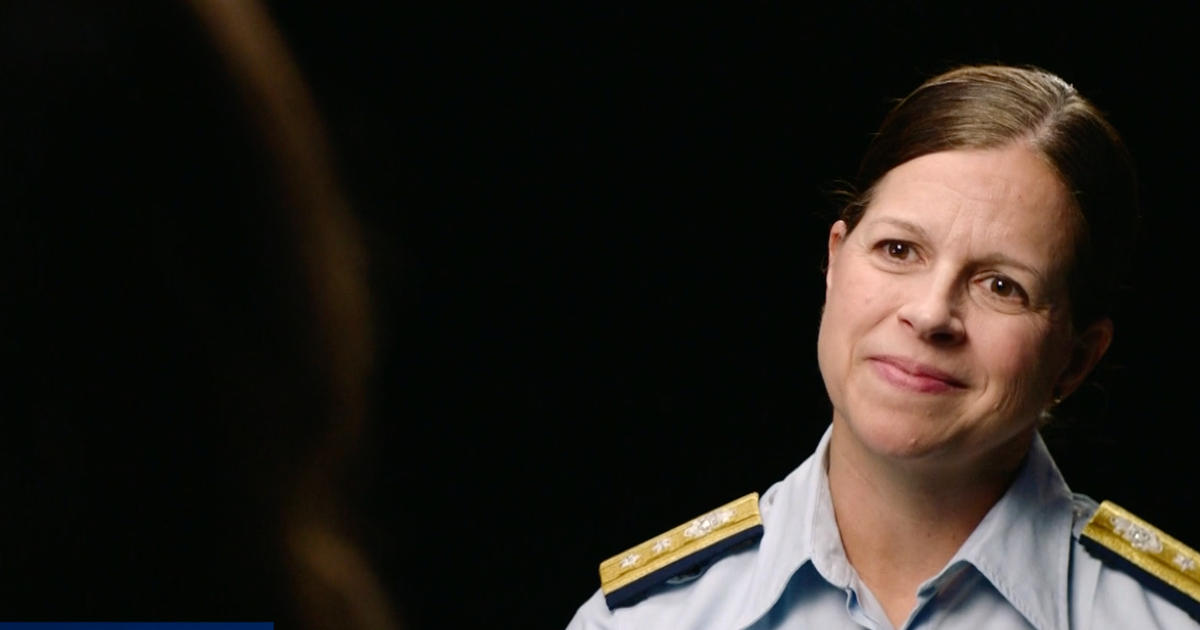
One of the vessels was the VL Prosperity, a 1,093-foot crude oil supertanker flying under the Liberian flag and bound for Galveston, Texas. Iranian state media quickly identified the ship after the incident and claimed that hackers had infiltrated its propulsion, navigation, and cargo systems, knocking out communications for roughly 30 hours. The U.S. Coast Guard has not publicly attributed the attacks to Iran. But Rear Adm. Amy Grable, commander of U.S. Coast Guard Cyber Command, told CBS News in an exclusive interview that investigators found clear evidence of malicious cyber activity when they boarded the ship.
“They started out by doing an assessment of the information technology and the other systems on board the vessel, and they did find malicious cyber activity,” Grable said.
Federal investigators are now trying to determine whether the two cyberattacks are connected and whether Iran or another foreign adversary was responsible. The incidents come at a time when U.S. ports and critical maritime infrastructure are seen as increasingly tempting targets for state-sponsored hackers and cybercriminals alike.
A SuperTanker’s Troubled Voyage
The VL Prosperity is a massive vessel, stretching more than three football fields in length and capable of carrying roughly 2.3 million barrels of crude oil. Public tracking data shows the ship departed Egypt’s Sidi Kerir oil terminal on Aug. 1, bound for Galveston. U.S. officials said it slowed near the Strait of Gibraltar around the time of the cyberattack before resuming its transatlantic crossing and continuing toward the United States.
On Aug. 20, Iran’s Mehr News Agency reported that the VL Prosperity had been attacked on Aug. 7 while transiting the Strait of Gibraltar. Citing an unnamed crew member, Mehr alleged that hackers had penetrated the engine room, reduced engine cooling flow, increased engine speed and interfered with fuel systems. The technical detail of the Iranian report raised eyebrows among cybersecurity experts.
Rob Lee, CEO of Dragos, an industrial cybersecurity firm that specializes in operational technology, said the Iranian narrative was plausible. While cautioning that authorities had not yet revealed who was behind the incident, Lee said the description matched what security researchers understand about the vulnerabilities of modern ships.
“The details that they published, from what we understand of these types of vehicles and ships and similar, is spot on,” Lee said. “Everything they’re saying is very realistic.”
The next day, Aug. 21, a team of Coast Guard cyber personnel, law enforcement officers, a vessel inspector and FBI Cyber Action Team operators boarded the ship and spent four days searching for malware and other signs of malicious access.
Grable said the Coast Guard had been alerted by interagency partners and went offshore with the FBI to climb aboard. She described the mission as one of roughly 40 to 50 that the Coast Guard’s Cyber Protection Team has carried out over the past year. The goal, she said, was to hunt for malicious software and comb through information technology systems to root out any activity that could threaten the vessel’s safety.
Why a Maritime Cyberattack Matters
The concern surrounding large cargo vessels and maritime critical infrastructure extends far beyond stolen files or briefly disrupted communications. Modern commercial ships increasingly rely on internet-connected systems for navigation, propulsion, steering, ballast management and other essential machinery. A cyberattack that penetrates those operational systems could potentially be weaponized, manipulated, or used to create a serious safety hazard.
“When these vessels are highly connected, they’re susceptible to cyber threats,” Grable said. She warned that a successful attack could result in “a vessel blocking a waterway or a pollution incident or any other number of safety and security hazards to our ports and waterways.”
The danger is especially acute near American ports, where a large compromised vessel could cause catastrophic damage. “Of course we’re worried about a collision, an explosion, anything that blocks the channel for other vessels to safely enter and exit the port, pollution incidents — we’re kind of worried about the whole gamut,” Grable said.
The economic stakes are also enormous. Grable noted that $5.4 trillion in commerce flows through U.S. ports every year. Even a relatively small disruption could have cascading effects on global supply chains. “Any small delay, because of a cyber breach, like, for example, if a port has to shift to manual operations, it causes a big delay with tankers and cargo vessels coming in and out of the port,” she said.
Perhaps most troubling, Grable suggested that the technical skill required to launch such an attack may be lower than the public assumes. When asked how sophisticated an attacker would need to be to move from breaking into a computer network to manipulating machinery aboard a modern tanker, she replied: “Not necessarily that sophisticated. There is malicious source code that people can get their hands on.”
Grable said that code is available right now, and she warned that “artificial intelligence is accelerating the rate at which we need to take action.” She urged ship operators to focus on network segmentation, phishing defenses and basic cyber hygiene. “Just taking basic precautions would prevent most of these occurrences,” she said.
Just One Firewall Away
On many ships, the barrier between a satellite internet connection and critical onboard systems can be as fragile as a single firewall. Behind that firewall, said Rob Lee of Dragos, there can be a shared network containing “navigation, propulsion, ballast, steering, ship command — everything on one shared network.”
Lee explained that artificial intelligence could make the problem worse because it helps attackers identify weakly protected systems and speed up attempts to breach internet-facing networks on energy carriers. “The very thing that we think is our one protection — not that you should have one protection — is the very thing that AI is actually really good at,” Lee said.
Still, experts acknowledge that while older vessels may lack the same digitally connected control systems, even modern ships present challenges. Reaching critical machinery requires some familiarity with the onboard environment, and attackers cannot simply assume they can take control of a ship the way they might take over a desktop computer.
Is “Remote Hijacking” a Real Threat?
Asked whether cyber access to a ship could amount to a form of remote hijacking, Grable called it a fair description of the broader risk. “That’s a good way to characterize it, and yes, it is a concern,” she said.
Lee agreed that the scenario is realistic if an attacker is able to gain a foothold. “I do think there’s a realistic concern,” he said, describing the possibility of remotely interfering with a maritime asset, even running it aground.
But Quinton DuBose, a former Coast Guard cyber official, pushed back against the idea that hackers could simply take over an entire supertanker like a remote-controlled vehicle. “I’d be kind of cautious about saying that somebody can just take control of the ship,” DuBose said. “Ships are incredibly complicated systems.”
The more realistic threat, DuBose argued, may be an attacker disrupting one or more critical subsystems enough to make the vessel unsafe. “Rather than looking at it as, ‘okay, I’m going to take full control of this thing,’ it’s, ‘what systems can I disrupt to the point where it affects the safe handling and makes the ship less safe to operate,’” he said.
Iranian State Media and the Attribution Puzzle
The U.S. government has not publicly named the perpetrator behind either cyberattack. But Iranian state media began publicizing the VL Prosperity incident before U.S. authorities even formally acknowledged the boarding. Four days after Mehr’s initial report, Iran’s Tasnim News Agency published an article with the headline: “No American Vessel Is Safe Anymore: Will Cannons Give Way to Codes?”
DuBose cautioned that the Iranian narrative remains unverified, noting that Iranian-linked actors are often quick to overstate their cyber capabilities. Attribution in cyberspace can take weeks or months, he added.
According to Grable, investigators often compare an attacker’s tactics, techniques and procedures — TTPs — against known threat actors. “We look at things called TTPs, which are tactics, techniques and protocols that certain adversaries use — kind of like their trademark fingerprints on how they gain access to systems and what they do and what their payloads are,” she said.
A Warning to the Maritime Industry
For Coast Guard Cyber Command, the central concern is that increasingly connected vessels are creating more porous entry points for attackers. As ships adopt satellite communications and integrate their IT networks with onboard control systems, the attack surface grows dramatically. “Because they’re facing the internet, that is a vector for attackers to gain access and deploy malicious activity on the vessels,” Grable said.
DuBose said the maritime industry should take the threat seriously while resisting the notion that all vessels are suddenly vulnerable to remote takeover. He noted that maritime infrastructure is so critical that the federal government has “increasingly imposed baseline cyber requirements across the sector.”
Grable’s message to vessel owners and operators was blunt: “We need everybody to pay attention to this.” The warning comes as the maritime industry faces a rapidly evolving threat landscape, where a single malicious intrusion could have consequences far beyond the digital realm. With billions of dollars in commerce and the safety of ports and waterways at stake, the incident aboard the VL Prosperity may be a sign of things to come.