Houthi Ballistic Missile Aimed at Riyadh Intercepted, Saudi-Led Coalition Says
RIYADH, Saudi Arabia — Saudi Arabia’s air defenses intercepted a ballistic missile over the capital early Saturday after Yemen’s Iran-backed Houthi militants launched a barrage aimed at Riyadh and other civilian targets, the Saudi-led coalition said, as the conflict in Yemen continued to spill across the kingdom’s borders.
The attack came amid fresh signs of danger in and around the Saudi capital. Firefighters extinguished a blaze on a fuel tank bearing the logo of Saudi oil giant Aramco at a fuel depot near Riyadh’s King Khalid International Airport, according to an Agence France-Presse journalist at the scene. Footage shared online and verified by AFP showed a thick column of black smoke rising above airport buildings, a stark visual reminder that the war in Yemen has drawn closer to the heart of the Saudi state.
Saudi authorities had issued an overnight air raid alert, sending residents across the capital to shelters and raising tensions in a city that has often been spared the kind of direct attacks now being reported. Hours after the early morning alert, residents told AFP on condition of anonymity that they heard what sounded like a round of explosions echoing through parts of Riyadh. Tracking website FlightRadar24 reported “major problems” at King Khalid International Airport, listing it for a while under its maximum disruption index before normal traffic began to resume.
Coalition says missile intercepted
The Saudi-led coalition said its air force “successfully intercepted and destroyed a ballistic missile launched by the Houthi terrorist militia towards the city of Riyadh at dawn on Saturday,” according to a statement posted on X by coalition spokesman Turki al-Malki.
Al-Malki said the Houthis also tried to target “civilians and civilian infrastructure in Bisha, Taif, Farasan, and Yanbu,” adding that the attacks “were thwarted by the Gulf monarchy’s air defenses.” He did not provide further details about the locations or the extent of any damage, but the claim suggested a coordinated, multi-front assault aimed at spreading fear across a wide swath of Saudi territory.
The Houthis, for their part, said the offensive was a direct response to recent Saudi airstrikes on areas under their control in Yemen. In a statement on Telegram, Houthi military spokesman Yahya Saree said the group had carried out “two successful military operations using a large number of ballistic and cruise missiles and drones.”
“The first targeted sensitive sites in the Saudi capital, Riyadh, and the second targeted Aramco facilities in Yanbu,” Saree said. The choice of targets — Riyadh, the political and administrative center of Saudi Arabia, and Yanbu, a major Red Sea industrial hub and oil export terminal — underscored the Houthis’ stated aim of punishing Saudi Arabia for its military role in Yemen.
The attacks also carried an economic dimension. Aramco is the world’s largest oil-exporting company, and Saudi Arabia remains one of the most important energy suppliers in the global market. Any direct threat to its infrastructure, or to the shipping lanes that carry its crude to international buyers, is likely to resonate far beyond the kingdom’s borders.
Escalation after months of relative calm
Saturday’s missile fire marked a significant escalation in a conflict that has fluctuated between open warfare and fragile, broken truces for years. In recent weeks, Yemen’s Houthis staged a lightning offensive, seizing swathes of territory in one of the world’s poorest countries and leaving the internationally recognized government, which is backed by Saudi Arabia, scrambling to respond.
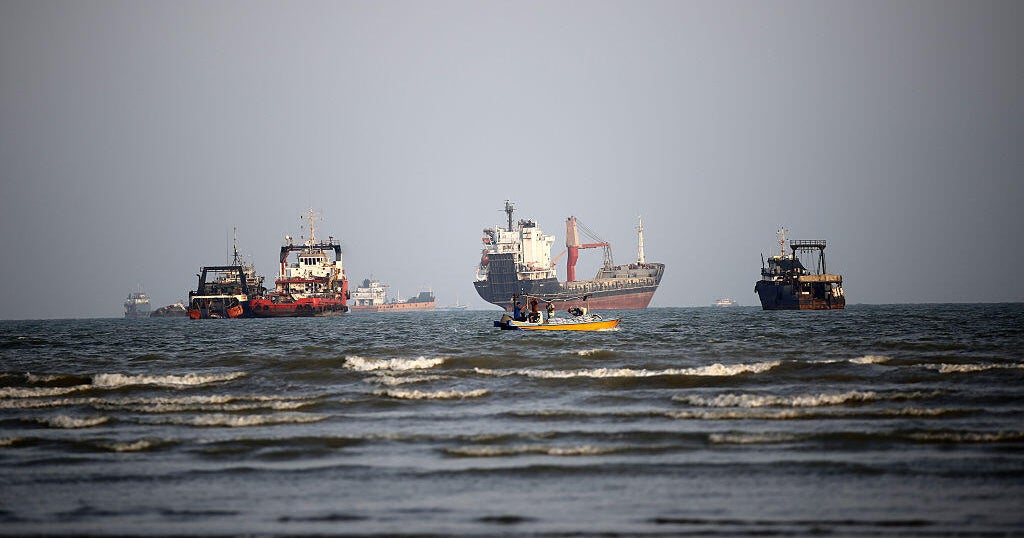
The Houthi advance has reportedly focused on Yemen’s entire Red Sea coast, with the group seeking to take control of the vital Bab al-Mandab Strait, one of the world’s most critical maritime chokepoints. The strait connects the Red Sea to the Gulf of Aden and the Indian Ocean, and a security threat there could affect the passage of tankers carrying millions of barrels of oil every day.
According to Houthi officials, Saudi-led forces have responded with scores of retaliatory strikes carried out daily on Houthi-held areas. Yet those strikes have failed to stop the group’s advance. The Houthis have repeatedly shown an ability to absorb punishment and still project force into Saudi territory, using a growing arsenal of ballistic missiles, cruise missiles, and drones supplied or enabled by Iran.
The latest attacks are believed to be the first time since the resumption of major fighting in Yemen that strikes have threatened the Saudi capital. Analysts said the targeting of Riyadh was significant not only militarily but psychologically, as the city has long been seen as a secure and distant hub of Saudi power. The fact that the Houthis could reach, or at least threaten, the capital signals an evolving capability and a willingness to escalate despite the risk of massive retaliation.
A war with deep regional roots
Yemen’s civil war began in 2014, when the Houthis swept into the capital, Sanaa, and ousted the internationally recognized government. In 2015, a Saudi-led coalition intervened to try to restore the government to power, launching an air campaign and later deploying troops and supporting local forces on the ground. The war has since killed tens of thousands of people, displaced millions, and created what the United Nations has called one of the world’s worst humanitarian catastrophes.
The conflict has also become a flashpoint in the broader regional rivalry between Saudi Arabia and Iran. Tehran has denied providing direct military support to the Houthis, but U.N. experts, Western intelligence agencies, and numerous regional governments have documented the transfer of ballistic missile components, drones, and other advanced weapons to the group. Iran’s support has allowed the Houthis to punch far above their weight, turning a ragtag rebel movement into a formidable fighting force capable of challenging both Yemeni government forces and Saudi air defenses.
The Houthis’ latest offensive has added a new layer of urgency to a stalemated conflict. After years of static lines and grinding attrition, the group has demonstrated renewed momentum, sweeping across territory in central and southern Yemen and placing additional pressure on the Saudi-backed government. The internationally recognized government has struggled to coordinate a coherent defense, and multiple attempts by the United Nations to broker a peace deal have failed to produce a lasting ceasefire.
Global markets and shipping lanes on edge
The missile attacks and the broader escalation have also raised concerns about the stability of the global economy. The Bab al-Mandab Strait is a strategic chokepoint through which a substantial share of the world’s seaborne oil trade passes. Any sustained disruption there could force tankers to take longer, more expensive routes around the southern tip of Africa, driving up freight costs and energy prices at a time when global markets are already fragile.
The threat to Saudi Aramco facilities in Yanbu is particularly worrying for energy markets. Yanbu is home to major refineries, export terminals, and pipelines that move crude oil from the eastern provinces of Saudi Arabia to the Red Sea coast. A successful strike on that infrastructure could carry significant economic consequences, not just for Saudi Arabia but for the entire global energy system.
The escalation piles further pressure on a global economy already rocked by seven months of war between the United States and Iran, which has destabilized shipping routes, raised insurance premiums for vessels in the region, and contributed to volatility in oil prices. The intersection of the Yemeni conflict with the broader U.S.-Iran confrontation has created a dangerous and unpredictable security environment across the Middle East.
Residents shaken but life slowly returns
In Riyadh, the immediate aftermath of the attack was one of confusion and heightened caution. The overnight air raid alert had already unsettled many residents, some of whom rushed to secure their homes and seek shelter. The sound of explosions, likely caused by the interception of the incoming missile, echoed through parts of the city, leaving people to wonder how far the Houthis could go.
By mid-morning, however, normal rhythms appeared to be returning. Flights at King Khalid International Airport began to resume, and roads reopened as authorities cleared the area around the fuel depot. The quick response of firefighters and the apparent success of the interception appeared to limit the damage, but the psychological impact of the attack was likely to linger.
For Saudi officials, the challenge is now twofold: continuing to support the Yemeni government in its fight against the Houthis, while also protecting the kingdom’s own territory, infrastructure, and civilians from increasingly bold attacks. The coalition’s decision to publicly emphasize the interception of the missile was clearly aimed at reassuring the public that the air defenses can cope with the threat. But Saturday’s events served as a stark reminder that no barrier is absolute, and that Yemen’s war has a long reach.
The coming days are likely to bring further Saudi airstrikes on Houthi-held areas, and further Houthi attempts to retaliate. The Houthis have said their operations are a response to what they describe as Saudi aggression, and they have shown little appetite for de-escalation. Meanwhile, the kingdom’s leadership has made clear it will not allow the Houthis to dictate the terms of the conflict.
With no political solution in sight, the cycle of strikes and counterstrikes seems set to continue. The attack on Riyadh may have been intercepted, but it has already achieved one of its intended effects: proving to the world that the war in Yemen can still reach the heart of the Arabian Peninsula, and that the cost of the conflict will be paid not only in Yemen’s devastated cities and towns, but across a region already on edge.