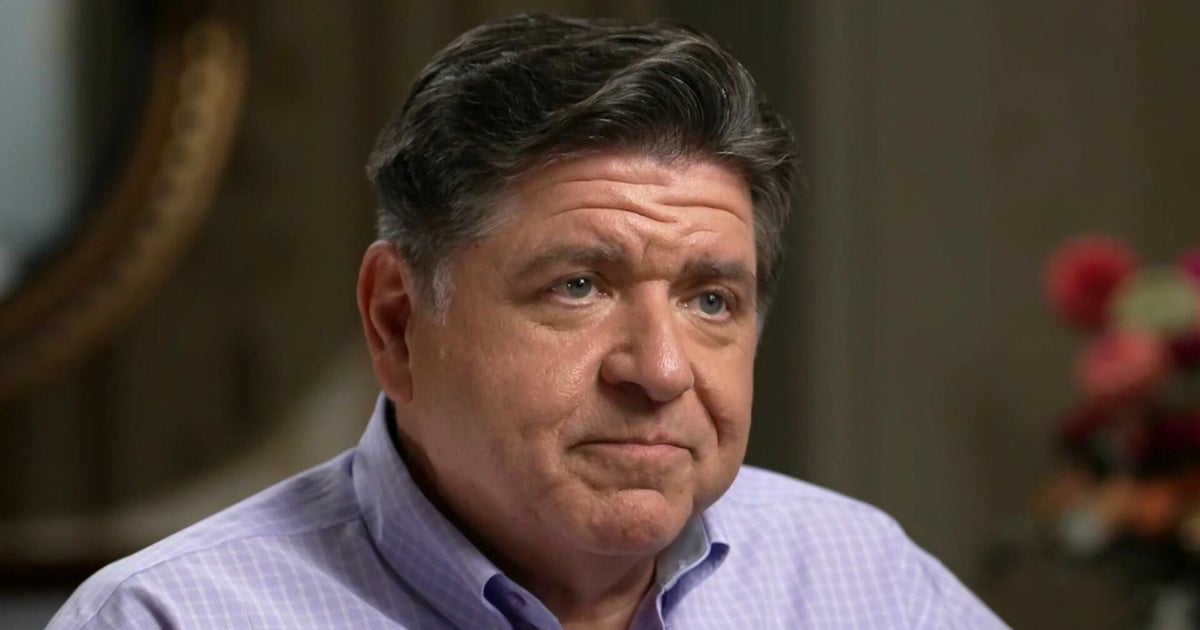
Illinois Gov. JB Pritzker Reveals GLP-1 Weight-Loss Journey: ‘I’ve Been Overweight Most of My Life’
Illinois Gov. JB Pritzker has spent much of his adult life in the public eye, but in a revealing interview on “CBS Mornings,” the Democrat opened up about a struggle he has carried with him since childhood: his weight. For the past two years, Pritzker said, he has been using a GLP-1 medication to lose weight, and the results have been transformative. He has lost 80 pounds so far, and he says the change has affected not only his body but his entire outlook on life.
“I feel a whole lot different and a whole lot better,” Pritzker said in the interview, which aired Monday. The governor, who has led the state of Illinois since 2019, said he has struggled with his weight for as long as he can remember. “I’ve been overweight most of my life, really, since I was probably 7 or 8 years old,” he said.
That childhood memory is tied to a deeply personal loss. Pritzker’s father, Donald, died of a heart attack at the age of 39. The governor recalled the painful circumstances of his father’s death, describing him as someone who was active but also overweight. “He was actually quite an active person, even though he was overweight, and so he was on a tennis court and had a heart attack, and my mother was there, and he died in her arms,” Pritzker said.
Given that family history, Pritzker said he has always paid close attention to his blood work and health markers. But the demands of being governor of the nation’s sixth-largest state, he admitted, contributed to additional weight gain over time. The pressures of the job, combined with the public scrutiny that comes with holding high office, made his weight a recurring source of unwanted attention. At one point, former President Donald Trump mocked him on the campaign trail in 2024, saying, “Pritzker, I don’t know, he’s too busy eating. He wants to eat all the time.”
Today, Pritzker says he is in a much different place. He begins many mornings with a four-mile walk along Lake Michigan in Chicago, a routine that has become central to his physical and mental well-being. But that healthier lifestyle did not come easily. It was prompted by alarming news from his doctor two years ago: Pritzker was diagnosed with diabetes.
“My doctor said, ‘Oh, no, you’ll never come off of it. You’re going to have to do this the rest of your life, and I recommend that you take a GLP-1,’” Pritzker recalled. The diagnosis was a wake-up call, but it was not one he faced alone. His wife, first lady MK Pritzker, said she strongly encouraged him to take the medication. “Obviously, I knew the history of his family,” she explained. “You know, it’s such a sad story, and of course, I want him to be around for a really long time.”
Pritzker began taking the GLP-1 medication, which he injects himself with on a weekly basis. He said the effects were almost immediate. In his first week on the drug, he lost weight. “All of a sudden, on the third day, I was like, you know, actually, I don’t need to eat that thing,” he said. “But it was the strangest feeling. Now, I’m not suggesting everything changed in a week. It didn’t happen that way.” He lost two pounds in that first week, a modest start that eventually compounded into a dramatic overall loss.
The governor is well aware that his public disclosure comes with questions, especially in a political environment where every move a potential presidential candidate makes is scrutinized. Asked directly whether he undertook his weight-loss journey to improve his image before a possible run for the White House, Pritzker was emphatic. “I’ve been driven my whole life to lose weight,” he said. “The fact that I am now able to do it because this GLP-1 became available is truly, like, I mean, it’s something that has meant a lot to me. I have not made any decisions about what I might do in the future. I can tell you I want to be the governor of the state of Illinois for a while longer, and I’m running for reelection.”
When pressed specifically about whether he is not running for president in 2028, Pritzker did not offer an unequivocal denial. Instead, he said, “I honestly am focused on what’s best for the people of Illinois.” That answer will likely do little to quiet speculation about his national ambitions, but the governor made clear that his immediate priority remains his work in Springfield and his campaign for another term.
Pritzker also used the interview to highlight his administration’s policy decisions around weight-loss and diabetes medications. Under his leadership, Illinois has chosen to cover GLP-1 drugs on the state insurance plan for 55,000 state employees. The decision, according to Pritzker, was not just a health measure but also a financial one. “Why? We’re going to save money,” he said. The governor argued that wider access to these medications would reduce the number of people who develop diabetes and help others avoid obesity-related illnesses. “People will be less overweight, which causes so many other diseases,” he explained.
The governor said the policy has already had a meaningful impact on people’s lives. He shared the story of one woman who told him the initiative saved her life. That kind of feedback, Pritzker said, reinforces his belief that talking openly about his own experience is important. “I have an opportunity just with the platform that I have as governor to tell people that this is something that can work for them,” he said. “I think they should do it with the doctor’s advice, but I can tell you at least for me it has been really life-changing.”
The governor’s decision to go public places him among a growing number of public figures who have acknowledged using GLP-1 medications, which include drugs such as Ozempic, Wegovy, and Zepbound. These medications, originally developed to treat type 2 diabetes, have become widely popular for their weight-loss effects. They work by mimicking a naturally occurring hormone that regulates appetite and blood sugar, helping people feel fuller and less interested in food. For Pritzker, the medication provided the kind of help that decades of dieting and exercise alone had not been able to deliver.
But GLP-1 drugs have also sparked broader debates about cost, access, and potential side effects. They can be expensive, and insurance coverage varies widely from state to state and employer to employer. By expanding coverage in Illinois, Pritzker has positioned himself as a proponent of making these treatments available to more people, not just those who can afford to pay out of pocket. His own story, he suggested, is a testament to what the drugs can do when combined with medical guidance and a commitment to healthier habits.
The governor’s remarks also bring a human dimension to the often-impersonal world of health policy. For all the millions of dollars involved in state insurance plans and pharmaceutical pricing, Pritzker’s account is ultimately about a man who watched his father die young, who inherited a genetic predisposition to heart problems, and who made the decision to do everything he could to avoid a similar fate. His father’s death at 39, with his mother present, has stayed with him throughout his life. It is a memory he now carries as a reminder of what is at stake.
Pritzker acknowledged that losing the weight has changed how he is perceived in public. For years, his size was a frequent target of commentators and political opponents. Trump’s taunt during the 2024 campaign was just one of many public jabs he has endured over the years. But Pritzker said he was not motivated by his critics. Instead, he was motivated by his family, his doctors, and his own desire to feel better. The fact that he now walks several miles every morning by Lake Michigan is something he does not take for granted.
The governor’s interview on “CBS Mornings” was not solely about weight loss. It was also a reminder of how personal health can intersect with public life. As Pritzker continues to lead Illinois, push for policy changes, and prepare for another election, he does so with a new sense of vitality. He may not have answered every question about his political future, but he made one thing clear: he intends to stick around, healthier than ever, and he wants to help others do the same.
“I have not made any decisions about what I might do in the future,” Pritzker said. “But I can tell you at least for me it has been really life-changing.”