Title: White House Press Pool Suspended After News Organizations Banned
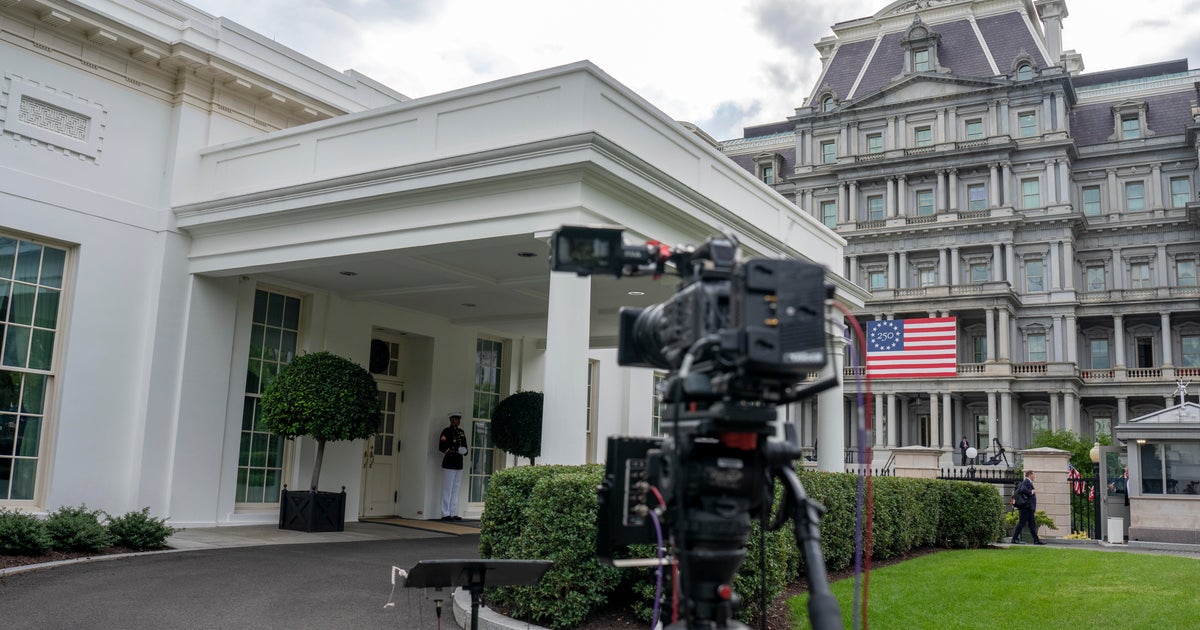
Washington — The rotating television press pool that normally travels with President Trump has been suspended after the White House barred CNN, MS NOW and Politico from covering the presidency. The move disrupts one of the most established mechanisms for independent coverage of the White House and has triggered a rare public confrontation between the administration and the news media.
The suspension took shape as CNN was scheduled to provide the television network pool coverage on Monday, the day Mr. Trump planned to travel to New York for the United Nations General Assembly. Because CNN would have supplied the pooled video and reporting for all networks, there will be no network TV pool team accompanying the president on that trip. He is expected to remain in New York through Tuesday and then return to Washington.
The pool system is a longstanding arrangement in which the major television networks rotate responsibility for covering presidential events. ABC, CBS, CNN, Fox and NBC are the participating networks. The designated network provides the video feed to other outlets, often live, and covers the president’s movements in spaces where only a limited number of journalists can fit. The same principle applies to print and radio, with separate pools. The arrangement dates back to the presidency of Franklin D. Roosevelt and is designed to ensure that the public always has a record of the president’s public actions, even in small settings such as the Air Force One press cabin. The pool also exists to guarantee that journalists are present in the event of unexpected breaking news. It is a practical system as much as a journalistic one, because all networks cannot physically fit into every space where the president appears.
On Monday, the five television networks issued a joint statement. “The public has a vital interest in receiving accurate, independent information about its government. No administration should reject a news organization because it objects to its reporting.” That statement reflected a rare moment of public unity among news organizations that often compete fiercely for scoops. It also signaled that the ban was seen as an attack not just on the three targeted outlets but on the broader principle of press independence.
The Washington Post also joined the protest. In a statement Monday afternoon, The Post said it would not publish any photographs of Mr. Trump or his events until after midnight Tuesday. The decision was part of a “collective effort with photographers in other newsrooms covering the White House in a show of support of the banned efforts.” That coordinated visual blackout was intended to highlight what many journalists see as a dangerous precedent: the White House using access as a weapon against reporting it considers unfavorable.
The action traces back to Friday, when Mr. Trump announced on social media that he would be “banning Fake News CNN, MSNOW … and Politico … from the White House as a result of their constant ‘reporting’ FAKE NEWS!” The announcement was abrupt and did not cite specific articles or alleged inaccuracies. It appeared to be aimed at outlets whose coverage has been critical of the administration. By Saturday, reporters from all three organizations were turned away when they arrived at the White House. CBS News witnessed the denials at the entrance. The barred organizations responded quickly. On Monday, CNN, MS NOW and Politico filed a lawsuit seeking to restore their access. In their complaint, they argued that the ban violates the First Amendment and that “there could not be a more direct assault on the First Amendment.” The lawsuit asks a federal court to intervene, contending that the White House cannot condition press credentials on a news organization’s viewpoint or editorial choices.
The White House Correspondents’ Association also objected. Its president, Jacqui Heinrich, a senior Fox News correspondent, said on Saturday that the White House “cannot deny that access arbitrarily or based on the content of their reporting.” Heinrich’s statement was significant because Fox News is generally not among the outlets often targeted by the president’s criticism. The association represents a broad coalition of reporters, photographers, and editors across all media, and its statement was a clear signal that the ban crossed a line that the press corps considers fundamental.
The dispute touches on a core question in American democracy: whether the press has a right to cover the president at the White House, and on what terms. The Supreme Court has recognized some First Amendment protections for access to government proceedings, though the right is not absolute. News organizations have long operated in what constitutional scholars describe as a gray area. The government can impose reasonable time, place, and manner restrictions on access to the White House complex. But officials cannot typically exclude a journalist because they dislike the content of their coverage. By maintaining a formal credentialing system and a designated pool, the government is arguably creating a limited public forum. In such forums, content-based exclusions are reviewed with strict scrutiny.
Past presidents have clashed with the press, and pool access has occasionally been revoked or threatened. But the wholesale exclusion of three major national news organizations at once is extraordinary. It also has practical consequences. The pool is a shared resource. When one network is barred, its ability to serve as pool provider is compromised, and the disruption affects not only that network but also the dozens of outlets that rely on the pool feed. The White House decision therefore harms more than the three specifically targeted organizations. It undermines the collective coverage of the presidency.
The timing is particularly sensitive because of the United Nations General Assembly. Major global leaders gather in New York, and the president’s speeches, bilateral meetings, and public remarks are usually covered by the pool. Without the network pool, the public may see less real-time video of those events. Other journalists may be able to cover some parts of the trip independently, but they will not have the same access to the restricted spaces reserved for the pool, such as the president’s motorcade route, arrival ceremonies, and internal events where only a handful of press are allowed.
The network pool’s suspension does not mean all White House coverage has ceased. Pools for other top officials continue. For example, coverage of Secretary of State Marco Rubio and Vice President JD Vance remained active on Monday. But the presidential travel pool is the highest-profile and most consequential of these rotating assignments. The lack of a network pool for the president’s trip to New York means that some of the most important images and video from the UN General Assembly may be less available to the public, at least in the short term.
The situation remains fluid. The president could lift the bans at any time. The lawsuit may prompt a court order, temporarily or permanently, restoring access. In the meantime, the affected news organizations continue to report through other means. They can still cover the White House from outside the building, interview officials, and send reporters to events. But they cannot enter the White House grounds for briefings, press conferences, and daily access. That is a substantial handicap for outlets whose mission includes holding the government accountable.
For now, the journalistic community appears largely unified in opposition to the ban. The five-network joint statement, The Washington Post’s photo blackout, and the White House Correspondents’ Association’s statement all point to a rare consensus: regardless of political leanings, news organizations see the move as a threat to the principle of an independent press. The coming days will be critical. The president’s travel schedule is crowded, with the UN General Assembly and other events. Whether a court will act quickly remains unclear. But the dispute has already changed how the White House press corps operates, and it may have lasting implications for press freedom in the United States. The core issue is not whether CNN, MS NOW, or Politico are liked or disliked; it is whether the government may punish the press for reporting that displeases it. The answer, under the First Amendment, is no.