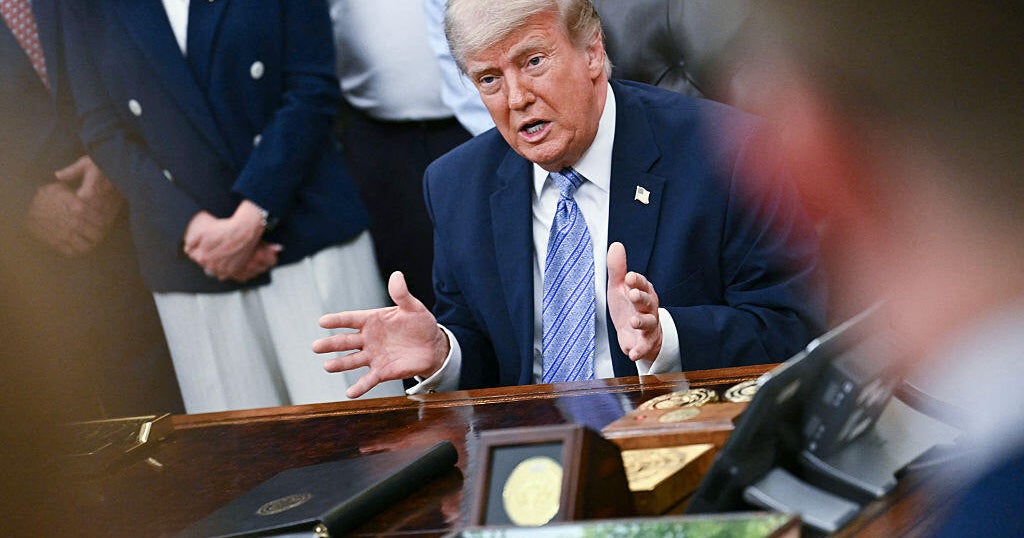
In a pivotal move on Tuesday, President Donald Trump put pen to paper on an executive order designed to propel the United States to the forefront of artificial intelligence (AI) innovation and security. This significant action aims to bolster the nation’s AI capabilities by enhancing collaboration between the government and the private sector, particularly in sharing cutting-edge AI models prior to their public release.
President Trump had previously stalled the signing of an earlier version of the AI order nearly two weeks earlier. His reservations centered on concerns that premature regulatory actions might hinder the competitive edge the United States holds over global competitors, particularly China, in the AI domain. The president expressed his apprehensions, stating that he did not want to implement anything that might diminish the U.S.’s leading position in AI innovation.
The crux of the executive order signed on Tuesday lies in balancing the dual objectives of fostering AI innovation while ensuring national security. The order establishes a voluntary program wherein AI companies can share their advanced AI models with the government ahead of public release. This initiative is designed to leverage the federal government’s resources to evaluate and potentially enhance the security measures of these AI models, ensuring they are robust against cyber threats before they are widely disseminated.
One of the key components of the executive order involves the development of a classified benchmarking process to determine what constitutes “frontier” AI models. These are models that represent the most advanced developments in the field. By identifying these frontier models, the government aims to work collaboratively with tech companies, allowing these models to be examined by national security agencies 30 days prior to their general release.
The significance of this scrutiny was highlighted by the capabilities demonstrated by frontier models in detecting previously unidentified vulnerabilities in critical software systems. For instance, Anthropic, a leading AI lab, announced in April its decision to provide its new AI model, Mythos, to select partners. This model enables these partners to strengthen their defenses against potential cyberattacks before the technology becomes available to a broader audience.
To address broader cybersecurity concerns, the executive order mandates several key actions. It directs the Secretary of Homeland Security to establish and expand federal cybersecurity programs that leverage AI to improve defensive capabilities. Additionally, it instructs a team consisting of the Secretaries of Treasury and Defense, along with the Director of the National Security Agency and the Secretary of Homeland Security, to collaborate with AI practitioners in setting up an AI cybersecurity clearinghouse to actively search for and address software vulnerabilities.
President Trump’s executive order places a strong emphasis on the voluntary nature of the collaboration between AI companies and the federal government. It explicitly states that the initiatives outlined within the order will not result in mandatory governmental licensing, preclearance, or permitting requirements for the development or distribution of new AI models, including those considered frontier models. This clause is critical in maintaining the innovative momentum of the AI industry by ensuring that regulatory measures do not stifle technological advancement.
This executive order reflects a nuanced approach to national policy on artificial intelligence, blending urgency in defense with a commitment to fostering innovation. It underscores the importance of maintaining strategic leadership in AI, while also recognizing the potential threats that unchecked AI technologies might pose to national and global security. By facilitating a proactive partnership between the government and the private sector, the order aims to create a safer and more secure digital environment, propelling the United States to new heights in the realm of artificial intelligence.
As with any policy directive, the implications and outcomes of this executive order will unfold over the coming months and years. It sets a precedent for how nations might navigate the complex terrain of technological progression amid growing global rivalry and security challenges. This approach, balancing innovation with regulatory foresight, may very well shape the future landscape of artificial intelligence, positioning the United States at the helm of global leadership in this transformative field.