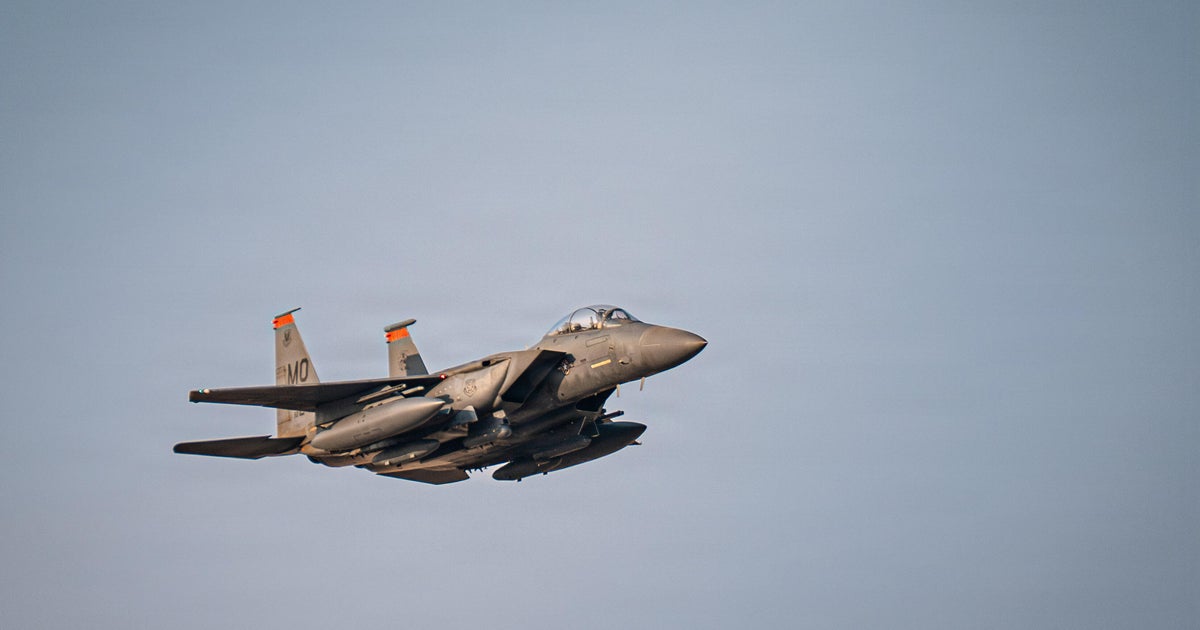
In a remarkable series of events that could rival the most gripping of combat dramas, an F-15E Strike Eagle pilot, who was only just over a month beyond surviving a friendly-fire incident over Kuwait, found himself once again in the heart of danger—this time, over the skies of Iran. According to CBS News, which gathered details from multiple sources familiar with the incidents, this pilot’s story is one of courage, survival, and the fine line between life and death in the theater of war.
The initial friendly fire incident took place at the start of an unspecified war when Kuwaiti air defenses, misidentifying their targets, shot down three F-15E Strike Eagles. This terrifying error resulted in six aircrew members—pilots and weapons system officers—ejecting safely from the engulfed jets. Remarkably, among these was the pilot who, after recovering from the incident, would face adversity yet again.
Only 30 days after the incident with the Kuwaiti air defenses, the same pilot was navigating the tense airspace over Iran. During this mission, on April 3, the jet was struck by an Iranian surface-to-air missile—an alarming testament to the perils faced by military aviators. Sean Naylor, a national security reporter, first highlighted the pilot’s consecutive shootdowns in his Substack publication, “The High Side,” drawing attention to the extraordinary nature of surviving two downings under such dramatic circumstances.
When discussing the specifics of the Iranian episode, CBS News reported earlier that after the shootdown, a daring and complex rescue operation unfolded. The pilot, who sustained serious injuries from the ordeal, was extracted after several critical hours, while the other crew member, the weapon systems officer, managed to evade enemy detection for nearly two excruciating days before being rescued.
Reflecting on these harrowing experiences, Joint Chiefs Chairman Gen. Dan Caine praised the aircrew during a White House briefing. He emphasized their exemplary courage, survival instinct, and the profound trust they placed in the training and capabilities of the rescue forces tasked with securing their safe return. Their ordeal underscored not only the personal resilience required in combat but also the broader operational challenges and dangers inherent in modern warfare.
The irony of being shot down twice, first by an ally and then by an adversary, did not escape the notice of seasoned military analysts. Retired Air Force Lt. Gen. David Deptula, during an interview with CBS News, expressed his astonishment at the rare coincidence. Having served as the principal attack planner during Operation Desert Storm in the Gulf War, Deptula remarked that he could scarcely recall another instance since possibly as far back as the Vietnam War where a pilot was shot down in separate incidents in the same campaign. He likened it to “getting hit by lightning twice.”
When CBS News reached out to the U.S. Central Command for comments, details were scant, underscoring the sensitivity and the classified nature of current military operations. However, the broader military community and public alike are left to ponder the incredible story of survival, skill, and perseverance demonstrated by these service members.
This narrative raises several points of discussion around the strategies employed in modern combat scenarios, the risks of friendly fire in highly volatile environments, and the extraordinary measures rescue teams undertake to save lives. The technological prowess of the F-15E Strike Eagles and the training of their crews are crucial to understanding both how these incidents happened and how the involved personnel managed to survive.
Looking ahead, one contemplates the psychological and physical toll on pilots like the one involved in these incidents. How does the military support their recovery and reintegration into service? What lessons will be drawn to prevent similar occurrences in future operations? These questions form the core of ongoing discussions aimed at enhancing safety and operational efficacy in military engagements.
The story of this F-15E pilot, weaving through the annals of aviation and military history, serves as a stark reminder of the unpredictabilities of war and the indomitable human spirit confronting these realities every day. As war strategies evolve and technologies advance, the enduring elements remain the bravery and expertise of those who operate and support these missions from the skies and beyond.