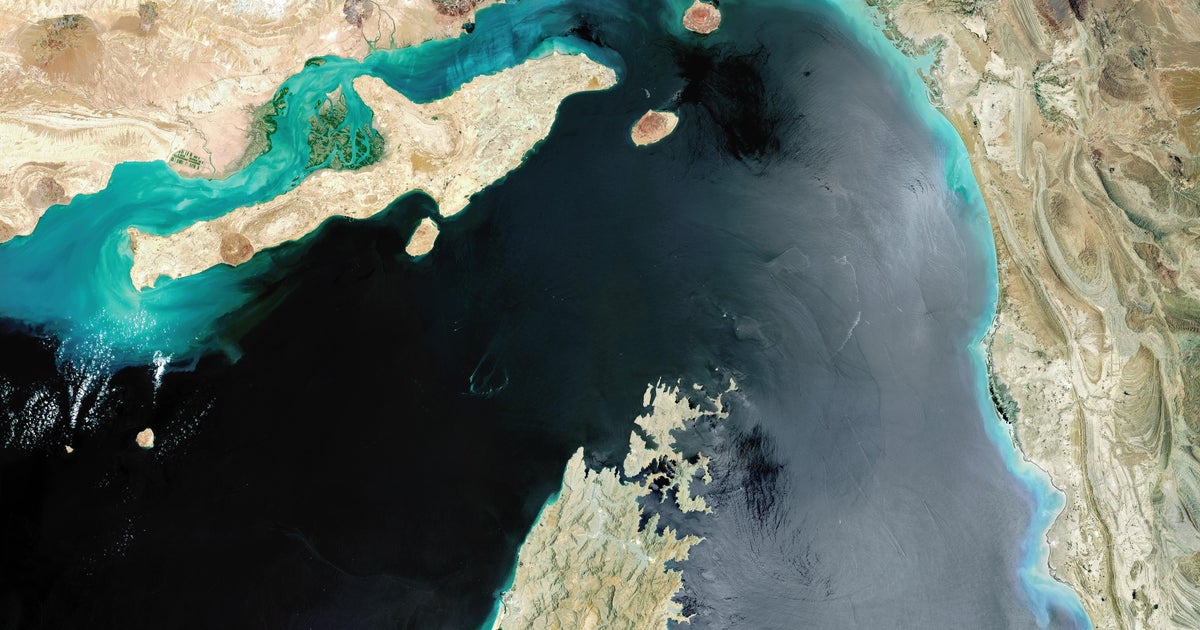
In the latest development in the ongoing tensions between the United States and Iran, American military forces carried out strikes on an Iranian island located near the strategic Strait of Hormuz. This came as a direct response to attempted Iranian drone and missile attacks. These actions represent the most recent clash in a series of ongoing confrontations between the two countries, which have been escalating even as President Trump seeks to broker a long-term agreement with Iran.
The U.S. Central Command (CENTCOM) issued a statement on Tuesday in which it stated that it had neutralized three Iranian drones that were targeting civilian mariners. In addition, Iran also launched a series of ballistic missiles at U.S. allies in the Persian Gulf region. However, all of these missiles failed to hit their intended targets, according to CENTCOM. This included three missiles that were directed at Bahrain but were successfully intercepted by air defenses, and two missiles that fell short or disintegrated en route before they could hit Kuwait.
In response to these attacks, CENTCOM said it carried out “self-defense strikes” at a ground control station located on Iran’s Qeshm Island.
Iran’s Islamic Revolutionary Guard Corps (IRGC) released a statement in which it claimed that its strikes were a reaction to an earlier move by CENTCOM on Tuesday. This involved the U.S. disabling an oil tanker that was heading towards Iran by firing a missile at its engine room. The IRGC stated that it had targeted the headquarters of the U.S. Navy’s Fifth Fleet in Bahrain and a “vessel belonging to the American Zionist enemy.” However, CENTCOM disputed these claims, stating on Twitter that the Fifth Fleet had not been struck by the IRGC.
The U.S. and Iran agreed to a ceasefire on April 7, which put a halt to most direct hostilities in the three-month-long war. Despite this, some clashes have continued to occur, even as U.S. forces maintain that the ceasefire is still in place. This includes several instances since the beginning of the last week. Furthermore, Iran has imposed restrictions on ships sailing through the Strait of Hormuz without its permission. This has led to a significant disruption in shipping traffic in this critical oil corridor. In response, the U.S. has enforced a blockade on Iranian ports and disabled some vessels accused of evading it.
In its Tuesday statement, CENTCOM reiterated its readiness to defend against any unwarranted Iranian aggression during the ongoing ceasefire.
Amid these tensions, U.S. and Iranian negotiators have been engaging in indirect talks aimed at extending the ceasefire, lifting the U.S. blockade, reopening the Strait of Hormuz, and initiating broader discussions on the contentious issue of Iran’s nuclear program. Although these talks have not yet resulted in a concrete agreement, Trump administration officials expressed optimism last week regarding the progress of these negotiations.
However, Iran’s semi-official Tasnim news agency reported on Monday that the country was suspending all conversations with the U.S. until Israel ceased its offensive in Lebanon against Iran-backed Hezbollah. Despite this, President Trump contradicted this claim on Tuesday, labeling it as “false and erroneous.” He insisted that dialogue between the U.S. and Iran had been ongoing, including as recently as the previous four days. He made this statement on Truth Social, a social media platform.
As these events unfold, it is clear that the situation between the U.S. and Iran remains highly volatile, with the potential for further escalation. While diplomatic talks continue, actions on the ground paint a different picture, with both sides demonstrating their readiness to respond to perceived threats. It is hoped that these talks will yield a resolution that can put an end to this cycle of hostility and bring about lasting peace and stability in the region.
The Strait of Hormuz, where these military actions are taking place, is a highly strategic waterway, serving as a crucial artery for the world’s oil supplies. Any disruption in this region can have significant implications for global oil prices and overall geopolitical stability. As such, the world will be closely watching how this situation develops, with the hope that a peaceful resolution can be reached.
In conclusion, while the ceasefire between the U.S. and Iran is technically still in place, sporadic clashes and hostile actions continue. Both sides, while engaging in talks, seem prepared for further hostilities if necessary. The world watches on, hoping for a peaceful resolution that will bring stability to this critical region and prevent any severe disruption to the global oil supply. The coming days and weeks will be crucial in determining the future path of U.S.-Iran relations.